


Nearly 9 in 10 Indian smartphone buyers now say AI features shape their purchase decision, according to the Flipkart x Counterpoint Smartphone Insights Report 2026.
That’s a big shift from a few years ago, when RAM and megapixels alone ruled the spec sheet.
The catch? Almost every phone launched in 2026 calls itself an “AI phone.”
Some genuinely run AI models on the device. Others just slap the label on a camera filter and call it a day.
This AI smartphone buying guide breaks down the 10 features that actually separate a real AI phone from a marketing sticker — so you don’t overpay for buzzwords.
What Actually Makes a Phone an “AI Smartphone”?
A real AI phone needs three things working together: an NPU strong enough to run AI models, enough RAM to hold those models in memory, and software built to actually use them.
Think scam detection, translation, and photo editing — not just a chatbot icon on the home screen.
Miss any one of these, and the “AI” branding on the box is mostly marketing. The 10 checks below show exactly what to look for.
1. Does the Phone Have Enough NPU Power (TOPS) for On-Device AI?
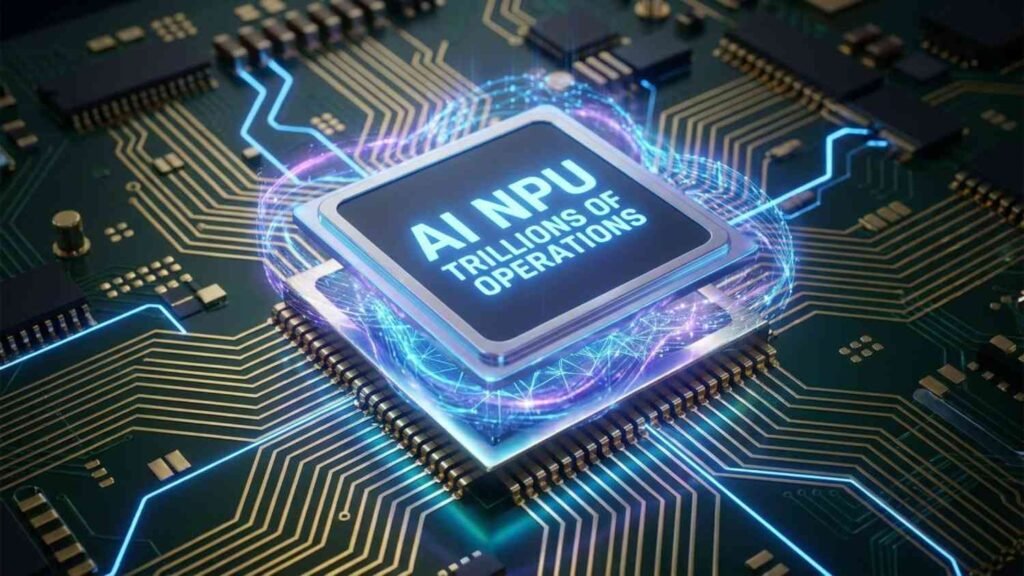
Look for a chip rated at 45+ TOPS (Tera Operations Per Second) if you want smooth on-device AI.
Much less than that, and generative features start to lag or get pushed to the cloud.
TOPS measures how many trillion AI calculations a chip can run every second.
In 2026’s top tier, Apple’s A19 Pro delivers roughly 45 TOPS, Qualcomm’s Snapdragon 8 Elite series crosses 50+ TOPS through its Hexagon NPU, and MediaTek’s Dimensity 9400+ sits close behind at around 48 TOPS.
A higher TOPS number means the phone can run bigger AI models locally — think real-time photo generation or live translation — without leaning on the cloud or your mobile data.
2. Is 12GB RAM Really the New Minimum?

Yes, at least on Android.
Google’s Gemini Intelligence suite treats 12GB of RAM as a hard requirement, not a suggestion — phones with 8GB or even 10GB simply don’t qualify.
That’s because Google’s on-device Gemma 4 models (the E2B and E4B variants) alone need 4.2GB to 5.9GB of RAM just to stay loaded and ready.
Add your apps and the OS on top, and 8GB runs out fast.
Apple takes a lighter approach — Apple Intelligence needs only 8GB of RAM, which is why it runs on the iPhone 15 Pro and every model since.
If you’re buying an Android phone specifically for its AI features, treat 12GB as your floor, not your ceiling.
Our Specification Finder tool can confirm the exact RAM on any model, and our breakdown of why smartphone prices are rising in 2026 explains why RAM itself has gotten so much pricier this year.
3. Which On-Device AI Model Does It Actually Run?

Check whether the phone runs Gemini Nano (Android), Apple Intelligence (iOS), or a brand layer like Galaxy AI.
This decides what works on your device versus what needs an internet connection.
On-device models process your data locally instead of sending it to a server.
Google’s own scam-call detection, for example, runs Gemini Nano directly on the phone and never records audio or sends the conversation back to Google’s servers.
That local-processing detail matters more than most buyers realize — it’s the difference between an AI feature that keeps working on a flight with no signal, and one that stops the moment your network drops.
4. Can the AI Camera Actually Improve Your Photos, or Just Edit Them?
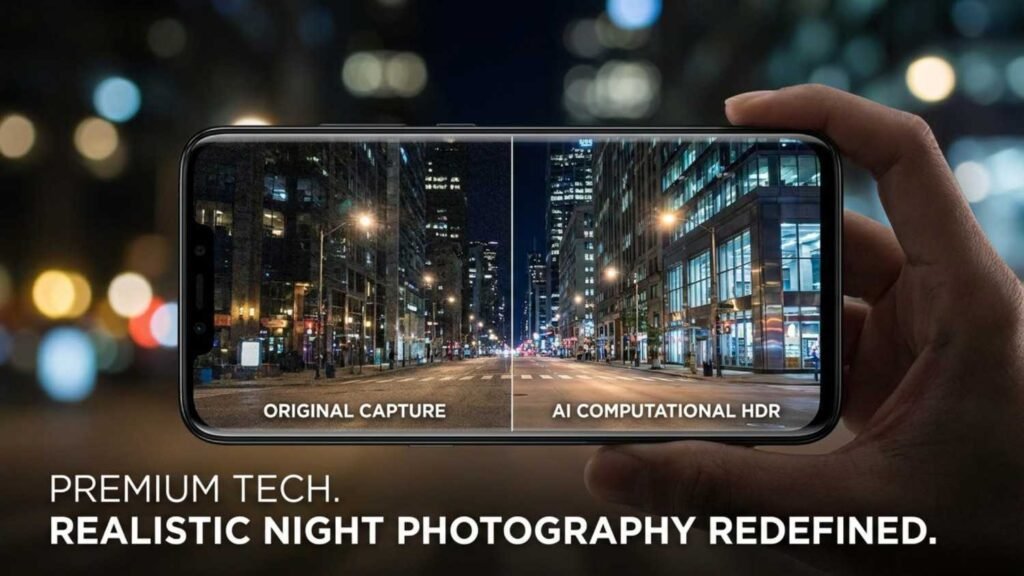
Two very different things get marketed as “AI camera”: computational photography that improves the shot as you take it, and generative editing that changes the photo after the fact.
Know which one you’re paying for.
Computational photography — HDR merging, night mode, portrait blur — happens in real time using the NPU and improves accuracy in the moment.
Generative editing tools (the “remove this person” style features) add or remove elements from a photo you’ve already taken.
Both are genuinely useful, but they solve different problems.
If you mostly want better everyday photos, prioritize the first. If creative editing power matters more to you, check for the second explicitly — brands rarely separate the two clearly in marketing copy.
5. Does the Phone Protect You from AI Voice Scams and Deepfake Calls?

This is one of 2026’s most important AI features for India specifically.
Google’s scam-call detection uses on-device AI to flag calls where a scammer is spoofing a number or cloning a familiar voice.
Announced for India in November 2025 ahead of the India AI Impact Summit, the feature verifies the calling device itself rather than trying to judge whether a voice “sounds real,” and it works in both Hindi and English.
It’s currently limited to Pixel 9 and later models in India, though Google has said it’s working to expand support to other Android phones.
Google also rolled out screen-share fraud alerts in partnership with Google Pay, Paytm, and Navi.
These warn users when an unknown caller is on the line while they navigate a banking app — a common tactic in India’s “digital arrest” scam cases.
If scam protection matters to you, confirm your shortlisted phone’s brand and Android version actually support these features, since the rollout isn’t universal yet.
6. How Many Years of Software and AI Updates Will You Get?
AI features age fast, and a phone that stops getting OS updates also stops getting new AI capabilities.
Google and Samsung currently lead with 7 years of OS and security updates on their flagship Pixel and select Galaxy models.
Other major brands lag behind — OnePlus typically offers 4 years of OS updates, and Motorola has historically offered just 2-3, though its new Signature series is moving toward matching the 7-year commitment.
Apple doesn’t publish a fixed number but routinely supports iPhones for 5-6 years in practice.
Since next year’s AI features need this year’s hardware to actually run them, a longer update commitment protects your investment, not just your security.
See our full list of Best Phones With 7 Years of Software Updates in India (2026) and how long a smartphone should really last before you decide.
7. Does AI Actually Extend Battery Life, or Just Look Good in Settings?

Adaptive battery AI genuinely helps — it learns your usage patterns (which apps you open, and when) and limits background activity for the apps you barely touch.
This is different from a phone simply having a bigger battery.
AI-based power management can stretch real-world screen-on time even on a mid-sized battery, because it’s optimizing how power gets used, not just how much is available.
Before you buy, run the numbers for your own usage rather than trusting the spec sheet alone — our Battery Life Calculator estimates real screen-on time based on capacity, display type, and your usage pattern.
8. Is the Phone Capable of “Agentic AI,” or Just Chat-Style AI?
Older phone AI was reactive — you ask a question, it answers.
Agentic AI is proactive: it can complete multi-step tasks on your behalf, like booking a reservation or reorganizing your calendar, without a separate prompt for each step.
This shift is driven by newer NPUs — MediaTek’s NPU 990 and Qualcomm’s latest Hexagon NPU both have enough headroom to run these multi-step chains locally instead of bouncing every step through the cloud.
If an “AI assistant” is a major reason you’re upgrading, ask specifically whether the phone supports agentic, multi-step actions — not just a chatbot bolted onto the lock screen.
9. Does the AI Actually Work in Hindi and Regional Indian Languages?
Many AI features launch in English first and reach Indian languages months later.
Check this specifically if you or a family member relies on Hindi or a regional language day to day.
Google’s scam-call detection in India is a rare exception here — it works in both English and Hindi from launch, processing the caller’s speech and returning warnings in Hindi where relevant.
Before buying an “AI phone” for someone who’s more comfortable in a regional language, verify which specific AI features — not just the voice assistant — actually support that language. Brands don’t always advertise this clearly.
10. Is the AI Premium Worth It During India’s Current Memory Price Crisis?
Probably not always — and this is the most important question of the ten.
India’s average smartphone selling price hit a record $302 (about ₹29,000) in early 2026, driven largely by a global RAM and storage shortage tied to AI data-center demand.
Counterpoint Research reported that India’s smartphone shipments fell roughly 10% year-on-year in the following quarter — the steepest June-quarter decline in six years, with the sub-₹20,000 segment (around 60% of the Indian market) hit hardest by rising memory costs.
In practice, this means some brands are now pricing basic AI features — that used to be free extras — as part of a premium jump.
That’s the core logic behind this AI smartphone buying guide: compare the actual feature list, not just the label, against your budget tier.
Our Best Mobile Phones in India 2026: Top Picks by Budget and Best Phones Under ₹40,000 guides break this down by price segment, and the EMI Calculator can help you plan the purchase either way.
AI Smartphone Buying Guide 2026: Quick Readiness Checklist
- NPU rated 45+ TOPS for smooth on-device AI
- 12GB+ RAM if you want Android’s Gemini Intelligence features (8GB is fine for Apple Intelligence)
- Confirm which on-device model it runs: Gemini Nano, Apple Intelligence, or a brand AI layer
- Check scam-call and screen-share protection support for your specific phone and Android version
- Look for at least 4-5 years of promised OS updates, ideally 7
- Verify camera “AI” claims mean real computational photography, not just filters
- Ask if AI features actually support Hindi or your regional language
- Compare AI-inclusive price against your actual usage needs, not marketing hype
Frequently Asked Questions (FAQs)
This AI Smartphone Buying Guide wouldn’t be complete without answering some of the most common questions buyers ask before purchasing an AI-enabled smartphone.
1. What is the minimum RAM needed for AI features on a smartphone in 2026?
Android Phones:
- Require at least 12GB RAM to run Google’s Gemini Intelligence features efficiently.
iPhones:
- Require only 8GB RAM for Apple Intelligence because Apple’s AI models are optimized differently.
2. Do AI phone features work without an internet connection?
Yes, partially.
- On-device AI features (such as Gemini Nano scam detection) work completely offline.
- Cloud-based AI tools (AI writing, image generation, advanced assistants, etc.) still require an internet connection.
3. Which smartphone brands currently offer the longest AI software support in India?
The current leaders are:
- Google Pixel smartphones
- Samsung Galaxy S Series
- Samsung Galaxy Z Series
These devices receive up to 7 years of Android OS and security updates, ensuring long-term AI feature compatibility.
4. Is Apple Intelligence better than Google’s Gemini Nano?
| Feature | Apple Intelligence | Google Gemini Nano |
|---|---|---|
| Minimum RAM | 8GB | 12GB |
| Works On | Selected Apple devices | Many Android flagship phones |
| Approach | Highly optimized ecosystem | Broader Android compatibility |
Both platforms are excellent—the better choice depends on whether you prefer the Apple ecosystem or Android.
5. How do I know if my phone supports Google’s AI scam call detection in India?
- Available on Google Pixel 9 and newer models (as of 2026).
- Supports both Hindi and English.
- Always verify support by checking the phone’s official specification page or Google’s support documentation before purchasing.
Final Takeaway from This AI Smartphone Buying Guide 2026
The term “AI Phone” is no longer just a marketing buzzword. In 2026, AI capabilities have become one of the biggest factors influencing smartphone buying decisions.
Instead of focusing only on flashy AI advertisements, evaluate every phone using these essential criteria:
- ✔ Dedicated NPU performance
- ✔ Sufficient RAM for AI processing
- ✔ Genuine on-device AI capabilities
- ✔ AI-powered scam and fraud protection
- ✔ Long-term software & security updates
- ✔ Real-world AI features you will actually use
Before purchasing your next smartphone, compare every shortlisted device using the 10-point AI checklist from this guide.
Need More Details?
Want to compare a specific smartphone’s AI features, RAM, battery life, EMI options, warranty, or full specifications?
Visit PhonePrice360.com and use the free comparison tools to make a smarter buying decision.
Read More:
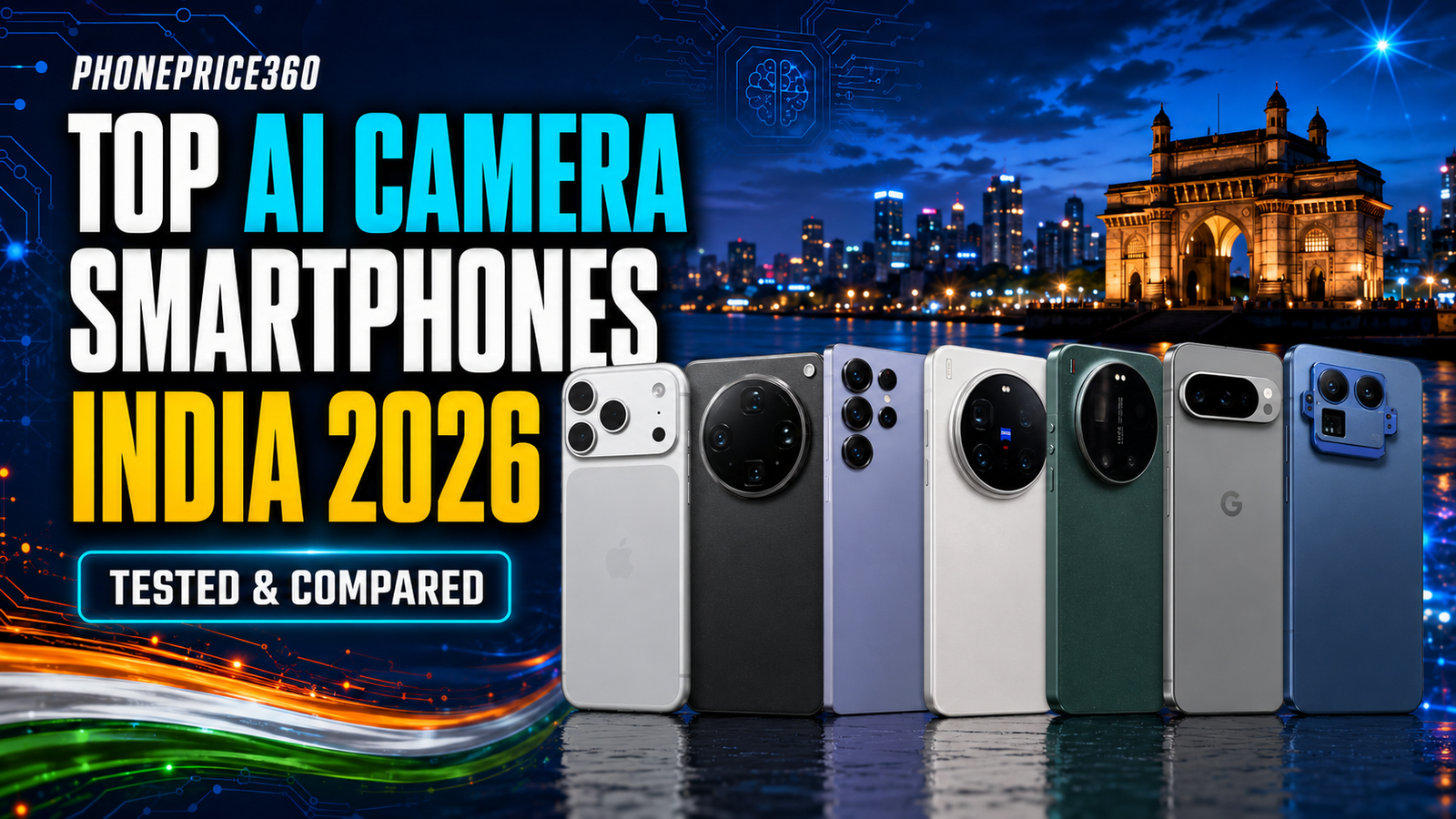
Best AI Camera Smartphones in 2026 (Top 7 Tested – Which One Wins?)
Best AI Phones 2026: Top Smartphones Ranked With Next-Gen AI Features, Camera & Performance
Apple Intelligence vs Gemini Nano vs Galaxy AI: On-Device Performance (2026)




3 thoughts on “AI Smartphone Buying Guide (2026): 10 Features You Should Never Ignore”