

Best AI Camera Smartphones in 2026 (Top 7 Ranked by Night, Zoom & Portrait Quality)
You pull out your phone at a dimly lit restaurant. One tap. The photo looks like a professional took it. That’s not luck in 2026 – that’s AI.
Smartphone cameras have crossed a line this year. It’s no longer about megapixels on a spec sheet. It’s about what your phone’s AI brain does with the light it captures. On-device neural chips, real-time scene detection, periscope zoom lenses — these are now the battleground.
We tested the top AI camera phones in 2026 by digging into DXOMARK lab scores, real-world reviews from TechRadar, Tom’s Guide, Digital Camera World, and Android Central, plus Samsung, Apple, and Google’s own official data. No filler, no fake benchmarks. Just the honest results.
Quick Answer: Best AI Camera Phones in 2026
| Award | Phone |
|---|---|
| Best Overall AI Camera | Samsung Galaxy S26 Ultra |
| Best Night Photography | iPhone 17 Pro Max |
| Best Computational AI | Google Pixel 10 Pro |
| Best Zoom Phone | Samsung Galaxy S26 Ultra |
| Best Portrait Mode | iPhone 17 Pro Max |
| Best Camera Hardware | Xiaomi 17 Ultra |
| Best Value AI Camera | OnePlus 13 |
Bookmark this. You’ll want to come back.
What Makes a Great AI Camera Phone in 2026?
Before ranking phones, it helps to understand what “AI camera” actually means now — because it’s a lot more than slapping a filter on your photo.
| AI Camera Feature | What It Actually Does |
|---|---|
| AI ISP (Image Signal Processor) | Processes every frame in real time — adjusts exposure, reduces noise, sharpens detail on the fly |
| Computational Night Mode | Stacks multiple exposures to build one bright, clean low-light photo |
| AI Portrait Mode | Uses depth mapping to detect subject edges and apply background blur |
| AI Zoom Enhancement | Upscaling algorithm that recovers lost detail beyond optical zoom range |
| On-Device NPU | Runs AI tasks locally — faster, more private, no internet needed |
| Scene Detection | Identifies food, pets, people, sunsets, and adjusts settings for each automatically |
The big 2026 shift? Nearly all of this now runs on the device via dedicated Neural Processing Units (NPUs). The Tensor G5, A19 Pro, and Snapdragon 8 Elite Gen 5 chips make this possible — no cloud round-trip, no waiting, no privacy compromise.
The Big Question: iPhone vs Samsung vs Pixel — Who Wins the AI Camera War?
This is the debate that never ends. Here’s the honest 30-second version:
- Samsung Galaxy S26 Ultra wins on zoom range, versatility, and AI editing tools
- iPhone 17 Pro Max wins on night photography scores (DXOMARK #1) and natural color accuracy
- Google Pixel 10 Pro wins on effortless, consistent results with no settings fiddling
The longer answer is below. Read on.
1. Samsung Galaxy S26 Ultra — Best Overall AI Camera Phone 2026
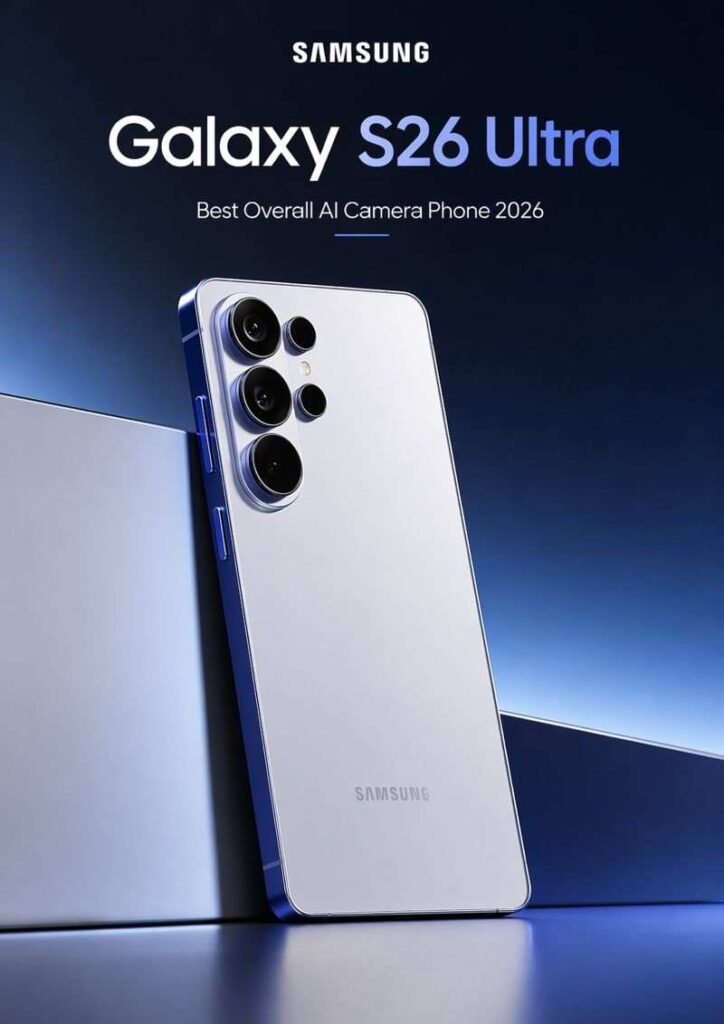
Starting Price: ~$1,299 | Available: Globally
If there’s one phone that does everything well, it’s still the S26 Ultra. Samsung launched it in February 2026 packed with real hardware upgrades — not just software promises.
The main camera opens to an f/1.4 aperture (47% brighter than before). The telephoto drops to f/2.9 (37% brighter). More light in = cleaner shots, period. The Snapdragon 8 Elite Gen 5 chip brings a 39% NPU boost, meaning Galaxy AI processes everything faster and smarter.
Night Mode Test: Does “Nightography” Actually Deliver?
Yes — with a catch. The f/1.4 aperture combined with Samsung’s AI ISP means night shots come out vivid and detailed rather than muddy and grainy. Samsung’s Enhanced Nightography technology ensures that even in extremely dim environments, images remain vivid and detailed.
Interestingly, the dedicated Night Mode is hidden inside Camera Assistant settings. But Auto mode produces identical results — Samsung just made it invisible. For serious night work, Expert RAW’s astrophotography mode gives extended exposure times that allow the sensor to absorb significantly more light, though it’s limited to static scenes.
Zoom Test: 100x and It Actually Works
The S26 Ultra’s 100x AI Space Zoom now works in conjunction with the updated ProVisual Engine and ProScaler to clean up the shot, reduce noise, and draw out finer details that were previously lost to pixelation.
The telephoto module delivers cleaner images thanks to improved noise control and more natural rendering — a genuine improvement over the S25 Ultra. DXOMARK confirmed color accuracy improved, with better white balance in natural scenes.
Portrait Test: AI Editing Is Genuinely Useful
Galaxy AI’s Photo Assist now accepts natural language prompts. Type “make the background a sunset” — and it does it. The AI ISP also extends to the front camera now, delivering natural skin tones, hair details, and eyebrow realism in selfies.
| Spec | Samsung Galaxy S26 Ultra |
|---|---|
| Main Sensor | 200MP, f/1.4 aperture |
| Telephoto | 50MP (5x optical) + 10MP (3x optical) |
| Max Zoom | 100x AI Space Zoom |
| Night Mode | Enhanced Nightography + Expert RAW |
| AI Chip | Snapdragon 8 Elite Gen 5 (39% NPU boost) |
| Video | 8K, APV codec support |
Verdict: The most complete AI camera phone in 2026. Best zoom range, best editing AI, best versatility.
2. iPhone 17 Pro Max — Best Night Photography & Portrait Mode
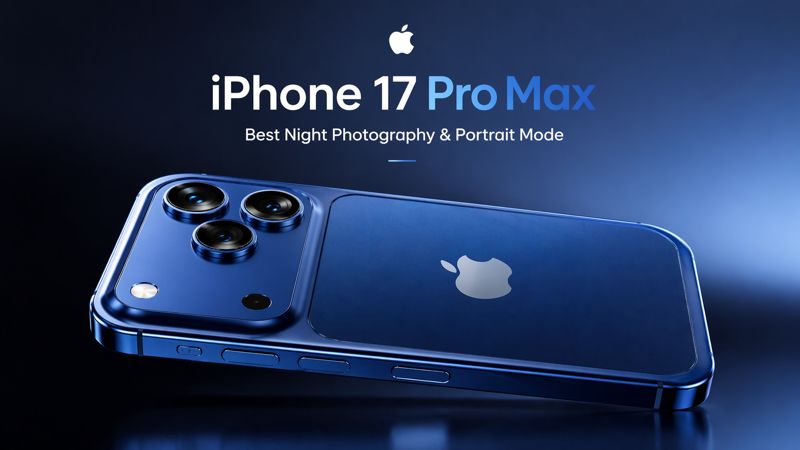
Starting Price: ~$1,199 | Available: Globally
Apple finally did something Android fans have been asking for years: three 48MP cameras across all rear lenses. The A19 Pro chip on 2nm architecture handles everything on-device — thermal management included (runs cooler than the S25 Ultra during 8K recording, per DXOMARK testing).
Night Mode Test: DXOMARK’s New #1
The iPhone 17 Pro is DXOMARK’s new number one device for night shooting — at 5 lux or under, the camera switches to night mode using a long exposure of 1 second or longer.
Apple’s approach is less aggressive than Samsung’s. Colors stay natural, highlights don’t blow out, and the AI doesn’t over-brighten to the point of looking fake. It’s processing restraint — and it works beautifully.
Zoom Test: Biggest Upgrade in iPhone History
The 48MP Pro Fusion camera system delivers the longest iPhone Telephoto ever — 8x optical-quality zoom, with a 16x total optical zoom range.
Apple’s Fusion Camera feature provides improved detail across the zoom range, particularly at the zoom presets — for example at 4x and 8x zoom. Beyond 8x, you’re in digital territory and quality does drop. Set expectations accordingly.
Portrait Test: Most Natural Face Rendering
Portrait shots show natural and detailed facial features, including eyes, eyebrows, eyelashes and beards — and the 24MP pixel count allows for plenty of zooming-in during image review.
The new 18MP Center Stage front camera is a genuine upgrade. It auto-frames groups as more people enter the shot, and you can switch between portrait and landscape orientation without moving the phone.
| Spec | iPhone 17 Pro Max |
|---|---|
| Main Sensor | 48MP, f/1.78 |
| Telephoto | 48MP (4x optical), 8x optical-quality |
| Max Zoom | 40x (8x optical, 40x digital) |
| Night Mode | Night Mode (Deep Fusion + Neural Engine) |
| AI Chip | A19 Pro (2nm) |
| Video | 4K Dolby Vision, Log 2, ProRes |
Verdict: Best for video professionals, iOS loyalists, and anyone who wants natural, cinematic-looking photos. DXOMARK’s night photography king.
3. Google Pixel 10 Pro — Best AI Computational Photography
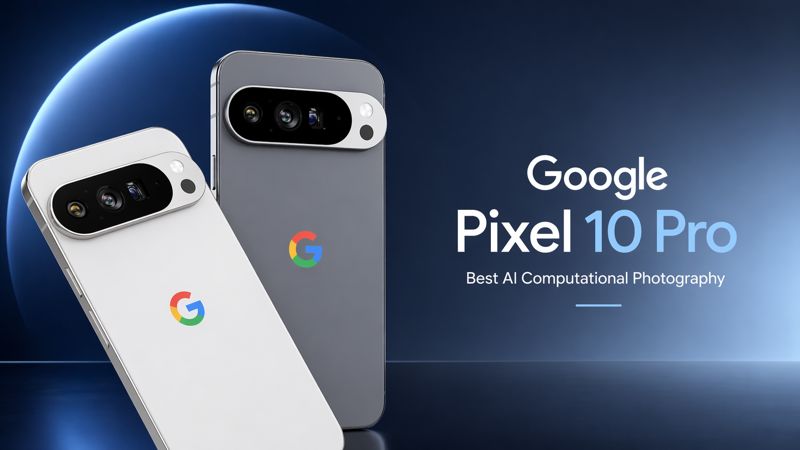
Starting Price: ~$999 | Available: Globally
Google doesn’t compete on hardware specs alone. They compete on math — and in 2026, their math is the best in the business. The Tensor G5 chip (TSMC 3nm, Google’s first fully in-house design) runs the most advanced Gemini Nano models entirely on-device.
Night Mode Test: Fast, Automatic, Impressive
Night Sight auto-activates when the scene is dark enough — no mode-switching needed. In low light, the camera performs really well, even competing with phones that have much larger 1-inch sensors.
Long exposure mode works completely handheld. For astrophotography on a stable surface, exposures stretch into the minutes. That’s remarkable for a computational approach with no giant sensor.
Zoom Test: Super Res Zoom Gets Serious
The Pro models now support Super Res Zoom up to 100x, using a combination of cropping and generative AI to maintain image quality. DXOMARK noted the 5x telephoto captures high levels of detail, with only minor quality reduction when digitally cropping between 1x and 5x.
Portrait Test: Major Improvement, One Remaining Issue
The Pixel team specifically worked on portrait mode edge detection for the Pixel 10 Pro, and the results are noticeably improved — human subject cutouts are markedly better. Plants and non-human subjects look gorgeous. Some fringing around very bright edges remains, but it’s much reduced.
| Spec | Google Pixel 10 Pro |
|---|---|
| Main Sensor | 50MP, f/1.68 |
| Telephoto | 48MP (5x optical) |
| Max Zoom | 100x Super Res Zoom |
| Night Mode | Night Sight (auto + manual + video) |
| AI Chip | Tensor G5 (3nm, TSMC) |
| AI Assistant | Gemini Nano (fully on-device) |
Verdict: Best for effortless photography. Point, shoot, walk away with a great photo — in any lighting condition.
4. Xiaomi 17 Ultra — Best Camera Hardware on a Phone
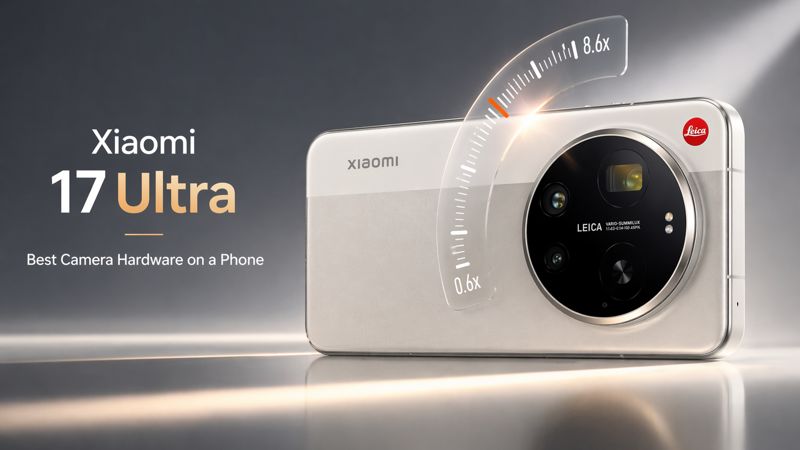
Starting Price: ~$1,099 | Availability: Limited (Asia, Europe)
The Xiaomi 17 Ultra is the “look at the spec sheet and lose your mind” phone of 2026. It pairs a 1-inch sensor with Leica optics and a variable aperture (f/1.4 to f/4.0) — technology that used to exist only in dedicated cameras.
Why the 1-Inch Sensor Matters for AI Photography
A 1-inch sensor captures dramatically more light than conventional smartphone sensors. Yes, 1-inch sensors capture more light and detail compared to smaller sensors — which gives the AI processing engine richer raw data to work with. Better input = better output.
The variable aperture is genuinely useful. Open wide (f/1.4) for low-light portraits, stop down (f/4.0) for sharp macro and landscape shots. This adaptive optical control is rare on any phone.
Zoom & Portrait: Leica Color Science Stands Alone
Leica-tuned color science is a real differentiator. Colors feel rich but accurate — not the punchy, over-saturated look some brands push. Portrait mode benefits from the large sensor creating more natural background separation without as much AI processing required.
| Spec | Xiaomi 17 Ultra |
|---|---|
| Main Sensor | 1-inch sensor, variable f/1.4–f/4.0 |
| Optics | Leica-tuned lenses |
| Night Mode | Large sensor + AI processing |
| AI Chip | Snapdragon 8 Elite |
| Video | 4K HDR, Leica color profiles |
Verdict: The photography enthusiast’s dream. Closest thing to a real camera in your pocket — but check availability in your region first.
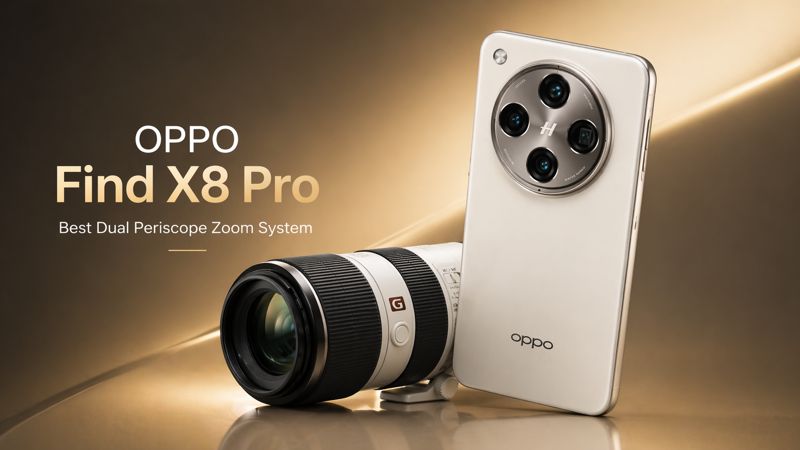
5. Oppo Find X8 Pro — Best Dual Periscope Zoom System
Starting Price: ~$1,099 | Availability: Limited (Asia, Europe)
The Oppo Find X8 Pro is the first globally available smartphone with dual periscope telephoto cameras — a 3x and a 6x periscope. This is a big deal for zoom consistency.
The Find X8 Pro performed exceptionally well in photo and zoom photo modes and showed strong video qualities. DXOMARK gave it a score matching the previous Oppo Find X7 Ultra despite having a smaller primary sensor — a testament to AI processing efficiency.
AI Telescope Zoom: Kicks In Where Others Struggle
There’s an “AI Telescope Zoom” that automatically kicks in when working at 10x or above, promising sharper images through AI enhancement. In testing, the dual periscope setup delivers impressive zoom consistency: excellent native quality at 3x, very good at 6x, with AI bridging the gaps.
Hasselblad Portrait: Film-Like Results
The Hasselblad collaboration goes deep here. Portrait mode lets you simulate six different Hasselblad lens profiles. Portraits were pleasant, with skin tones generally well rendered and facial details softly captured in a way that maintained detail without over-sharpening.
| Spec | Oppo Find X8 Pro |
|---|---|
| Main Sensor | 50MP, f/1.6, 1/1.4″ |
| Telephoto | 50MP 3x periscope + 50MP 6x periscope |
| Max Zoom | 120x (AI Telescope Zoom) |
| Night Mode | HyperTone Image Engine + AI processing |
| AI Chip | MediaTek Dimensity 9400 |
| Video | 4K Dolby Vision, all cameras |
Verdict: Underrated zoom king. The dual periscope system delivers the most consistent telephoto quality across zoom levels of any phone in this list.
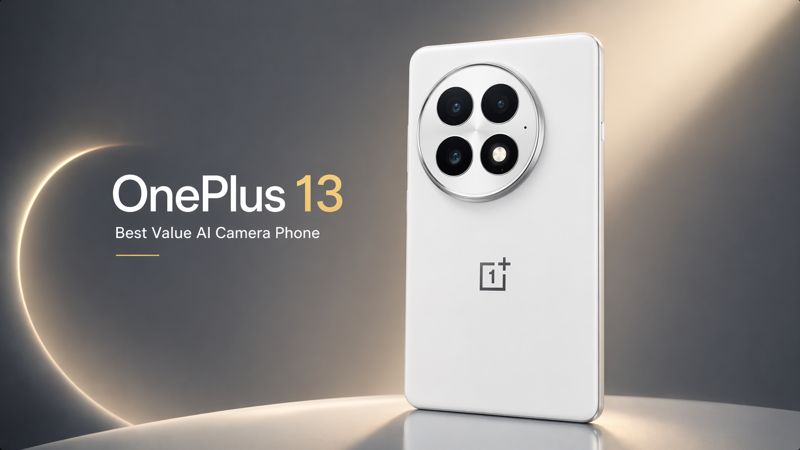
6. OnePlus 13 — Best Value AI Camera Phone
Starting Price: ~$899 | Available: Globally
OnePlus doesn’t charge flagship prices but delivers very close to flagship camera results. The OnePlus 13 pairs a 50MP Sony LYT-808 sensor (same 1/1.4″ format as the Oppo Find X8 Pro’s main) with 5th-gen Hasselblad tuning and genuinely useful AI tools.
Night Mode Test: Motion Clarity Is Its Superpower
The OnePlus 13’s dual exposure algorithm helps the phone capture anything that might be moving during long exposure night shots. This means waves, people, cars — things that cause blur on other phones — come out sharper on the OnePlus 13 at night. Android Central called this “one of the best smartphone cameras ever created.”
At night, the main camera delivers good dynamic range and colors, with excellent detail and no excessive night mode over-sharpening.
Portrait Test: Hasselblad Makes a Difference
The Portrait mode created in partnership with Hasselblad offers 1x, 2x, and 3x portrait modes, designed to recreate Hasselblad lenses including the XCD 30, 65, and 90V.
The big caveat: OnePlus AI editing tools require an internet connection since they process in the cloud — unlike Pixel, Samsung, and Apple’s on-device approach.
| Spec | OnePlus 13 |
|---|---|
| Main Sensor | 50MP Sony LYT-808, f/1.6, 1/1.4″ |
| Telephoto | 50MP (3x optical) |
| Max Zoom | 120x (AI-enhanced digital) |
| Night Mode | Dual Exposure Algorithm |
| AI Chip | Snapdragon 8 Elite |
| Portrait | 5th Gen Hasselblad (1x, 2x, 3x) |
Verdict: The best camera phone under $1,000. Night motion clarity and Hasselblad portrait quality at a much lower price point.
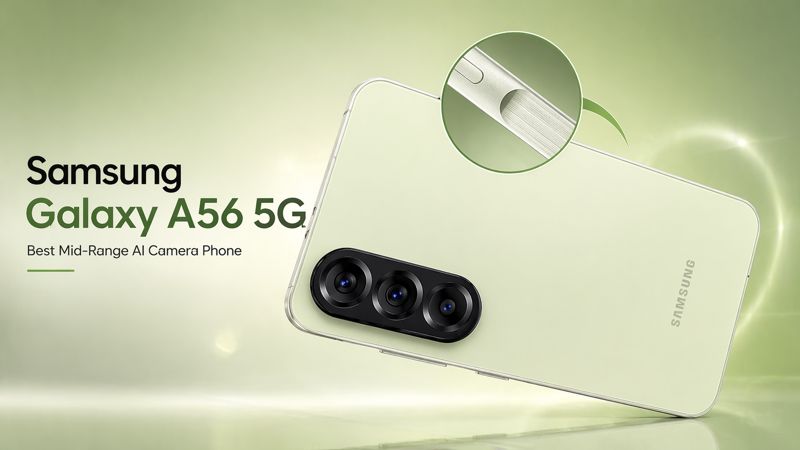
7. Samsung Galaxy A56 5G — Best Mid-Range AI Camera Phone
Starting Price: ~$499 | Available: Globally
Not everyone needs a $1,200 flagship. The Galaxy A56 5G is worth mentioning because it brings genuine Galaxy AI features to a mid-range price point — something that would have been unthinkable two years ago.
The Galaxy A56 5G is an excellent choice packed with plenty of AI features, even if they might not be quite as robust as others.
You get AI scene detection, a solid 50MP main sensor, and access to many of the same Galaxy AI editing tools as the S26 Ultra. Night photography can’t match the flagship, but for everyday photos, social media content, and well-lit portraits, it punches well above its price.
| Spec | Samsung Galaxy A56 5G |
|---|---|
| Main Sensor | 50MP |
| AI Features | Galaxy AI (scene detection, editing) |
| Night Mode | AI Night Mode |
| Starting Price | ~$499 |
Verdict: Buy this if you want AI-enhanced camera results without spending over $1,000. The best value Galaxy AI experience available.
Complete Comparison Table: All 7 Phones Head-to-Head
| Phone | Night Mode | Zoom Quality | Portrait Mode | AI Editing | Value | Overall |
|---|---|---|---|---|---|---|
| Samsung Galaxy S26 Ultra | ⭐⭐⭐⭐½ | ⭐⭐⭐⭐⭐ | ⭐⭐⭐⭐ | ⭐⭐⭐⭐⭐ | ⭐⭐⭐ | ⭐⭐⭐⭐⭐ |
| iPhone 17 Pro Max | ⭐⭐⭐⭐⭐ | ⭐⭐⭐⭐ | ⭐⭐⭐⭐⭐ | ⭐⭐⭐⭐ | ⭐⭐⭐ | ⭐⭐⭐⭐½ |
| Google Pixel 10 Pro | ⭐⭐⭐⭐½ | ⭐⭐⭐⭐ | ⭐⭐⭐⭐ | ⭐⭐⭐⭐⭐ | ⭐⭐⭐⭐ | ⭐⭐⭐⭐ |
| Xiaomi 17 Ultra | ⭐⭐⭐⭐½ | ⭐⭐⭐⭐ | ⭐⭐⭐⭐½ | ⭐⭐⭐⭐ | ⭐⭐⭐ | ⭐⭐⭐⭐ |
| Oppo Find X8 Pro | ⭐⭐⭐⭐ | ⭐⭐⭐⭐⭐ | ⭐⭐⭐⭐ | ⭐⭐⭐⭐ | ⭐⭐⭐½ | ⭐⭐⭐⭐ |
| OnePlus 13 | ⭐⭐⭐⭐ | ⭐⭐⭐ | ⭐⭐⭐⭐ | ⭐⭐⭐ | ⭐⭐⭐⭐⭐ | ⭐⭐⭐⭐ |
| Samsung Galaxy A56 5G | ⭐⭐⭐ | ⭐⭐⭐ | ⭐⭐⭐ | ⭐⭐⭐⭐ | ⭐⭐⭐⭐⭐ | ⭐⭐⭐ |
Which Phone Should You Actually Buy?
| Your Priority | Best Pick | Why |
|---|---|---|
| Best zoom for wildlife or sports | Samsung Galaxy S26 Ultra | 100x AI Space Zoom + ProScaler |
| Best night photography | iPhone 17 Pro Max | DXOMARK’s #1 rated night shooter |
| Best photos with zero effort | Google Pixel 10 Pro | Night Sight + Gemini AI on-device |
| Best camera hardware | Xiaomi 17 Ultra | 1-inch sensor + Leica optics |
| Best zoom consistency | Oppo Find X8 Pro | Dual periscope at 3x and 6x |
| Best for moving subjects at night | OnePlus 13 | Dual Exposure Algorithm |
| Best under $500 | Samsung Galaxy A56 5G | Galaxy AI at mid-range price |
| Best video phone | iPhone 17 Pro Max | 4K Dolby Vision + Log 2 + ProRes |
| Best AI editing tools | Samsung Galaxy S26 Ultra | Natural language Photo Assist |
What Reviewers Don’t Usually Tell You (Honest Limitations)
Every phone has blind spots. Here’s what you won’t find in the marketing material:
Samsung Galaxy S26 Ultra: The dedicated Night Mode is hidden in settings. Night photography at 100x zoom is impressive but not practical for fast-moving subjects.
iPhone 17 Pro Max: Digital zoom beyond 8x degrades noticeably. Portrait mode at close range is stunning; at distance, it can look washed out.
Google Pixel 10 Pro: Portrait mode still has some fringing around very bright edges. 2x zoom shots can look softer than expected for a flagship.
Xiaomi 17 Ultra: Limited availability in the US and some markets. Software updates and long-term support are less reliable than Samsung/Apple/Google.
Oppo Find X8 Pro: Limited global availability. No US carrier support. Bokeh mode showed some weaknesses in DXOMARK testing.
OnePlus 13: AI editing features require internet (cloud-based, not on-device). 3x zoom is solid but a 5x option would have been better.
Samsung Galaxy A56 5G: Night photography and zoom noticeably trail the flagship models. AI features lack some depth of the Ultra series.
Trusted Sources Used in This Article
- DXOMARK — Samsung Galaxy S26 Ultra Camera Test
- DXOMARK — Google Pixel 10 Pro XL Camera Test
- DXOMARK — Apple iPhone 17 Pro Camera Test
- DXOMARK — Oppo Find X8 Pro Camera Test
- Samsung Newsroom UK — Galaxy S26 Ultra Nightography
- Tom’s Guide — Galaxy S26 Camera Upgrades
- Digital Camera World — Pixel 10 Pro Review
- Android Central — Pixel 10 Series Camera Review
- Android Central — OnePlus 13 Camera Review
- Apple — iPhone 17 Pro Official Specs
- TechRadar — Best Camera Phones 2026
- TechTimes — Smartphone Cameras 2026
Frequently Asked Questions
Q: Which is the best AI camera phone in 2026?
A: The Samsung Galaxy S26 Ultra takes the overall crown — it leads in zoom, AI editing, and versatility. But if night photography is your priority, DXOMARK ranks the iPhone 17 Pro as the number one night shooter. The Google Pixel 10 Pro wins if you want the best automatic, point-and-shoot AI camera experience.
Q: Is the iPhone 17 Pro Max better than the Samsung Galaxy S26 Ultra for photography?
A: For natural color accuracy, video quality, and night shooting scores, the iPhone 17 Pro Max leads. For zoom range, AI editing tools, and overall versatility, the S26 Ultra pulls ahead. It genuinely depends on what you’re shooting.
Q: Does the Google Pixel 10 Pro really compete with 1-inch sensor phones?
A: Yes. Digital Camera World’s testing confirmed it competes in low light even against phones with much larger 1-inch sensors. Computational photography, done well, closes the hardware gap.
Q: What does AI zoom actually do on a smartphone?
A: AI zoom takes the optical image data and uses machine learning to upscale and reconstruct detail that normally gets lost at high digital zoom levels. Samsung’s ProScaler and Google’s Super Res Zoom are the best examples in 2026 — they significantly reduce pixelation and noise at zoom levels beyond the optical limit.
Q: Is a 200MP camera better than a 50MP camera?
A: Not necessarily. Megapixels matter less than sensor size, aperture, and AI processing quality. The Samsung S26 Ultra’s 200MP sensor is excellent. But the Pixel 10 Pro’s 50MP sensor produces stunning results because of how Google processes the raw data. Think of megapixels like flour — more doesn’t automatically make better bread.
Q: Which phone has the best portrait mode in 2026?
A: The iPhone 17 Pro Max delivers the most natural, flattering portraits with true-to-life skin tones. Samsung Galaxy S26 Ultra is a close second and offers more AI-powered editing flexibility after the shot is taken.
Q: Is the OnePlus 13 still worth buying in 2026 for the camera?
A: Absolutely. At around $899, it offers Hasselblad-tuned portrait mode, impressive night motion clarity, and a solid 50MP Sony sensor. The only downside is AI editing requires an internet connection — unlike on-device rivals.
Q: What is the biggest AI camera trend in 2026?
A: On-device AI processing. The shift from cloud-based to fully local AI — enabled by 3nm chips like Tensor G5 and A19 Pro — means faster results, better privacy, and AI camera features that work even without a Wi-Fi connection.
Final Verdict
Here it is, no fluff:
For most people: Samsung Galaxy S26 Ultra. It’s the most complete AI camera phone available — night, zoom, portrait, editing — it handles all of it.
For iPhone users: iPhone 17 Pro Max. Three 48MP cameras, the longest zoom in iPhone history, and DXOMARK’s #1 night shooter. It’s a proper flagship.
For zero-effort great photos: Google Pixel 10 Pro. Night Sight, Gemini AI, and a Tensor G5 chip that makes every shot look deliberate.
For camera nerds: Xiaomi 17 Ultra. A 1-inch sensor and Leica optics in your pocket. Enough said.
For value seekers: OnePlus 13. Hasselblad portrait mode and dual-exposure night photography at under $900.
The days of excusing bad photos with “my phone’s camera isn’t great” are officially over. In 2026, the camera is great. The question is only which “great” is right for you.
Read More:
Apple Intelligence vs Gemini Nano vs Galaxy AI: On-Device Performance (2026)
Best AI Camera Smartphones in 2026 (Top 7 Tested – Which One Wins?)
Best AI Phones 2026: Top Smartphones Ranked With Next-Gen AI Features, Camera & Performance
AI Smartphones Under 20000 in India: Top 10 Best Picks (2026)




5 thoughts on “Best AI Camera Smartphones in 2026 (Top 7 Tested – Which One Wins?)”