
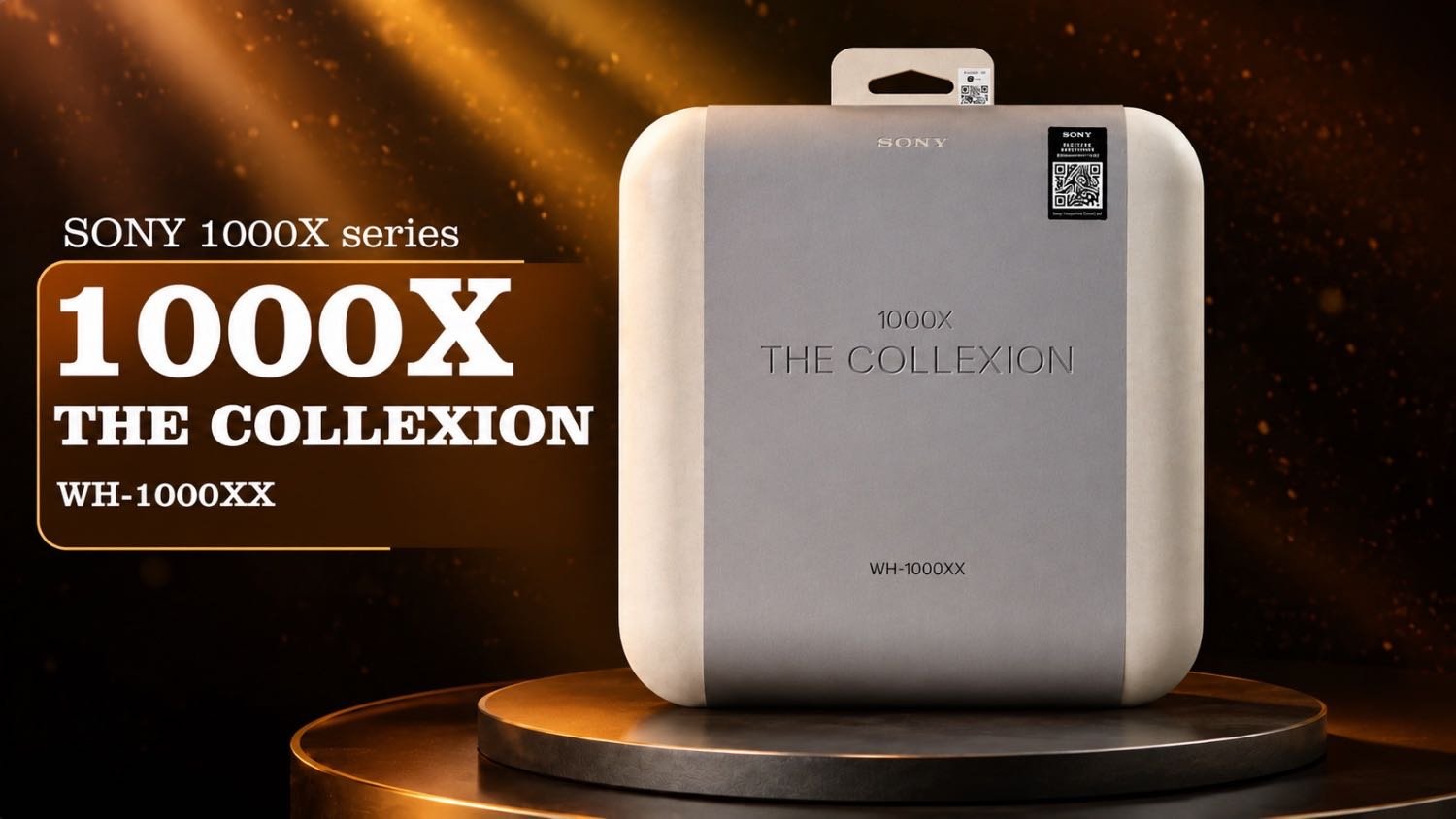
I’ve unboxed a lot of headphones. Most of them feel the same after the first thirty seconds — plastic clamshell, foam insert, a “thank you” card nobody reads. This one didn’t.
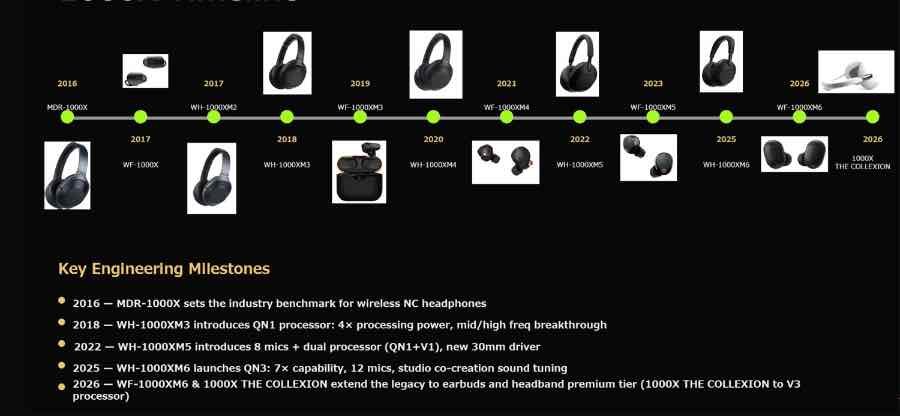
Sony calls it the 1000X The Collexion, and it’s the first time in a decade the company has put out a headphone that sits above the numbered XM line instead of inside it. That’s not a marketing spin. It’s a real structural decision, and it changes how you should think about buying a Sony headphone in 2026.
Here’s what’s actually different, what Sony’s own numbers say, and where it falls apart a little.
What Is the Sony 1000X The Collexion, Exactly?

It’s a re-skinned, re-tuned WH-1000XM6 with premium materials and a new driver, released to mark ten years of the 1000X series. Sony announced it on May 19, 2026, out of its San Diego headquarters, and it isn’t replacing anything — the WH-1000XM6 keeps selling right alongside it.
The name is stylized “COLLEXION” but said out loud as “Collection.” Soundphile Review, one of the first outlets to spend real time with the unit, described the concept as Sony bundling up everything it’s learned across ten years of ANC engineering into one flagship piece.
And here’s the part that trips people up: it isn’t the WH-1000XM7. Early reviewers were explicit about this — the Collexion runs parallel to the numbered series, not ahead of it. The XM7 is still coming separately, whenever Sony decides it’s ready.
How Much Does the Sony 1000X The Collexion Cost?

$649.99 in the US. That’s roughly $200 above the standard WH-1000XM6, and you’re paying for materials and tuning, not new noise-cancelling silicon.
By region:
- US: $649.99 USD / $849.99 CAD
- UK / EU: £550 / €630
It launched in Platinum and Black through Sony, Best Buy, and Amazon starting in May 2026. Sony used the same announcement to quietly drop a Sandstone colorway onto the regular WH-1000XM6, priced at $459.99 — which, if I’m honest, is the version most people should actually be looking at.
What Makes the Unboxing Feel Different?
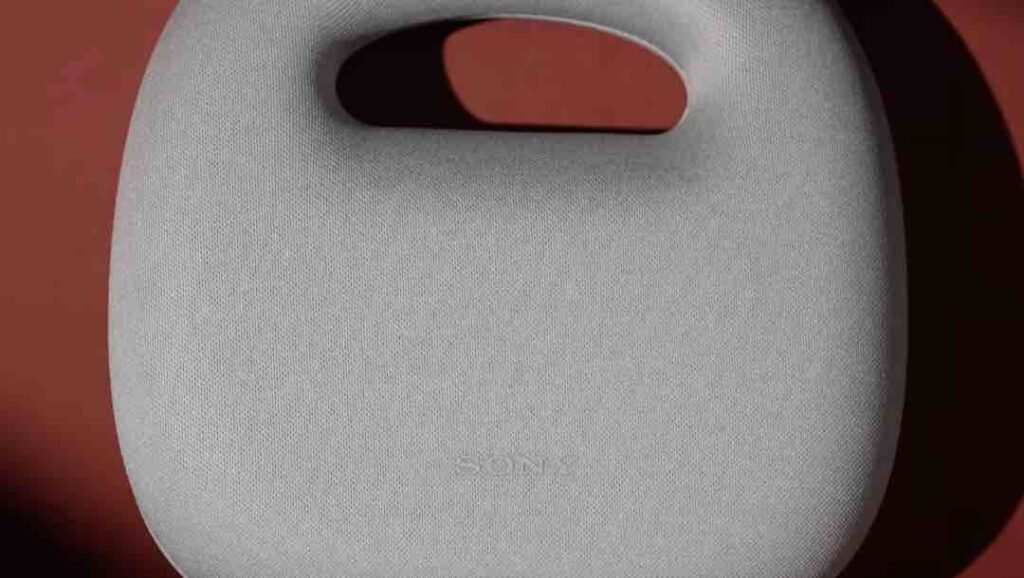
The case gets you before the headphones do. It’s soft and bag-shaped instead of the usual hard clamshell, and it shuts with a magnet instead of a zip — a small thing that somehow makes the whole box feel less like electronics packaging and more like something from a leather goods shop.
That’s not accidental. Sony built the case with accessibility in mind for people with low vision or limited hand mobility, alongside tactile buttons, clear L/R markings, and QR-code guides printed right on the packaging. Nice touch, and one most premium headphones skip entirely.
Then there’s the leather. Sony spent two years developing a vegan leather that covers both the earcups and earpads as one continuous piece — no seams, no stitching lines where two materials meet. The headband uses hand-finished metal accents, part matte-sandblasted, part hand-polished, with each unit reportedly finished individually rather than stamped out on a line. It photographs beautifully, which, again, is sort of the entire point of calling something “The Collexion.”
What’s Actually New Inside?
Underneath the leather, Sony didn’t just borrow the WH-1000XM6’s guts and call it a day. There’s a genuinely new driver in here, and that’s the part worth paying attention to if you care about sound over style.
The dome is made from a unidirectional carbon composite material, a first for this line, and Sony says it sharpens separation between instruments and vocals while extending detail at the top end. Grammy-winning and Grammy-nominated mastering engineers reportedly worked on the final tuning, which is a flex, sure, but also a real credential.
It’s also the first Sony headphone to ship with DSEE Ultimate, an on-device AI system that upscales compressed audio files in real time. And 360 Reality Audio Upmix now runs in three separate modes — music, cinema, and game — switchable from a dedicated button rather than buried in a menu.
Does It Actually Sound Better Than the WH-1000XM6?
A little, not dramatically. This is a refinement of an already-good platform, not a reinvention, and I’d be skeptical of anyone claiming otherwise after a first listen.
The wider soundstage and cleaner separation are real, and they show up most on densely-mixed tracks — think orchestral pieces or layered vocal harmonies. But here’s a detail that should keep the hype in check: reviewers comparing the base WH-1000XM6 against the Cambridge Audio Melomania P100 SE found the Cambridge model actually wins on raw acoustic accuracy and detail retrieval straight out of the box, no tuning required. So Sony’s upgrade is real. It’s just not automatically “best in class.”
How’s the Noise Cancellation and Battery Life?

Identical ANC to the WH-1000XM6, and slightly worse battery life. Sony didn’t touch the noise-cancelling hardware at all here, which is either reassuring or a letdown depending on what you were hoping for.
You get the same Multi-Noise Sensor setup with 12 microphones and the Adaptive NC Optimizer as the standard XM6 — so nobody’s missing out on silence by skipping the Collexion. Battery sits at 24 hours with ANC and Bluetooth running, stretching to 32 hours with ANC switched off. Both figures came back accurate in independent testing.
The catch: that’s down from the WH-1000XM6’s 30-hour rating, and Sony’s own explanation is that the new driver draws more power. It’s still around 4 hours ahead of the AirPods Max 2, so it’s not a bad number. It’s just not a step forward, which is a strange thing to say about a flagship that costs $200 more.
Sony 1000X The Collexion vs. the Rest of the Sony Lineup
| Spec | 1000X The Collexion | WH-1000XM6 (Sandstone) |
|---|---|---|
| Price (US) | $649.99 | $459.99 |
| Colors | Platinum, Black | Black, Midnight Blue, Platinum Silver, Sandstone |
| Build material | Vegan leather (2-yr development) + hand-finished metal | Mostly plastic |
| Driver | New carbon composite dome | Standard XM6 driver |
| ANC hardware | 12-mic Multi-Noise Sensor + Adaptive NC Optimizer | Identical |
| Battery (ANC + Bluetooth) | 24 hours | 30 hours |
| Battery (Bluetooth only, ANC off) | 32 hours | Not officially rated higher |
| DSEE Ultimate | Yes — first headphone with it | Standard DSEE |
| 360 Reality Audio Upmix modes | 3 (music / cinema / game) | Fewer, standard implementation |
| Release | May 2026 | May 2025 (Sandstone: Feb 2026) |
The gap here is small on paper and big in the hand. If you’re buying on specs alone, the Sandstone XM6 wins on value every time.
How Does It Compare to Bose and Apple?
This is where the Collexion has to earn its price against the two brands most people actually cross-shop it with.
| Headphone | Price (US) | Battery (ANC on) | What it’s known for |
|---|---|---|---|
| Sony 1000X The Collexion | $649.99 | 24 hours | Vegan leather build, new carbon composite driver |
| Bose QuietComfort Ultra (2nd Gen) | $449 | 30 hours | ActiveSense real-time adaptive noise cancelling |
| Apple AirPods Max 2 | $549 at launch | 20 hours | H2 chip, USB-C lossless audio, Apple ecosystem integration |
| Cambridge Audio Melomania P100 SE | — | 60 hours | Best out-of-the-box acoustic detail among this group |
Look at that battery column for a second. Bose gives you 6 more hours than Sony’s flagship for $200 less. Apple’s newest AirPods Max still trails Sony by 4 hours but wins on ecosystem lock-in if you’re already deep in Apple hardware. And the Melomania P100 SE just embarrasses everyone on battery life alone. Sony isn’t winning this table on numbers — it’s betting you’ll pay for the leather.
Wait, Is the Analog Jack Actually Analog?
No, not really, and it’s worth knowing before you plug in a cable expecting a pure signal path. Sony didn’t build a bypass here.
Any audio coming through the 3.5mm jack gets digitized through an ADC first, run through the onboard DSP exactly like a Bluetooth stream, then converted back to analog by the internal DAC before it hits the drivers. Practically, that means the headphones have to be powered on to use the wired jack at all, and you can’t drive them straight from a standalone amp the way you can with genuinely passive cans.
Does the Sustainability Angle Hold Up?
Partly. There’s real material substitution, not just a press-release claim, but it’s a modest step rather than a full green overhaul.
About 25% of the plastic in the headphone body and carry case comes from recycled sources, and retail packaging is plastic-free in most regions — coatings and adhesives excluded from both figures. That’s worth knowing, because “sustainable” gets thrown around loosely across this entire industry, and Sony’s fine print is at least honest about where the line sits.
Should You Actually Buy One?
Buy it if the leather, the weight distribution, and the story matter to you as much as the spec sheet. Skip it if you’re optimizing for battery life or price-per-hour of ANC, because on those numbers alone it loses to its own siblings.
Get the Collexion if:
- You want the nicest-feeling Sony headphone ever made, full stop
- Long sessions matter more than saving $200
- You genuinely care about materials and provenance, not just performance
Get the standard WH-1000XM6 (or the new Sandstone) instead if:
- You want identical ANC for $190 less
- Six extra hours of battery life actually matters to your week
- You’d rather spend the difference on a DAC, a second pair of earbuds, or, frankly, anything else
Why This Launch Actually Matters
Sony isn’t just adding an SKU here — it’s testing whether headphone buyers will pay for craftsmanship the same way camera buyers pay extra for a specific lens coating. That’s a real bet, and the market backs it up.
The global noise-cancelling headphones market was worth $13.1 billion in 2021 and is projected to hit $45.4 billion by 2031, growing at a 13.2% annual rate, according to Allied Market Research. A premium sub-line like the Collexion lets Sony chase higher margins in that growth curve without touching the WH-1000XM6’s mainstream price point at all.
Frequently Asked Questions
Is the Sony 1000X The Collexion the same as the WH-1000XM7?
No. It’s a separate, premium model built on the WH-1000XM6 platform, released to mark the 1000X series’ 10th anniversary. The WH-1000XM7 is still expected as its own future release.
What colors does the Sony 1000X The Collexion come in?
Just two: Platinum and Black. Sony kept the palette deliberately narrow to match the “collection” branding.
How much battery life does it get?
24 hours with noise cancelling and Bluetooth both running, or up to 32 hours with ANC switched off. That’s actually 6 hours less than the standard WH-1000XM6 with ANC on.
Is the noise cancellation better than the regular WH-1000XM6?
No — it’s identical hardware. Same 12-microphone Multi-Noise Sensor system and Adaptive NC Optimizer as the standard XM6.
Can I use it as wired headphones?
Yes, through the 3.5mm jack, but the signal still gets digitized and processed through the onboard DSP before reaching the drivers. The headphones must be powered on for the wired connection to work at all.
Is the Sony 1000X The Collexion worth the extra $200 over the WH-1000XM6?
Only if design, materials, and comfort matter more to you than battery life or value. On pure specs, the standard WH-1000XM6 (especially in the new Sandstone finish) is the better buy for most people.
Final Take
The Sony 1000X The Collexion isn’t a smarter headphone. It’s a nicer one — same ANC, slightly less battery, a genuinely upgraded driver, and materials that took two years to get right.
Whether that’s worth $200 over the XM6 comes down to one honest question: do you want the best spec sheet, or do you want to feel something every time you pick the headphones up? Sony built this one for the second group, and it knows exactly who’s buying it.
Sources referenced: Sony Electronics official press release · Sony EU press center · GSMArena review · Gear Patrol · Soundphile Review · RecordingNow · Allied Market Research · Bose QuietComfort Ultra 2nd Gen launch details · AirPods Max 2 specs
Redmi Note 17 5G Price in India: 7 Must-Know Facts Before You Buy









1 thought on “Sony Just Changed Headphones Forever — 1000X Collection Unboxing & First Look”