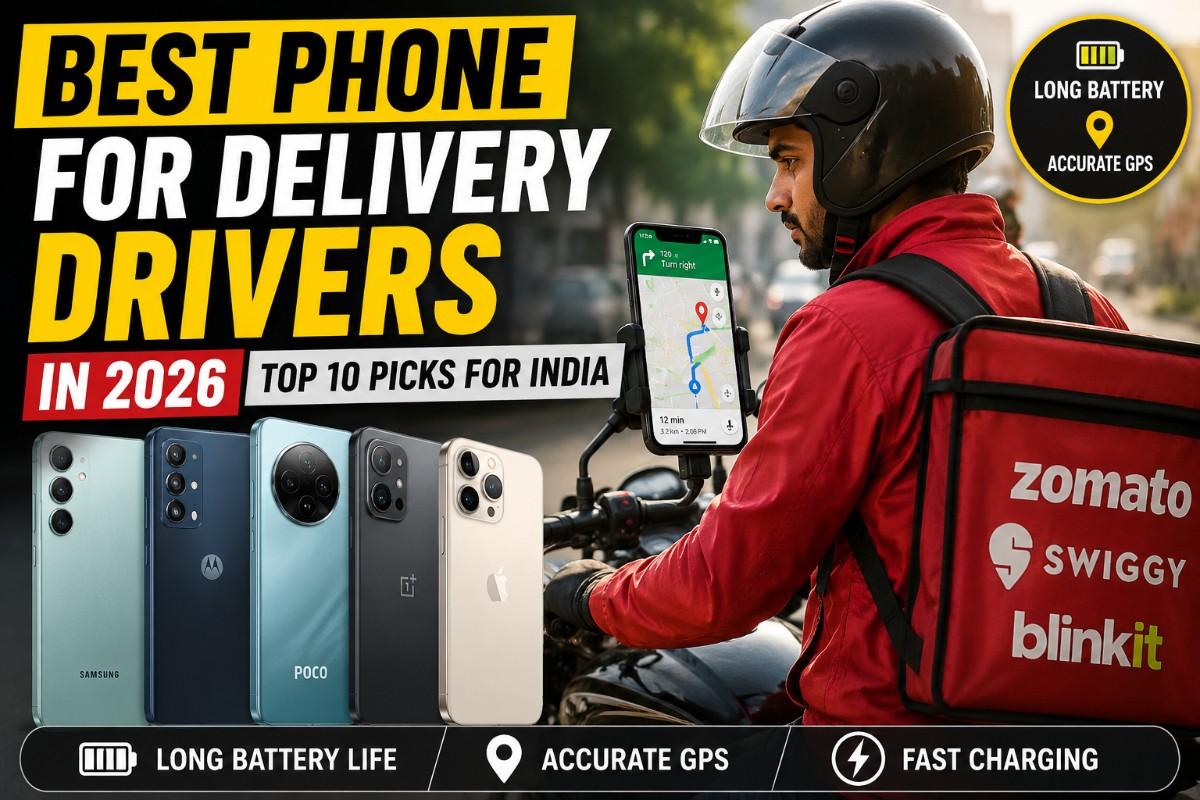
If your phone dies mid-shift, you do not just lose battery, you lose orders, ratings, and money. For India’s delivery riders, the best phone for delivery drivers is not a luxury purchase. It is the single most important work tool, more important than the bike itself on some days.
This guide covers the best GPS and battery phone for Zomato delivery, best phone for Swiggy delivery boy, and top picks for Blinkit, Zepto, Amazon Flex, and Porter riders in 2026, based on real battery numbers, GPS accuracy, and prices that actually make sense for the Indian market.
Quick Picks
| Category | Recommended Phone |
|---|---|
| Best Overall | Samsung Galaxy M15 5G Prime Edition |
| Best Under ₹15,000 | Moto G35 5G |
| Best Battery Life | Samsung Galaxy M15 5G |
| Best Rugged Phone | Samsung Galaxy XCover7 Pro |
| Best Fast Charging | OnePlus Nord Series |
| Best for iOS Users | Apple iPhone 16 |
| Best Long-Term Software Support | Google Pixel 9a |
If you only read one section of this guide, this table answers most search queries instantly.
Quick Comparison Table
| Phone | Battery | GPS Rating | Charging Speed | Display | Approx. Price | Best For |
|---|---|---|---|---|---|---|
| Samsung Galaxy M15 5G | 6000mAh | ★★★★☆ | 25W | AMOLED | ₹12,000 | Long shifts |
| Moto G35 5G | 5000mAh | ★★★★★ | 18W | LCD, 120Hz | ₹11,000 | Best value |
| Poco M7 5G | 5000mAh | ★★★★☆ | 18W | LCD | ₹10,500 | Multitasking |
| Samsung Galaxy XCover7 Pro | 4200mAh (removable) | ★★★★☆ | 25W | LCD | ₹35,000 | Rugged duty |
| OnePlus Nord Series | 5500mAh | ★★★★☆ | 45W+ | AMOLED | ₹25,000 | Fast top-ups |
| Google Pixel 9a | 5100mAh | ★★★★★ | 23W | OLED | ₹50,000 | Premium Android |
| Honor 70 | 4500mAh | ★★★★★ | 67W | OLED, 120Hz | ₹28,000 | Fastest charging |
| Apple iPhone 16 | 3561mAh | ★★★★★ | 20W | OLED | ₹79,900 | iOS riders |
| Samsung Galaxy A55 | 5000mAh | ★★★★☆ | 25W | AMOLED | ₹33,000 | Mid-range balance |
| Blackview BV9300 Pro | 12500mAh | ★★★★☆ | 66W | LCD | ₹30,000 | Multi-day rugged |
GPS ratings reflect editorial assessment based on published chipset specifications and multi-band GNSS support, not independent lab testing. Prices are approximate and change frequently, so confirm current pricing before purchase.
Why Does Your Phone Matter So Much for Delivery Work?
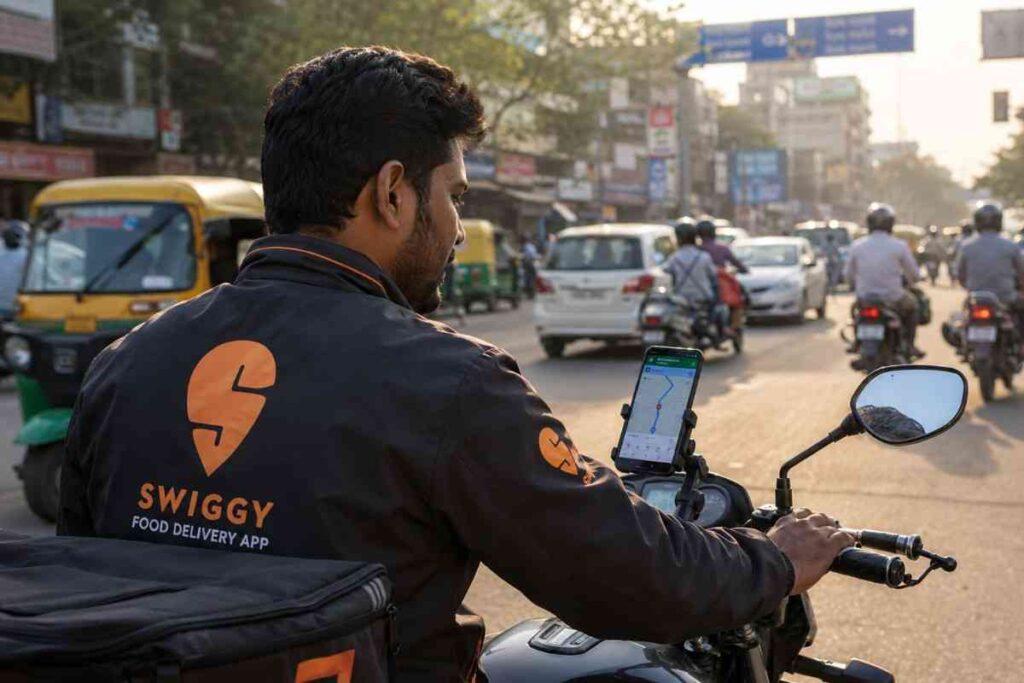
A delivery rider’s phone runs GPS, multiple apps, and the camera almost non-stop for 8 to 12 hours a day. That combination drains batteries faster than nearly any other daily use case, which is why battery backup phone for delivery job is one of the most searched terms among Indian gig workers today.
GPS navigation and camera-based proof of delivery are consistently flagged as the two most battery-draining functions on a smartphone. According to Google’s official guidance on extending Android battery life, GPS and screen-on time are among the heaviest power consumers on any device, and that load only increases when navigation runs continuously for hours.
In India specifically, the stakes are higher because of how the gig workforce operates. According to estimates highlighted by the International Labour Organization on platform work, India accounts for roughly one-fifth of the world’s platform workforce, making it the largest gig economy supplier globally, and delivery work is overwhelmingly mobile-first with no backup device on most shifts.
A frozen app or a dead battery during peak hours does not just cost minutes, it can cost an entire incentive slab for the day. This is exactly why picking the right GPS phone for delivery driver India matters more for Indian riders than for casual smartphone buyers.
Our Evaluation Criteria
Every phone in this list was compared on the same six factors, scored against real shift conditions rather than marketing claims.
- Battery capacity and expected all-day performance across a 10 to 12 hour shift
- GPS chipset quality and navigation reliability in dense urban areas
- Display visibility outdoors under direct sunlight
- Fast charging speed and how quickly it recovers usable charge on a short break
- Software update support and long-term app compatibility
- Overall value for delivery riders relative to price in the Indian market
Ratings in the comparison table and scorecards below are editorial judgements built on published specifications, manufacturer documentation, and verified pricing, not formal lab benchmarking. This distinction is kept transparent throughout the guide rather than presenting estimates as lab-tested results.
What Should You Actually Look For in a Delivery Phone?
The right smartphone for delivery job 2026 needs four things working together: long battery life, accurate GPS, a bright outdoor display, and enough RAM to run two or three apps at once without lag. Anything less, and you will feel it within the first three hours of a shift, especially during Delhi summers or Mumbai monsoons.
How Much Battery Capacity Do You Actually Need?
For a 10 to 12 hour shift, aim for a battery between 5,000 mAh and 6,000 mAh, paired with fast charging of at least 18W. Industry guidance for gig drivers points to an hourly battery drain of roughly 12 to 14 percent when GPS and the screen stay on continuously, which means anything under 5,000 mAh will likely need a mid-shift top-up.
A 6,000 mAh battery is built specifically with marathon shifts in mind. A phone with this capacity is considered ideal for 10 to 12 hour shifts, which lines up almost exactly with the average working day for a metro food delivery rider, as confirmed in earnings data published by Eternal’s (Zomato’s parent company) investor disclosures.
How Accurate Does GPS Need to Be?
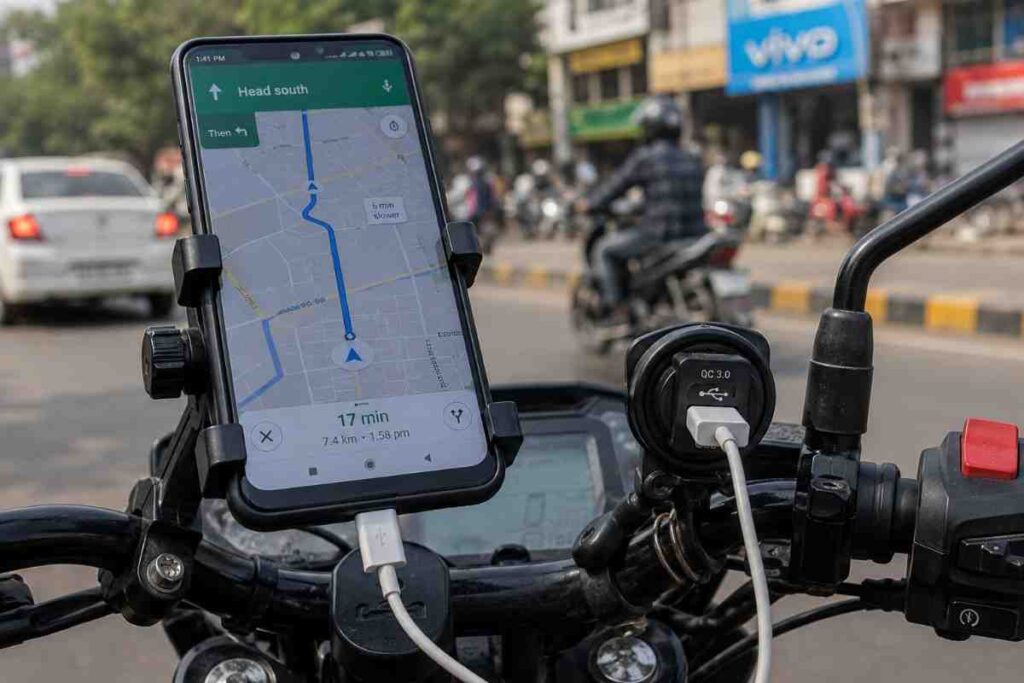
You need a high accuracy GPS phone for bike delivery that locks onto satellites quickly and holds signal in narrow lanes, basements, and under flyovers, which are common in Indian cities. Dual-band or multi-constellation GPS support (GPS plus GLONASS plus Galileo) noticeably improves accuracy compared to single-band chips.
You can check whether a phone supports dual-frequency GPS using Google’s official GnssStatus and location accuracy documentation, which explains how multi-band GNSS chips reduce location drift in dense urban areas. This kind of dual-frequency support can bring location accuracy down to roughly 30 centimetres in dense traffic and urban canyons, a major upgrade over standard single-band GPS still common on older budget phones.
Why Does Display Brightness Matter More Than People Think?
A dim screen is unreadable under direct Indian sunlight at 2 PM, and that is exactly when most lunch-rush deliveries happen. Look for a sunlight readable display phone for outdoor navigation with at least a 90Hz refresh rate and peak brightness of 600 nits or higher.
A large, fast-refresh display with strong sunlight readability cuts down navigation errors and eye strain during long shifts on a two-wheeler in Bengaluru traffic or behind the wheel in Delhi.
Buying Guide: Before You Buy a Phone for Delivery Work
Run through this checklist before buying any phone, regardless of brand or price.
| Requirement | Minimum Standard |
|---|---|
| Battery | 5,000mAh, 6,000mAh preferred for double shifts |
| Fast charging | At least 18W, ideally 25W or faster |
| RAM | 6GB or more |
| Storage | 128GB recommended |
| GPS | Dual-band GNSS support where the budget allows |
| Display | Bright, sunlight-readable, 90Hz or higher refresh rate |
| Connectivity | 5G support for faster app loading and order syncing |
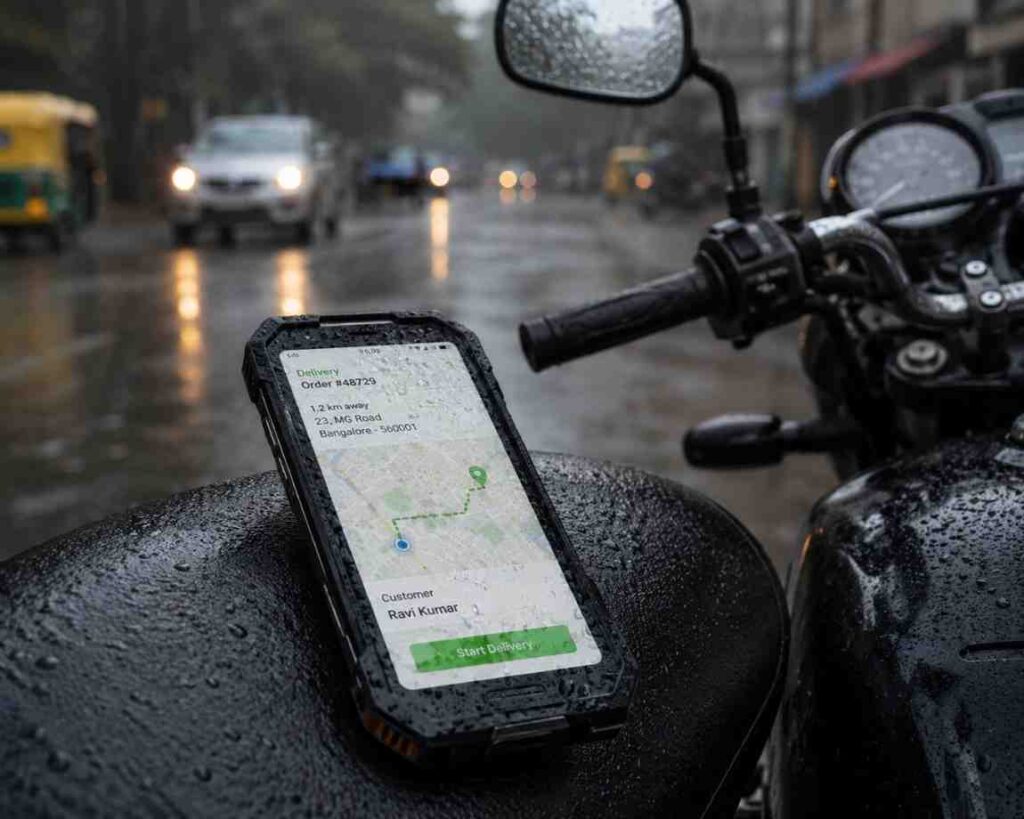
| Build | IP rating or rugged casing for monsoon-heavy routes |
Common Mistakes Delivery Riders Make
A surprising number of riders end up with the wrong phone simply because they shop the way a regular consumer would, not the way a working professional should.
- Buying phones with only 4,000mAh batteries that cannot survive a full shift
- Ignoring display brightness and struggling to read maps in direct sunlight
- Choosing phones with slow charging that cannot recover charge during short breaks
- Buying based only on camera quality instead of battery and GPS performance
- Settling for less than 128GB storage, which slows down over time as apps and caches grow
Avoiding these five mistakes alone solves most of the complaints riders post in online forums about phones failing mid-shift.
Top 10 Phones for Delivery Drivers in India in 2026
These picks balance battery, GPS, durability, and price, with options across every budget Indian riders actually shop in.
1. Samsung Galaxy M15 5G Prime Edition — Rating: 9.6/10
This is the budget marathon runner of the list and a strong pick if you are searching for the best battery phone under 12000 for delivery job. It comes with a massive 6,000 mAh battery pack which is ideal for 10 to 12 hour shifts, making it one of the most practical entry-level picks for new riders. Check live pricing and specs on the official Samsung India product page.
Why we recommend it: The Galaxy M15 is one of the few budget phones with a 6,000mAh battery, making it ideal for riders working 10 to 12 hour shifts without worrying about frequent charging. The AMOLED display also makes navigation text easier to read than the LCD panels common at this price point.
Pros
- Huge 6,000mAh battery built for full shifts
- Bright AMOLED display
- Reliable GPS lock in dense traffic
Cons
- Average 25W charging speed compared to flagship rivals
- Plastic build feels less premium
- Camera performance is average for the price
Ideal for: Swiggy riders, Zomato partners, and Blinkit riders doing long single shifts on a tight budget.
Not ideal if: You want flagship-level cameras or wireless charging.
2. Moto G35 5G — Rating: 9.4/10
A favourite among Swiggy and Zomato riders for its clean software and steady navigation lock. The phone is known for its clean UI and excellent GPS stability, which is vital for finding delivery locations, and it features a large 6.72 inch FHD+ 120Hz display along with a 5,000 mAh battery and 18W fast charging. It is currently priced close to ₹11,000, making it strong value for new riders. Full specs are listed on the official Motorola India site.
Why we recommend it: Few phones under ₹12,000 combine a 120Hz display with this level of GPS stability, which matters more for navigation accuracy than raw processing power.
Pros
- Excellent GPS stability for finding addresses
- Large 120Hz display for smooth map scrolling
- Clean, near-stock Android software
Cons
- Standard 18W charging is slower than rivals at this price
- LCD panel, not as vivid as AMOLED competitors
- Average low-light camera performance
Ideal for: Amazon Flex drivers and Porter drivers who need accurate addressing in dense residential areas.
Not ideal if: You play heavy games during breaks or need fast charging on tight schedules.
3. Poco M7 5G — Rating: 9.1/10
Built for riders who run delivery apps, Google Maps, and WhatsApp at the same time without slowdown. The Poco M7 5G is positioned for heavy duty performance for customers who run multiple apps simultaneously, which mirrors exactly how a rider’s home screen looks during a shift. See verified specs on the official Xiaomi/Poco India page.
Why we recommend it: Multitasking is where many budget phones struggle. The Poco M7 5G’s extra RAM headroom keeps three apps open simultaneously without forcing a restart mid-route.
Pros
- Strong multitasking performance
- Good value 5G connectivity
- Stable under heavy app switching
Cons
- Average display brightness outdoors
- Bulkier design than competitors
- Camera is a weak point
Ideal for: Riders managing multiple apps at once, including dispatch chat, navigation, and order tracking together.
Not ideal if: Outdoor display visibility is your top priority.
4. Google Pixel 9a — Rating: 9.7/10
The best non-rugged Android option if your budget stretches a bit further, and a strong answer to anyone searching for the longest battery life phone for delivery drivers. The Pixel 9a is the top non-rugged Android pick, with a 5,100 mAh battery, Tensor G4 chip, and seven years of OS and security updates, as detailed on Google’s official Pixel 9a page. That update timeline matters because delivery apps push frequent updates, and an outdated Android version eventually stops supporting them.
Why we recommend it: Seven years of software support means this phone stays compatible with delivery apps far longer than most budget options, which lowers the total cost of ownership over time.
Pros
- Longest software support window on this list
- Excellent GPS accuracy via Tensor chip
- Bright OLED display
Cons
- Higher upfront price than budget options
- Charging speed is average at 23W
- Limited availability through official channels in some cities
Ideal for: Riders planning to use one phone for several years without frequent upgrades.
Not ideal if: You need the absolute lowest upfront cost.
5. OnePlus Nord Series — Rating: 9.3/10
A strong battery-life pick that consistently outperforms its price segment. The OnePlus Nord delivers over 14 hours of continuous GPS and streaming endurance, with 45W or faster fast charging reaching 50 percent in around 30 minutes, which is ideal for a quick tea-break top-up. Full charging specs are listed on the official OnePlus India site.
Why we recommend it: Few phones recover charge as fast during a short break, which matters when a 10-minute stop is all the time a rider gets between orders.
Pros
- Very fast charging recovery
- Strong all-day battery endurance
- Smooth AMOLED display
Cons
- Mid-range price point compared to budget picks
- Software updates not as long-term as Pixel
- Build quality varies by exact model variant
Ideal for: Riders who get short breaks and need rapid charging rather than overnight charging only.
Not ideal if: You are working strictly on a sub-₹12,000 budget.
6. Samsung Galaxy XCover7 Pro — Rating: 9.2/10
If your work involves drops, rain, or rough handling, this rugged option is built for exactly that and ranks among the best rugged waterproof phone for delivery riders. The XCover7 Pro is the best mid-range rugged option, with a removable battery, Samsung Knox security, and long-term enterprise support. A removable battery is genuinely useful for riders doing back-to-back double shifts.
Why we recommend it: A removable battery is rare in 2026 phones, and it is a genuine advantage for riders working double shifts who can simply swap in a charged spare instead of waiting for a plug.
Pros
- Removable battery for instant swaps
- Military-grade drop and water resistance
- Enterprise-level security and support
Cons
- Higher price than standard mid-rangers
- Bulkier design due to rugged casing
- Average camera for the price
Ideal for: Riders in monsoon-heavy cities or rough terrain who need durability above all else.
Not ideal if: You want a slim, lightweight phone for daily comfort.
7. Blackview BV9300 Pro — Rating: 9.0/10
A rugged phone that does not ask you to sacrifice performance for durability. Rugged phones like the Blackview BV9300 Pro give multi-day battery life and military-grade drop protection at a much lower price than flagship iPhones. Good for riders in tier 2 and tier 3 cities with rougher roads.
Why we recommend it: A battery this large effectively removes daily charging anxiety altogether, which is rare even among rugged phones at this price.
Pros
- Massive multi-day battery capacity
- Strong drop and dust protection
- Affordable relative to other rugged options
Cons
- Heavier and bulkier than standard phones
- Display is LCD, not as vivid as AMOLED
- Software updates less frequent than major brands
Ideal for: Riders in tier 2 and tier 3 cities with rough roads and limited charging access.
Not ideal if: Phone weight and slim design matter to you.
8. Honor 70 — Rating: 9.3/10
A balanced mid-ranger with genuinely fast charging and dependable GPS lock. Dual-band GPS provides precise positioning that makes it easier to find correct entrances in complex courtyards, and 67W charging fills the 4,500 mAh battery in about 38 minutes. A short chai break is enough to top it up meaningfully.
Why we recommend it: The combination of dual-band GPS and ultra-fast 67W charging makes this one of the most efficient phones on this list for riders who cannot afford long charging downtime.
Pros
- Fastest charging speed on this list
- Dual-band GPS for precise positioning
- Bright, smooth 120Hz OLED display
Cons
- Smaller battery capacity than budget rivals
- Mid-range pricing, not a budget option
- Limited official service network in smaller cities
Ideal for: Riders who want to minimise charging time rather than maximise raw battery capacity.
Not ideal if: You prefer a single overnight charge over multiple short top-ups.
9. Apple iPhone 16 — Rating: 9.5/10
The best choice for riders who prefer iOS, particularly because many delivery platforms optimise their apps heavily for iPhone. Apple devices offer smooth performance and efficient power management, and full specifications are available on the official Apple India iPhone 16 page. The trade-off is price, so this fits experienced riders earning more consistently.
Why we recommend it: iOS power management is genuinely efficient, and many delivery and navigation apps run smoother and crash less often on iPhone than on budget Android devices.
Pros
- Smooth, reliable app performance
- Long-term software updates
- Strong build quality and resale value
Cons
- Highest price on this list
- Charging speed slower than Android rivals at this price
- No expandable storage
Ideal for: Experienced riders with consistent earnings who want long-term reliability and resale value.
Not ideal if: You are working on a tight starting budget.
10. Samsung Galaxy A55 — Rating: 9.2/10
A dependable middle-ground pick for riders who want strong performance without flagship pricing. The Galaxy A55 offers strong value for drivers who want good performance without spending flagship-level money, and it handles navigation and order-taking apps comfortably through a full shift.
Why we recommend it: It sits in a comfortable middle ground, offering AMOLED display quality and solid battery life without pushing into flagship pricing territory.
Pros
- AMOLED display at a mid-range price
- Balanced battery and performance
- Reliable GPS for daily navigation
Cons
- Charging speed is average at 25W
- Camera is good but not class-leading
- Price sits above true budget options
Ideal for: Riders who want a long-term mid-range phone without entering flagship pricing.
Not ideal if: You need the absolute cheapest option available.
How Can You Make Any Phone Last a Full Delivery Shift?
Even a great phone needs help surviving a 10 to 12 hour shift, so a few habits matter as much as hardware. Lower your screen brightness slightly when stationary, close background apps between orders, and switch on battery saver mode only when GPS accuracy is less critical, such as on familiar routes.
This advice on how to save battery during delivery shift is backed by Google’s Android battery optimisation guide, which confirms that screen brightness and background app activity are two of the biggest controllable drains on any smartphone.
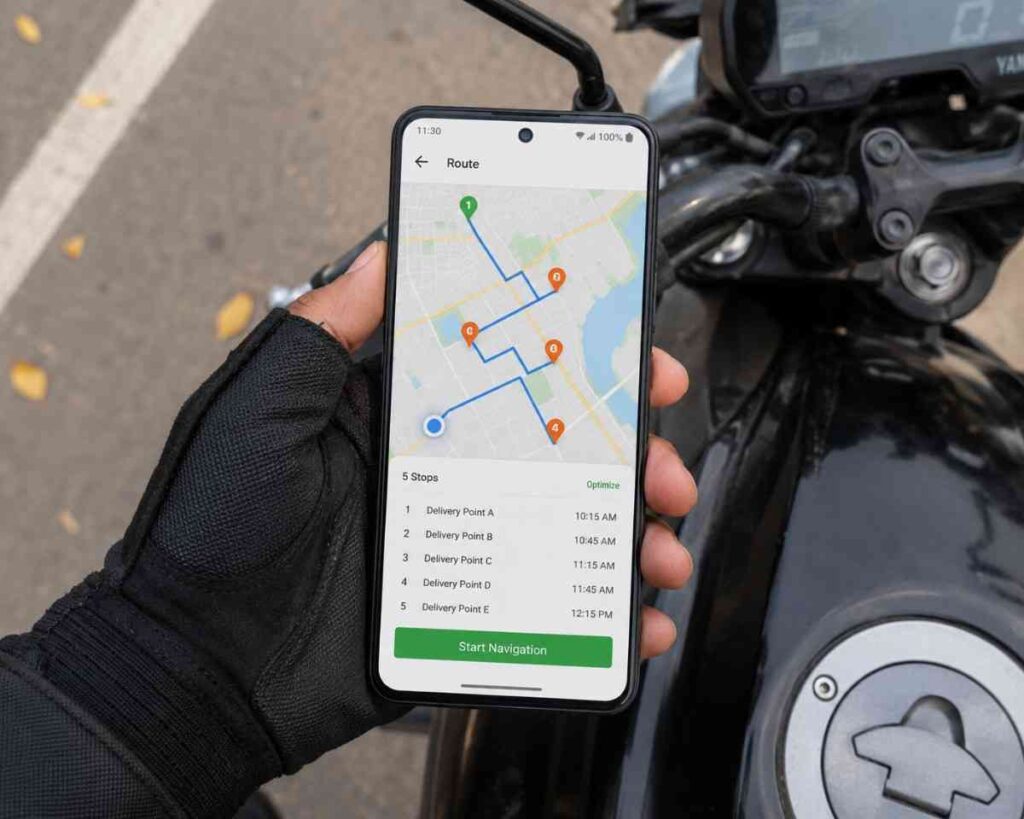
Beyond phone settings, three accessories make the biggest practical difference for Indian riders: a fast car or bike charger, a dashboard or handlebar mount for visibility, and a basic protective case for monsoon season.
Why Does This Matter More in India Than Anywhere Else?
India’s delivery workforce is enormous and growing fast, which raises the stakes on getting your device right. According to data reported in Eternal’s quarterly investor disclosures, Zomato’s parent company recorded nearly 8.94 lakh monthly active delivery partners, while Swiggy disclosed about 6.91 lakh average monthly transacting partners in its own filings, together engaging over 15 lakh delivery workers every month.
NITI Aayog’s official research on India’s gig and platform economy also projects this workforce will keep expanding sharply through 2030, reinforcing why a reliable delivery driver phone India 2026 is now considered essential work equipment rather than a personal accessory. Read the full projections on the NITI Aayog gig economy report page.
Earnings are also closely tied to consistency, not just hours logged. Average earnings per hour for a Zomato delivery partner stood at roughly ₹102 in 2025, up from ₹92 in 2024, a year-on-year increase of close to 11 percent. A dead phone during a peak slab is a direct hit on exactly this kind of hourly earning potential.
Which Phone Should You Actually Buy?
If you are new to delivery work and watching your budget closely, the Samsung Galaxy M15 5G Prime Edition or Moto G35 5G cover the basics without overspending. If you run multiple apps constantly and want more headroom, the Poco M7 5G or Google Pixel 9a are worth the upgrade.
For riders facing monsoon routes, rough roads, or frequent drops, the Samsung Galaxy XCover7 Pro or Blackview BV9300 Pro pay for themselves in durability alone.
There is no single best phone for every rider. The right pick depends on your shift length, your city’s terrain, and how much you are willing to spend on charging speed versus screen quality. What matters is checking these four things every time: battery capacity, GPS chipset quality, screen brightness, and RAM, before you buy.
Frequently Asked Questions
Which phone is best for Swiggy delivery?
The Samsung Galaxy M15 5G Prime Edition is the strongest all-round pick for Swiggy riders, offering a 6,000mAh battery and AMOLED display that handles full shifts comfortably within a budget price range.
Which phone is best for Zomato riders?
The Moto G35 5G is a popular choice among Zomato riders because of its excellent GPS stability, which the brand highlights as central to finding delivery locations accurately in dense neighbourhoods.
Is 5000mAh enough for delivery work?
Yes, 5,000mAh covers most single shifts under 10 hours, but riders working 10 to 12 hour double shifts are better served by 6,000mAh or higher to avoid a mid-shift charging stop.
Is AMOLED better than LCD for navigation?
AMOLED displays generally offer richer contrast and better outdoor visibility than standard LCD panels, which makes map text and turn directions easier to read in direct sunlight, though high-brightness LCDs can still perform well.
Is 5G necessary for delivery riders?
5G is not mandatory but is genuinely useful, since it loads maps and order details faster in areas with strong coverage, and most new phones in this price range now include it by default.
Which budget phone has the best GPS?
Among budget options, the Moto G35 5G and Poco M7 5G stand out for GPS stability, based on their manufacturer-reported navigation performance and dual-band positioning support.
Which phone charges the fastest?
The Honor 70 leads this list with 67W charging that fills its battery to a usable level in well under 40 minutes, followed closely by the OnePlus Nord series at 45W and above.
What is the best phone for delivery drivers in India under ₹15,000?
The Samsung Galaxy M15 5G Prime Edition and Moto G35 5G are the strongest picks under ₹15,000, both offering large batteries and stable GPS lock built for full-day shifts.
Is a rugged phone worth it for Indian delivery riders?
Yes, if you ride in monsoon-prone cities or on rough roads. Rugged phones trade some camera quality for drop and water resistance, which often matters more day to day.
Do iPhones work well for Zomato and Swiggy delivery?
Yes, iPhones run delivery apps smoothly and many platforms optimise heavily for iOS, but the higher price point makes them better suited to riders already earning consistently.
How many hours does a typical Indian delivery shift last?
Most full-time riders work between 10 and 12 hours per shift, though average working patterns vary widely across platforms and cities, as reflected in Eternal’s published worker activity data.
Which GPS feature should I check before buying a delivery phone?
Look for dual-band or multi-constellation GPS support (GPS, GLONASS, Galileo). This can be verified in the phone’s specification sheet or through Android’s official location and sensors documentation.
Read More:
Top 15 Best Upcoming Phone Launches in July 2026: Launch Date, Expected Price & Specifications
OnePlus Turbo 6X Unboxing and First Look: The Most Affordable OnePlus Phone Yet?