Best Mobile Phones for BTech Students (2026): Top Budget and Premium Picks
We compared dozens of smartphones across different price segments launched in India through 2026, and narrowed the list down to the best mobile phones for BTech students based on processor performance, battery life, software update support, pricing, and long-term value. Every phone below has been cross-checked against live Indian retail pricing as of July 2026.
Our methodology: We shortlisted every phone by comparing chipset performance, RAM and storage headroom, battery endurance, software update commitment, and real-world pricing in India, specifically through the lens of what an engineering student needs over a four-year degree. Camera quality and design were treated as secondary factors, not deciding ones.
India’s wireless subscriber base has crossed 1,294 million users as of May 2026, per the Telecom Regulatory Authority of India. At this scale, a phone is no longer “just a phone” for most students. It is a portable study tool, a coding practice device, and often the only computer between hostel and home.
BTech Student Buying Guide: Best Phone by Use Case
Not every student has the same priority. Use this quick-reference guide to jump straight to the phone that matches your specific need, then read the detailed breakdown below.
| Category | Recommended Phone | Why |
|---|---|---|
| Best Overall | POCO F7 | Flagship-level chipset at a mid-range price |
| Best Under Rs. 20,000 | OnePlus N6 5G | Strongest all-round balance in the budget segment |
| Best for Coding and Multitasking | OnePlus Nord 6 | Snapdragon 8s Gen 4 handles IDEs and heavy tab-switching without lag |
| Best Battery Life | OnePlus Nord 6 | 7,600mAh silicon-anode battery, easily two-day use |
| Best Gaming Phone | iQOO 15R | Snapdragon 8 Gen 5 with strong sustained thermal performance |
| Best Samsung Phone | Samsung Galaxy A37 | Longest software support commitment in this list |
| Best OnePlus Phone | OnePlus 13R | Best long-term value if budget allows Rs. 40,000+ |
| Best for Clean Software | Nothing Phone 4a | Minimal bloatware, fast updates, distinct design |
What Should a BTech Student Actually Look For?
A BTech student needs three things above everything else: a processor that survives multitasking, a battery that survives an eight-hour college day, and enough RAM to run coding apps alongside a dozen open browser tabs. Camera quality matters, but it should never be the deciding factor.
Storage is the next big consideration. Engineering coursework involves PDFs, recorded lectures, coding IDEs, and companion apps for tools like AutoCAD or MATLAB. Anything below 128GB will start feeling tight within a year.
Display and battery efficiency decide whether you survive back-to-back lectures without hunting for a charging point in the lab. A 120Hz AMOLED panel paired with a 5,000mAh-plus battery is now the realistic minimum, not a luxury feature.
How Much Should a BTech Student Spend?
Most students should budget between Rs. 15,000 and Rs. 30,000 for the best balance of performance and value. This range now includes AMOLED displays, 5G, and genuinely capable chipsets that were flagship-exclusive just three years ago.
If you can stretch further, the Rs. 30,000 to Rs. 50,000 segment gives you near-flagship performance that will comfortably outlast your entire degree. Anything above that is more about brand preference and camera quality than raw academic utility.
Quick Comparison: Performance, Battery, Display, and Updates
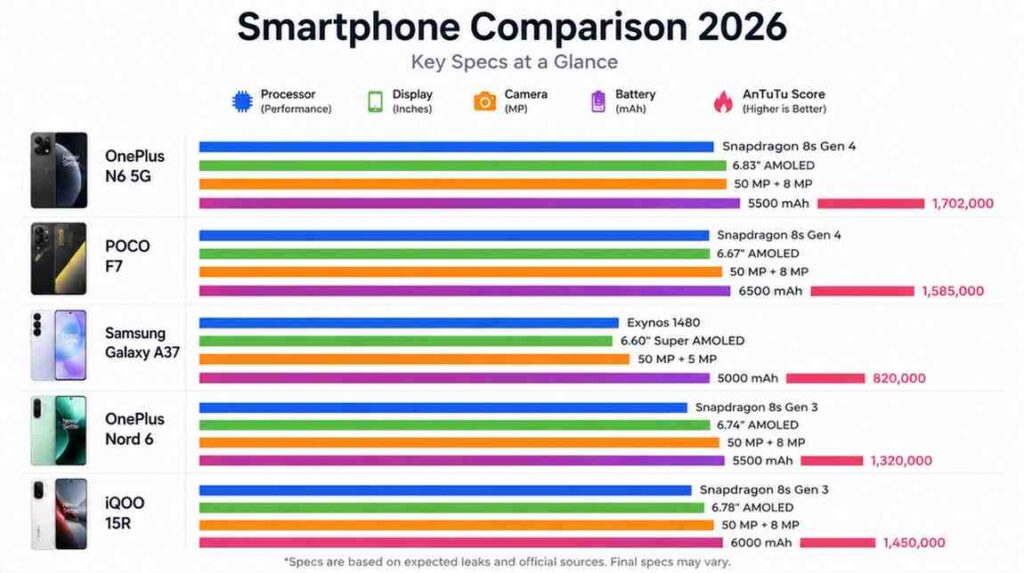
This side-by-side comparison rates the strongest phone in each price tier across the five factors that matter most for a BTech student. Ratings are out of 5, based on our comparison of specs, independent benchmark data, and pricing.
| Feature | OnePlus N6 5G | POCO F7 | Samsung Galaxy A37 | OnePlus Nord 6 | iQOO 15R |
|---|---|---|---|---|---|
| Performance | 3/5 | 5/5 | 3/5 | 4/5 | 5/5 |
| Battery | 5/5 | 4/5 | 4/5 | 5/5 | 5/5 |
| Display | 3/5 | 5/5 | 4/5 | 5/5 | 5/5 |
| Software Updates | 4/5 | 3/5 | 5/5 | 4/5 | 3/5 |
| Value for Money | 5/5 | 5/5 | 4/5 | 4/5 | 4/5 |
Best Budget Phones Under Rs. 20,000
These phones suit students whose main use is online classes, coding practice apps, WhatsApp groups, and moderate gaming between study sessions. This segment now delivers AMOLED displays and 5G as standard rather than as exceptions.
| Phone | Price (approx.) | Processor | Display | Battery |
|---|---|---|---|---|
| OnePlus N6 5G | Rs. 19,999–24,999 | Dimensity 6360 Apex | 120Hz LCD, 6.8-inch | 8,000mAh, 45W charging |
| Realme P4 | Rs. 17,000–19,000 | Dimensity 7400 Ultra | 144Hz FHD+ AMOLED | 5,500mAh+ |
| Redmi 15 5G | Rs. 12,000–14,000 | Snapdragon 6s Gen 3 | 144Hz 6.9-inch LCD | 7,000mAh, 33W charging |
| Samsung Galaxy M17 | Rs. 14,000–16,000 | Exynos-based chip | AMOLED | Day-long backup |
| Vivo T5x | Rs. 14,000–16,000 | Dimensity 7300 | 120Hz FHD+ LCD | 6,500mAh, 44W charging |
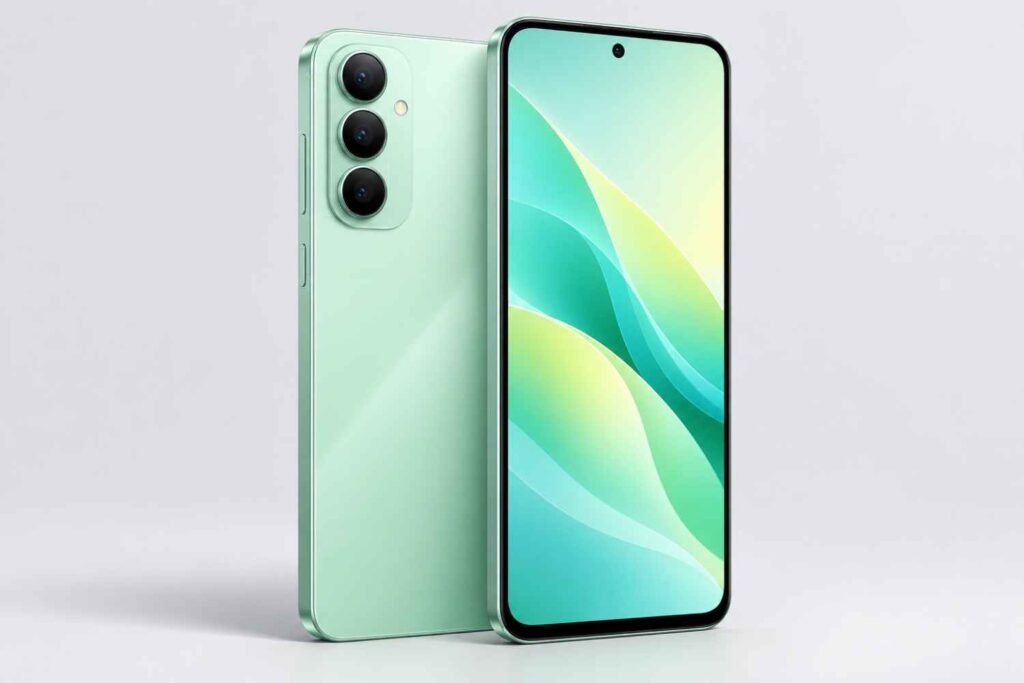
OnePlus N6 5G — Best Under Rs. 20,000
Performance: 3/5 | Battery: 5/5 | Camera: 3/5 | Software: 4/5 | Value: 5/5
Pros
- Massive 8,000mAh battery with a 7-year battery health guarantee from OnePlus
- Smooth 120Hz display for reading-heavy coursework
- Strong overall balance across performance, camera, and battery
Cons
- LCD panel, not AMOLED
- Dimensity 6360 Apex is built for endurance, not heavy gaming
Realme P4 — Best Budget AMOLED Pick
Performance: 4/5 | Battery: 3/5 | Camera: 3/5 | Software: 3/5 | Value: 4/5
Pros
- 144Hz AMOLED display, rare at this price
- Dimensity 7400 Ultra handles multitasking well
- Good build quality for the price
Cons
- Battery is smaller than direct rivals
- Software has some bloatware out of the box
Best Mid-Range Phones (Rs. 20,000 to Rs. 35,000)
This is the sweet spot for most engineering students because it adds a genuinely fast chipset that handles compiler-heavy apps and multitasking without lag, along with better build quality and longer software update promises.
| Phone | Price (approx.) | Processor | RAM/Storage | Battery |
|---|---|---|---|---|
| POCO F7 | Rs. 32,000–36,000 | Snapdragon 8s Gen 4 | Up to 12GB/256GB | Large battery, fast charging |
| OnePlus Nord CE 6 | Rs. 22,999–27,999 | Snapdragon 7s Gen 4 | 8GB/128GB+ | Balanced all-day use |
| Nothing Phone 4a | Rs. 28,000–32,000 | Snapdragon 7s Gen 4 | 8GB/128GB | 5,080mAh |
| Samsung Galaxy A37 | Rs. 25,000–36,000 | Exynos 1480 | 8GB/128GB | 5,000mAh, 45W charging |
POCO F7 — Best Overall Value
Performance: 5/5 | Battery: 4/5 | Camera: 3/5 | Software: 3/5 | Value: 5/5
Pros
- Snapdragon 8s Gen 4, the same chip found in phones costing Rs. 15,000 more
- Excellent sustained performance for coding apps and gaming
- Bright, smooth AMOLED display
Cons
- Camera performance is average for the segment
- No wireless charging
Samsung Galaxy A37 — Best Samsung Phone
Performance: 3/5 | Battery: 4/5 | Camera: 4/5 | Software: 5/5 | Value: 4/5
Pros
- Longest software update commitment in this list
- Reliable Super AMOLED display
- Trusted after-sales network across India
Cons
- Performance trails the POCO F7 and OnePlus Nord CE 6 in this range
- Charging speed is only moderate
Best Premium Phones (Rs. 35,000 and Above)
If you plan to use your phone for four to five years without an upgrade, or you’re already freelancing or building a coding portfolio on the side, spending more upfront saves money long-term. Premium phones in 2026 bring flagship chipsets that won’t feel outdated even in your final year.
| Phone | Price (approx.) | Processor | Battery | Notable Feature |
|---|---|---|---|---|
| OnePlus 13R | Rs. 40,000–45,000 | Snapdragon 8 Gen 3 | 6,000mAh | Dolby Vision display, telephoto camera |
| OnePlus Nord 6 | Rs. 38,000–45,000 | Snapdragon 8s Gen 4 | 7,600mAh silicon-anode | Best-in-class battery endurance |
| iQOO 15R | Rs. 44,999–52,999 | Snapdragon 8 Gen 5 | 7,600mAh, 100W charging | Gaming and thermal management |
| Nothing Phone 3a Pro | Rs. 30,000–35,000 | Snapdragon 7s Gen 3 | AMOLED display | Distinct design, clean OS |
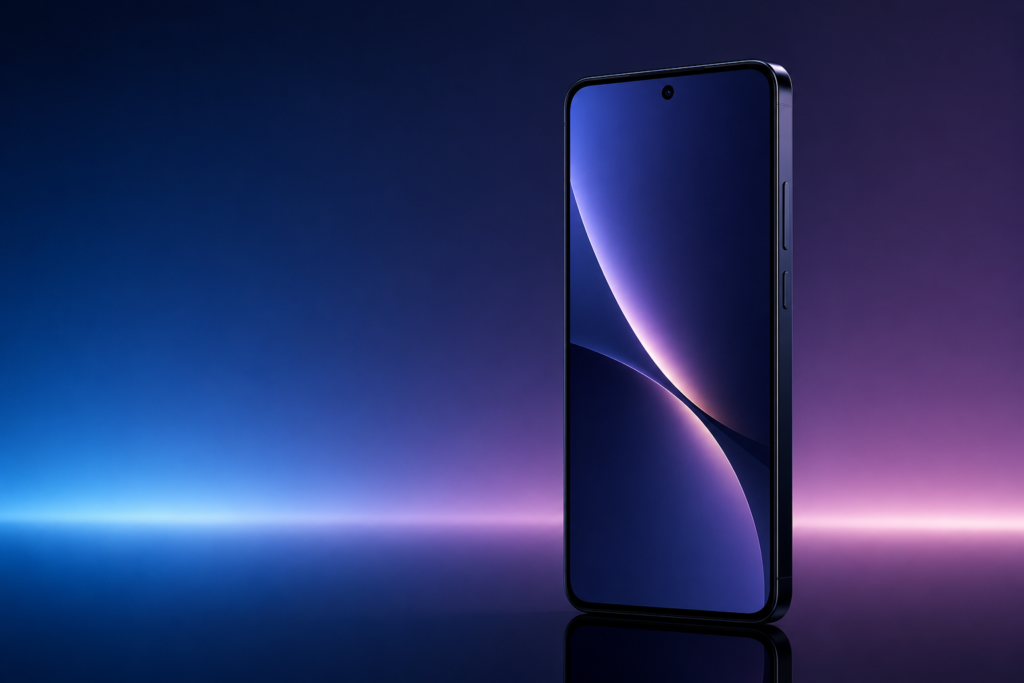
OnePlus Nord 6 — Best for Coding and Battery Life
Performance: 4/5 | Battery: 5/5 | Camera: 3/5 | Software: 4/5 | Value: 4/5
Pros
- 7,600mAh silicon-anode battery, among the largest in this price range
- Snapdragon 8s Gen 4 handles heavy multitasking with ease
- High refresh-rate AMOLED display and OxygenOS 16 with long update support
Cons
- No reverse charging
- Camera is decent but not a standout feature
iQOO 15R — Best Gaming Phone
Performance: 5/5 | Battery: 5/5 | Camera: 3/5 | Software: 3/5 | Value: 4/5
Pros
- Snapdragon 8 Gen 5, flagship-level performance
- Strong thermal management during long gaming sessions
- 100W fast charging, IP68 and IP69 durability ratings
Cons
- Higher entry price than most mid-range picks
- Camera setup is functional rather than exceptional
OnePlus 13R — Best OnePlus Phone Overall
Performance: 5/5 | Battery: 4/5 | Camera: 4/5 | Software: 4/5 | Value: 4/5
Pros
- Snapdragon 8 Gen 3 remains fast years after release
- Dolby Vision display, genuinely useful for video-based learning
- 50MP telephoto camera, a rarity at this price
Cons
- Flat-screen design may not appeal to everyone
- Charges slower than some direct rivals
Which Processor Should You Actually Care About?
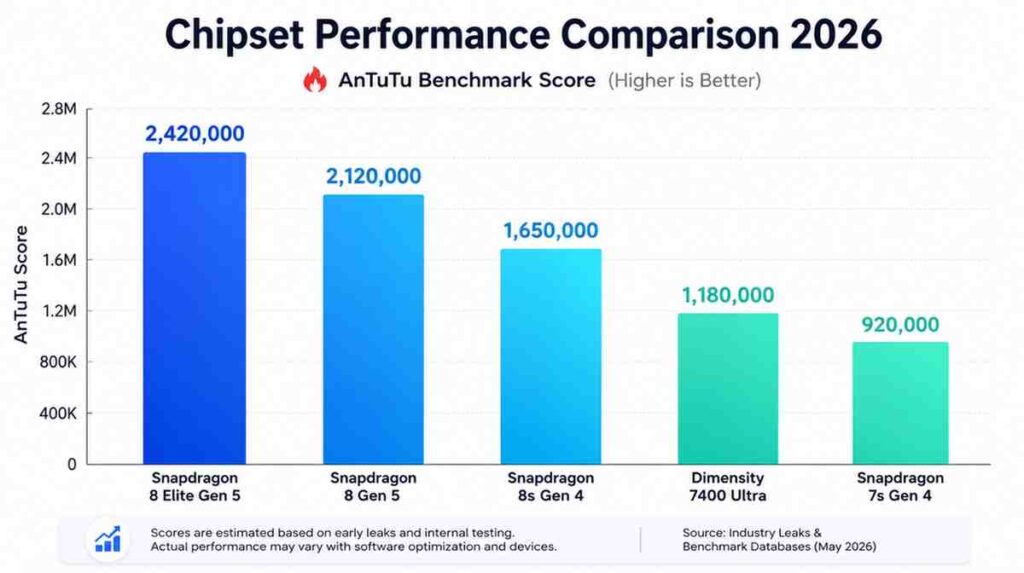
Focus on the chipset, not the marketing name, since it decides how well your phone handles coding apps, virtual labs, and multitasking years down the line. Our comparison of current chipsets places the Snapdragon 8 Elite Gen 5 at the top of the performance charts for 2026, with an AnTuTu score of over 39 lakh and Geekbench multi-core scores crossing 11,000, based on independent lab testing.
For mid-range budgets, the Snapdragon 8s Gen 4, Dimensity 7400 Ultra, and Snapdragon 7s Gen 4 offer the best real-world balance of speed and battery efficiency without pushing prices into flagship territory.
You can independently verify live benchmark scores on the official AnTuTu ranking page or the official Geekbench mobile benchmark chart before finalizing a purchase.
Should BTech Students Buy 5G Phones in 2026?
Yes, 5G is now a baseline expectation, not a premium add-on, even in India’s Rs. 12,000 segment. With India’s wireless subscriber base at 1,294.46 million as of May 2026 and telecom operators actively expanding 5G coverage, a 4G-only phone today limits usability well before your degree ends.
Nearly every phone in this guide, even in the budget segment, ships with 5G as standard, so this should no longer be a deciding factor between two similarly priced options.
How Much RAM and Storage Do You Really Need?
For comfortable multitasking between coding apps, PDFs, and browser tabs, 8GB RAM and 128GB storage is the realistic minimum in 2026. Anything lower forces constant storage management and background app closures.
If your coursework involves heavier applications like circuit simulators or 3D modeling apps, or you record lecture videos frequently, 12GB RAM and 256GB storage will give you a smoother four-year experience.
Final Verdict: Which Phone Should You Buy?
If your budget is tight, the OnePlus N6 5G or Realme P4 deliver the best all-round value under Rs. 20,000. For most engineering students, the POCO F7 or OnePlus Nord CE 6 in the Rs. 25,000–35,000 range offer the strongest long-term balance of speed, battery, and software support.
If you want a phone that outlasts your entire degree without feeling dated, the OnePlus 13R or iQOO 15R are worth the extra spend, particularly if gaming or heavy multitasking is part of your daily routine.
Whatever you choose, cross-check live prices on Amazon India, Flipkart, or the brand’s official website before buying, since India’s smartphone pricing shifts frequently around festive sales.