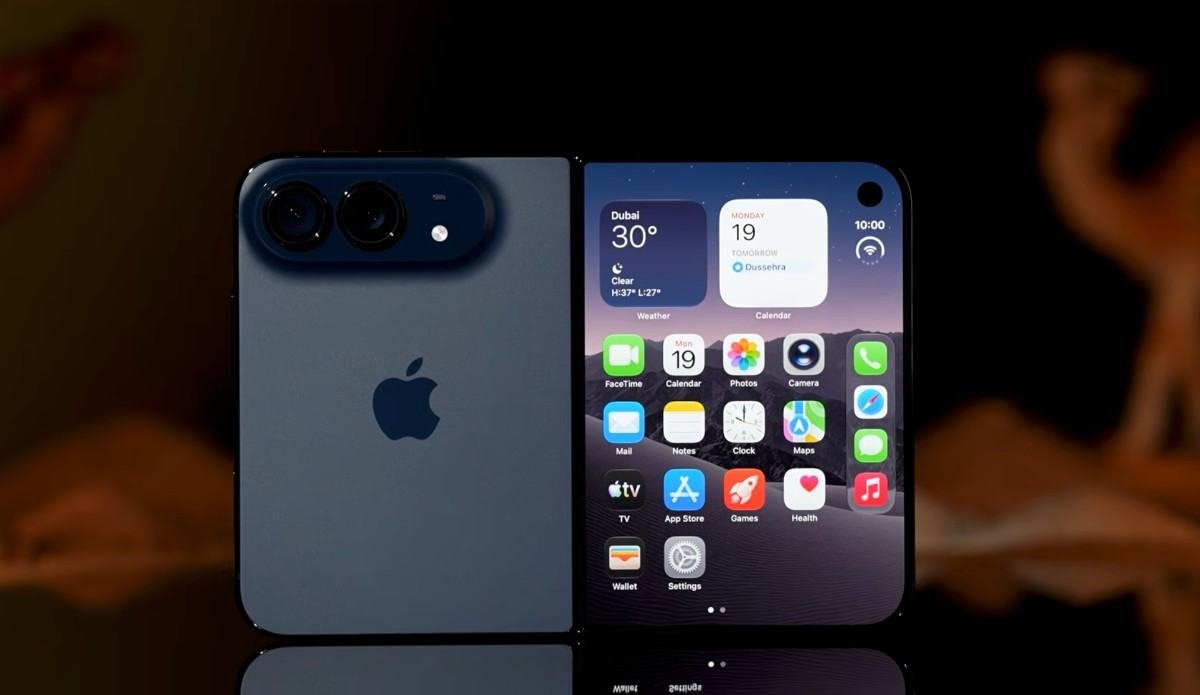
Quick Answer
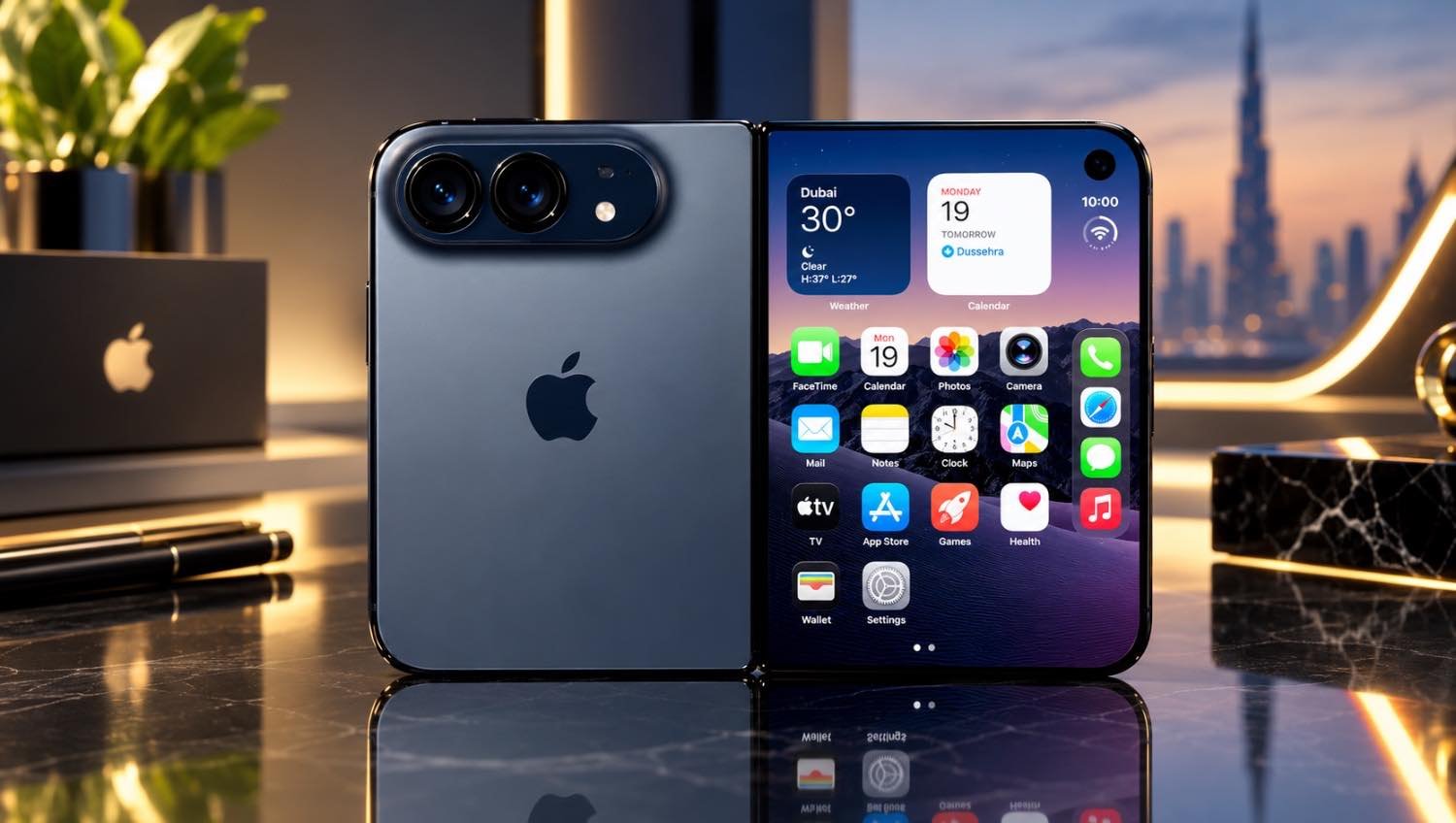
The iPhone Duo is Apple’s first foldable iPhone, priced from ₹2,99,900 in India. It has a 7.6-inch inner OLED and a 5.4-inch outer OLED, runs the A20 Pro chip, and supports Split View multitasking, Apple Pencil and iOS 27. It goes on sale on October 23, 2026.
Apple spent nearly two decades telling anyone who would listen that a foldable iPhone made no sense. Then, on September 9, 2026, it launched one anyway. The iPhone Duo is Apple’s first foldable, its most expensive iPhone ever, and — according to early reviews — the most interesting iPhone since the original.
It opens to a 7.6-inch OLED display that Apple says is 50% larger than the iPhone 18 Pro Max. It folds down to a 5.4-inch outer screen that covers about 90% of the surface area of an iPhone 18 Pro. It runs the same A20 Pro chip as the Pro Max, supports Split View multitasking, works with an Apple Pencil, and starts at ₹2,99,900 in India.
That price is the whole conversation. At nearly ₹3 lakh, the Duo is not competing with the Pro Max on value — it is creating a new tier above it. Whether that tier is worth it depends entirely on what you want a phone to do. This guide covers everything: price, full specifications, display, performance, camera, battery, software, Apple Pencil, eSIM, India availability, and the honest trade-offs you should know before spending this much money.
Sources include Engadget, Gizmodo, TechRepublic, The Times of India, CNBC TV18, and Apple India.
Why this matters right now: The iPhone Duo goes on sale in India on October 23, 2026 — right before Diwali. Pre-orders opened on October 16, and every store pick-up slot across Apple’s six India stores sold out on day one. Online delivery estimates have already slipped to January or February 2027. If you want one this year, you need to order soon.
Key Takeaways
- India price: ₹2,99,900 (256GB), ₹3,24,900 (512GB), ₹3,74,900 (1TB), ₹4,49,900 (2TB)
- Display: 7.6-inch inner OLED + 5.4-inch outer OLED, both 120Hz ProMotion and up to 3,000 nits
- Chip: A20 Pro with 6-core CPU, 7-core GPU, dual 16-core Neural Engine and a vapour chamber
- Cameras: 48MP main + 48MP ultra-wide, no telephoto lens, 12MP Center Stage front camera
- Battery: Up to 44 hours video on the outer screen, 31 hours on the inner screen
- Software: iOS 27 with Split View, saved app pairs and two windows of the same app
- Apple Pencil: USB-C Apple Pencil support arrives later in 2026, not at launch
- eSIM only: No physical SIM tray; Airtel, Jio and Vi supported in India
- Availability: On sale October 23, 2026; pre-order delivery slipping to early 2027
Quick Verdict: Is the iPhone Duo Worth ₹2.99 Lakh?
Strengths
- 7.6-inch inner OLED with nano-texture finish
- Genuine Split View multitasking
- Apple Pencil support on both screens
- A20 Pro performance with vapour chamber
- Premium titanium build and IP68
- Dual-battery architecture
- Strong resale value as a first-gen Apple product
Weaknesses
- No telephoto camera
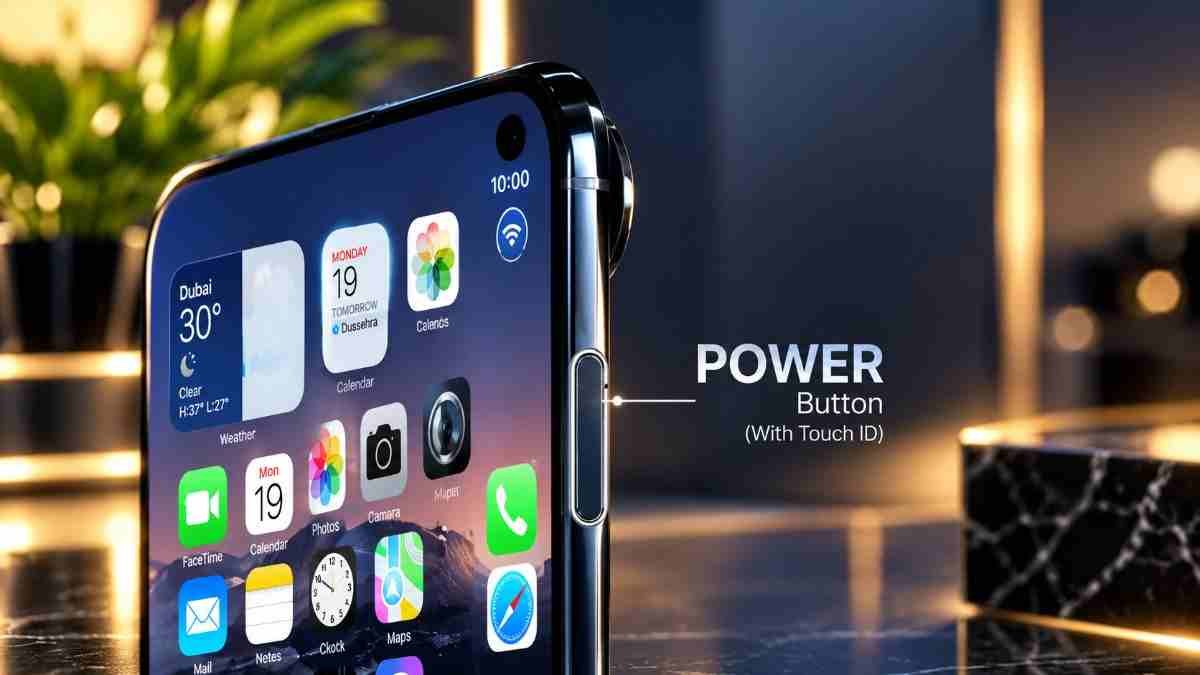
- Touch ID instead of Face ID
- Heaviest iPhone ever at 254g
- Apple Pencil support not available at launch
- eSIM-only may inconvenience some Indian users
- Very expensive compared to the Pro Max
- Supply constraints mean months-long waits
The one-line answer: The iPhone Duo is a genuinely excellent first-generation foldable. Engadget scored it 8.8/10 and Gizmodo called it the most interesting iPhone in years. But it is not a value purchase — it is a premium for a new form factor. Buy it if you want a tablet-sized screen in your pocket and will use multitasking, stand mode and the Apple Pencil. Skip it if camera quality, Face ID and battery life matter more than screen size.
iPhone Duo Price in India and Availability
The iPhone Duo is available in four storage variants in India. There is no 128GB option — Apple starts at 256GB and goes up to 2TB. That makes the entry price higher than some buyers might expect.
| Storage | India Price | US Price | Status |
|---|---|---|---|
| 256GB | ₹2,99,900 | $1,999 | On sale Oct 23 |
| 512GB | ₹3,24,900 | $2,199 | On sale Oct 23 |
| 1TB | ₹3,74,900 | $2,599 | On sale Oct 23 |
| 2TB | ₹4,49,900 | $3,199 | On sale Oct 23 |
India pricing from The Times of India, Zee News and Gadgets 360. US pricing from TechRepublic.
Launch Offers in India
- ✦ Instant cashback of up to ₹7,000 on eligible American Express, Axis Bank and ICICI Bank cards
- ✦ No-cost EMI for up to 12 months on eligible purchases
- ✦ Apple Trade In benefits of up to ₹81,500 on eligible devices
- ✦ Three months of Apple Music, Apple TV+ and Apple Arcade for eligible customers
Availability reality check: Every store pick-up slot across Apple’s six India stores sold out on the first day of pre-orders. Online delivery estimates have slipped to January 2027, with some buyers quoted early February. The Duo goes on sale October 23 as part of a first wave covering more than 70 countries, but supply is clearly tight.
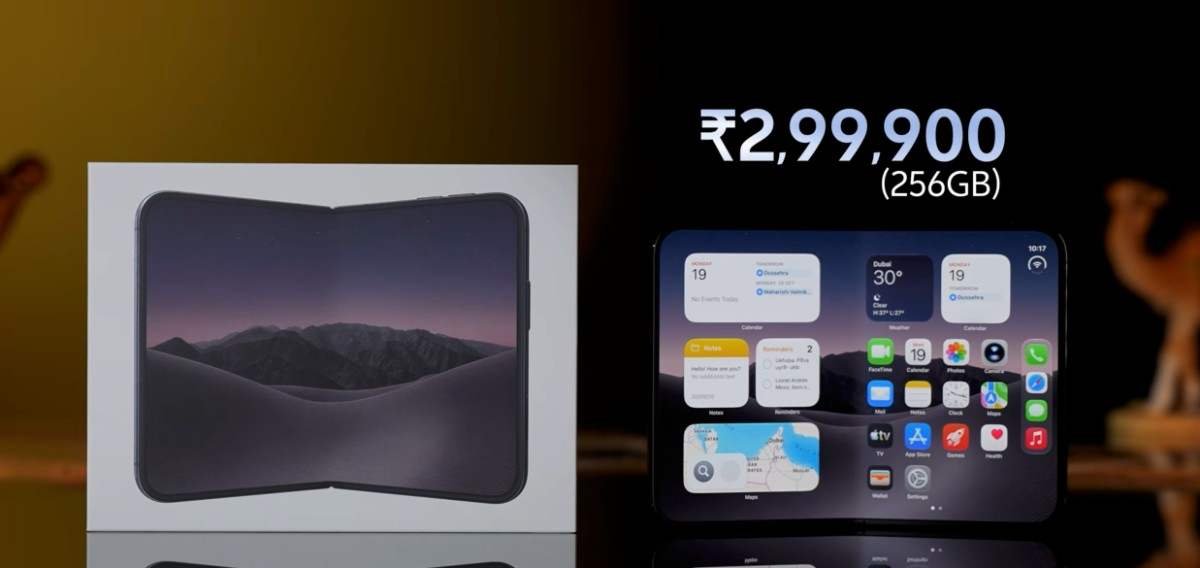
iPhone Duo: Full Specifications
Specifications from TechRepublic, Engadget, The Verge and Apple India.
Display & Design: A Passport-Sized Foldable
The iPhone Duo’s design is deliberately different from every other foldable on the market. Instead of a tablet-style book fold or a flip-phone clamshell, Apple went with a pocket-book shape — a straight spine on one side, rounded edges on the other, closer to a thick passport than a phone. India Today’s hands-on noted that it fits in the hand more naturally than expected when folded, though it may feel broad for people with small hands.
When open, the device is 5.2mm thick — the thinnest iPhone Apple has ever made. Closed, it measures 11.3mm and weighs 254 grams, making it the heaviest iPhone to date. That weight is the price of the titanium frame, the dual-battery system and the hinge mechanism.
The Two Screens
Both displays share the same 1.4:1 aspect ratio, which is why content scales smoothly when you move between them. The outer screen is a 5.4-inch OLED with 1398 × 2034 resolution and 460ppi. The inner screen is a 7.6-inch OLED with 1878 × 2670 resolution and 430ppi. Both support 120Hz ProMotion, Always-On and up to 3,000 nits of peak outdoor brightness.
The inner display has a nano-texture finish that reduces glare and makes the crease less visible. Engadget’s review described it as feeling almost like paper, with reflections well controlled. Gizmodo called the crease “barely visible” in normal use. There is a small divot if you run your finger across the middle, but it disappears when you look at the screen head-on.
Display details from Engadget, Gizmodo, India Today and The Verge.
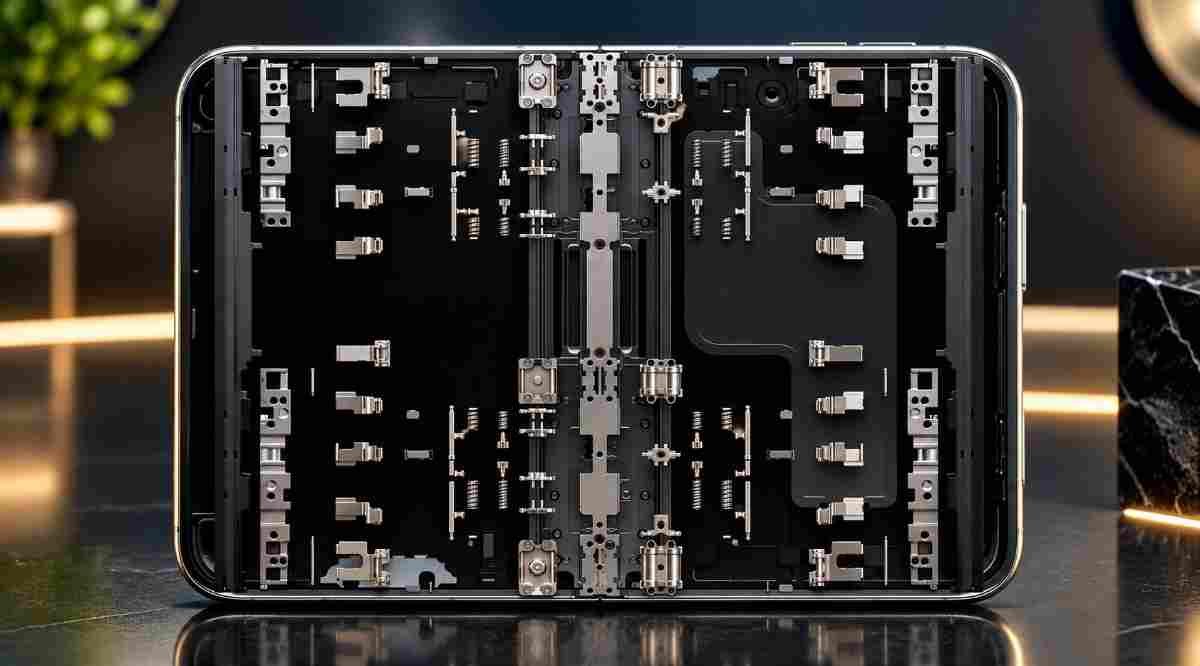
Durability: The Duo has a Grade 5 titanium frame, Ceramic Shield 2 on the front outer display, Ceramic Shield on the back, and an IP68 rating tested to 6 metres for 30 minutes. Apple says the hinge uses more than 100 components and holds the display flat when open. Independent long-term durability testing is still pending, but the on-paper credentials are stronger than most foldables.
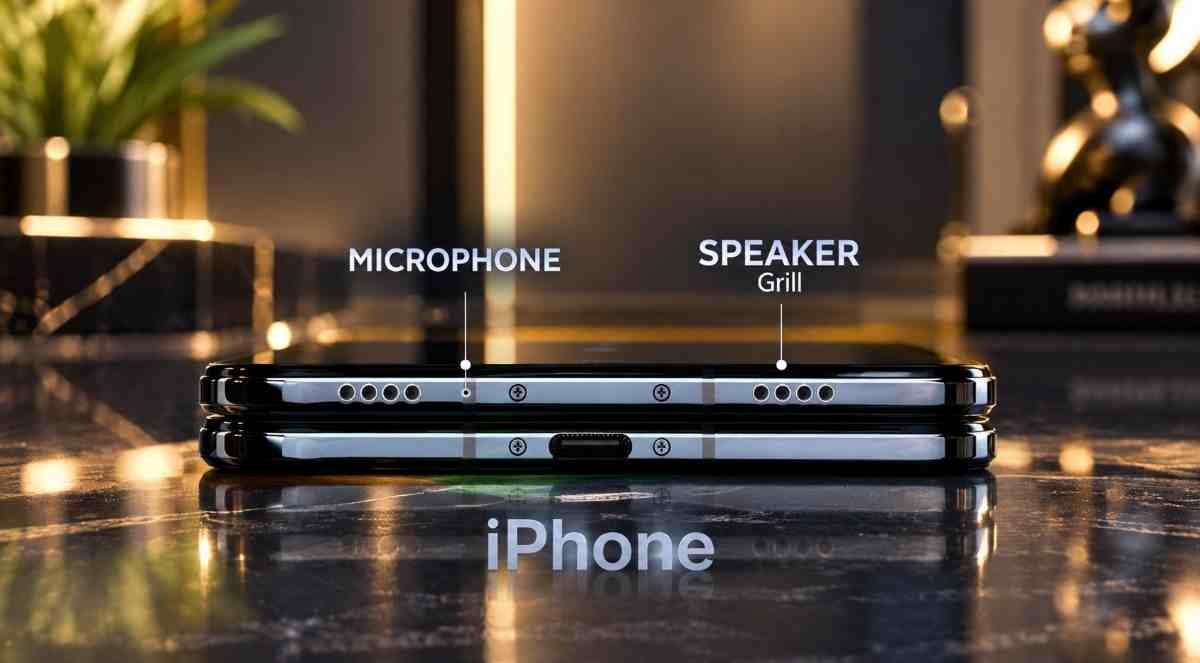
Performance: A20 Pro With a Vapour Chamber
The iPhone Duo runs the same A20 Pro chip as the iPhone 18 Pro and Pro Max. That means a 6-core CPU, a 7-core GPU and a dual 16-core Neural Engine. Apple claims the CPU is up to 20% faster than the A19 Pro and the GPU is up to 40% faster and more power efficient. The chip also has 50% more unified memory bandwidth than the previous generation.
What makes the Duo different is cooling. Apple has fitted a vapour chamber to manage heat inside the thinner foldable chassis. Engadget and Gizmodo both described performance as best-in-class, with no obvious throttling during extended use. Gizmodo specifically praised the “best-in-class performance from A20 Pro chip” in its review verdict.
For everyday tasks — browsing, messaging, photography, video — the Duo is as fast as any iPhone. For gaming, the larger inner display is genuinely better for touch controls and visibility, and the vapour chamber should keep frame rates steadier than a passively cooled phone. If you want benchmark numbers, the Duo will match the Pro Max almost exactly, because it is the same chip.
Performance details from TechRepublic and Gizmodo.
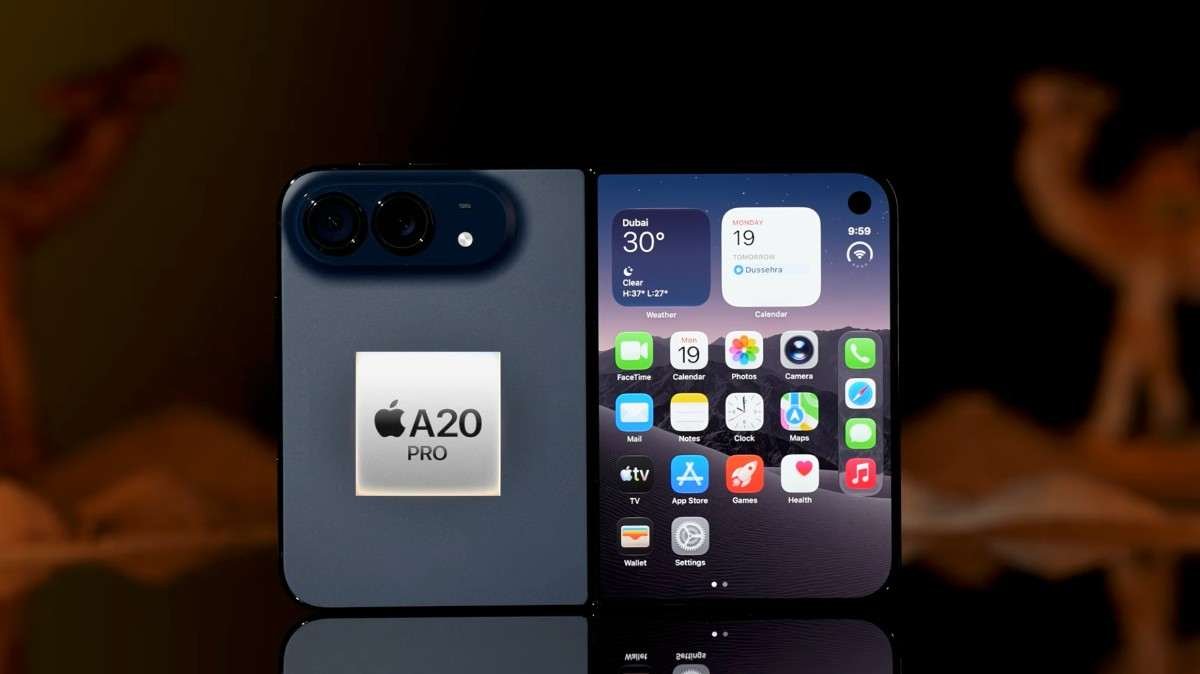
Camera: Dual 48MP, No Telephoto
This is where the Duo makes its biggest compromise. The camera system is good, but it is not Pro Max-good.
| Lens | iPhone Duo | iPhone 18 Pro Max |
|---|---|---|
| Main | 48MP Fusion · f/1.6 | 48MP · variable aperture f/1.48–f/4.0 |
| Ultra-wide | 48MP Fusion | 48MP |
| Telephoto | None | 48MP · 4x optical |
| Front | 12MP Center Stage + under-display FaceTime | 18MP Center Stage |
| Zoom | 2x optical-quality (crop) | 4x optical · 8x optical-quality |
| ProRAW / ProRes | No | Yes |
| LiDAR | No | Yes |
The Duo’s main camera is a 48MP Fusion sensor with an f/1.6 aperture. It supports 0.5x, 1x and 2x shooting, with the 2x mode working as an optical-quality crop rather than a true telephoto. The ultra-wide is also 48MP and supports macro photography. In good light, the results are excellent — sharp, detailed and consistent with Apple’s colour science.
The problem is reach. There is no dedicated telephoto lens, which means anything beyond 2x is digital zoom. Engadget noted that this makes the Duo a poor choice for concertgoers, nature photographers or anyone used to the Pro Max’s 4x optical zoom. The Duo also lacks the Pro Max’s variable aperture, LiDAR scanner, ProRAW photos, ProRes video and Apple Log 2. If you care about camera versatility, the Pro Max is clearly better.
Foldable Camera Tricks
What the Duo lacks in hardware, it partly makes up for in software built around the folding form factor:
- ✦ Duo Preview: Shows a live preview on the outer screen so the person being photographed can see the shot
- ✦ Smart Take: Uses on-device AI to recognise when subjects are posing and automatically captures the photo
- ✦ Rear-camera selfies: Use the 48MP main camera for selfies and frame the shot on the outer display
- ✦ Dual-camera FaceTime: Use both inner and outer cameras at the same time during video calls
Camera details from TechRepublic, Engadget, heise online and CNBC TV18.
Battery & Charging: Two Cells, Three Ratings
The Duo uses a dual-battery architecture — one cell in each half of the phone, managed by software as a single unit. That is a clever engineering solution to the space constraints of a foldable, and it delivers battery life that is competitive with the Pro Max, depending on which screen you use.
| Usage | Rated Video Playback |
|---|---|
| Outer display only | Up to 44 hours |
| Inner display only | Up to 31 hours |
| Both screens equally | Up to 24 hours |
In practice, the outer-display figure is the one most people will experience day to day, because the Duo is designed to be used closed for quick tasks. That 44-hour rating is essentially the same as the iPhone 18 Pro Max’s 45-hour rating. When you open the phone and use the big screen, battery life drops significantly — which is the trade-off of a 7.6-inch display.
Charging
The Duo supports 60W wired charging, reaching 50% in about 20 minutes with a compatible adapter. Wireless charging is 25W MagSafe or Qi2, reaching 50% in about 30 minutes. That is slightly slower than the Pro Max’s wired charging, but the wireless speed is competitive. There is no charger in the box, as with all modern iPhones.
Battery and charging details from MacObserver, Yahoo Tech and Apple India.
iOS 27 & Multitasking: The Real Reason to Buy
The hardware is impressive, but the software is what makes the Duo feel like a new kind of device rather than just a big iPhone. iOS 27 has been redesigned around the foldable form factor, with features that simply do not exist on any other iPhone.
Split View
This is the headline feature. For the first time on an iPhone, you can run two apps side by side on the inner display. You can also open two windows of the same app — for example, two Safari windows — and keep Siri visible alongside another app. You can save app pairs so your favourite combinations launch together the next time you open the phone.
Stand Mode and Desk Mode
Fold the Duo into a V-shape and it stands on its own. That enables hands-free FaceTime calls, video watching without a stand, and an always-on desk mode that turns the phone into a clock or photo frame when propped up. These are small features individually, but together they change where and how you use the phone.
Adaptive Interface
iOS 27 automatically adapts as the phone is opened, closed or used at different angles. The home screen, app layouts and controls shift to suit the available screen space. Apple has also added a redesigned Dynamic Island for the outer display and a Call Context widget that surfaces relevant information during calls.
Software details from TechRepublic, MacRumors, PCMag and MacObserver.
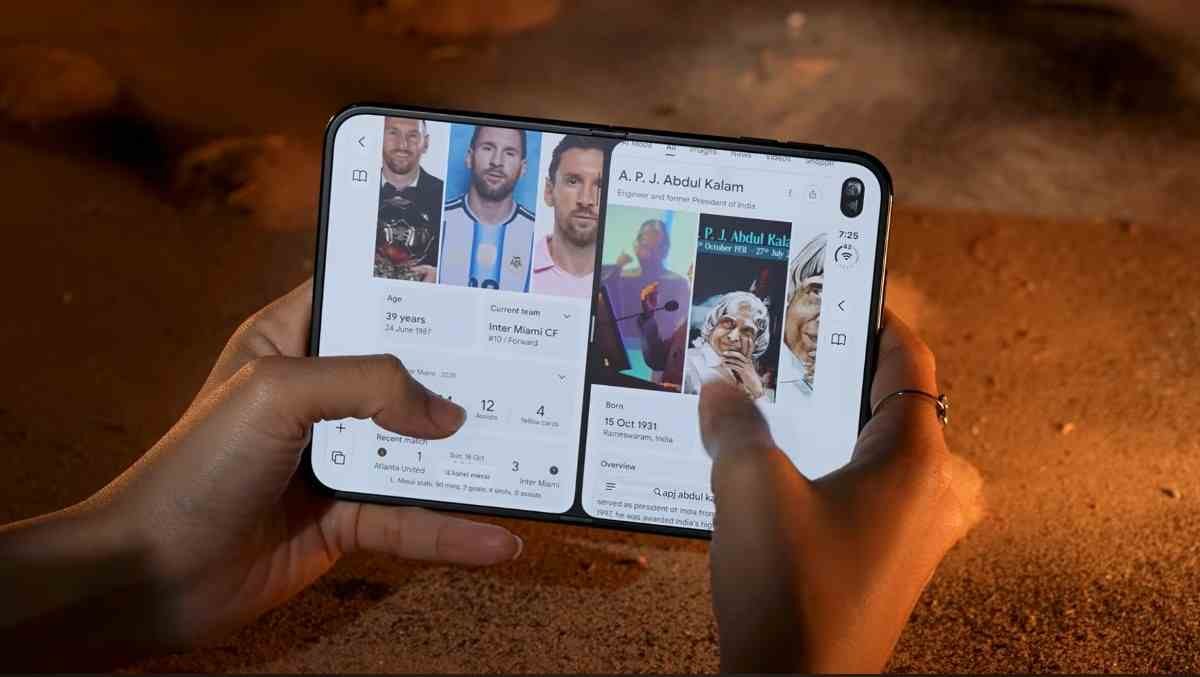
The caveat: Not every app is optimised for the inner display yet. Engadget noted that “a lot of apps still need fine-tuning to look their best” on the Duo. Apple’s own apps work well, but third-party developers will need time to catch up. If you rely on a specific app for work, check whether it supports the Duo’s screen sizes before buying.
Apple Pencil & eSIM: Two Important Details
Apple Pencil Support
The iPhone Duo is the first iPhone to support an Apple Pencil. The USB-C Apple Pencil will work on both the inner and outer displays for notes, sketches and markup. That makes the Duo a genuine notebook replacement for light use — not an iPad replacement, but far more capable than any iPhone before it.
There is a catch: Apple Pencil support is not available at launch. Apple says it is coming later in 2026, without a specific date. If you are buying the Duo specifically for stylus input, you will need to wait for a software update.
eSIM Only
The Duo has no physical SIM tray. It is eSIM-only worldwide, including in India. Apple lists Airtel, Jio and Vi as supported networks. You can store eight or more eSIMs and keep two active at once. If you travel frequently and rely on buying local physical SIMs, this is a genuine inconvenience — you will need to use eSIM roaming or switch to an eSIM-compatible local plan.
Details from Business Today, iClarified, CNBC TV18 and Digital Trends.
Honest Trade-offs: What You Give Up for the Fold
A ₹3 lakh phone should be judged on what it does not do as much as what it does. Here are the compromises, sourced from independent reviews, that you should know about before buying.
| Feature | iPhone Duo | iPhone 18 Pro Max |
|---|---|---|
| Authentication | Touch ID (side button) | Face ID |
| Telephoto camera | None | 4x optical |
| Variable aperture | No | Yes |
| LiDAR | No | Yes |
| ProRAW / ProRes | No | Yes |
| Battery (video) | 44h outer / 31h inner | 45h |
| Weight | 254g | 249g |
| Price | ₹2,99,900 | ₹1,79,900 |
| Apple Pencil | Yes (later in 2026) | No |
| Foldable screen | 7.6-inch inner | No |
The Pro Max is not a compromised device. It is the most polished slab phone Apple has ever made, and it costs ₹1.2 lakh less. The Duo is a premium for a new form factor, not a straight upgrade. If you buy it expecting Pro Max camera quality, you will be disappointed. If you buy it for the screen and the multitasking, you will not be.
Should You Buy the iPhone Duo?
Buy It If:
- You want a tablet-sized screen in your pocket
- You will actually use Split View multitasking
- Apple Pencil support for notes and sketches appeals to you
- You watch a lot of video and want a bigger canvas
- You are comfortable spending ₹3 lakh on a phone
- You want the most interesting iPhone Apple has made in years
Skip It If:
- Camera quality is your top priority
- You rely on Face ID
- You need the longest possible battery life
- You want a lighter, more pocketable phone
- You are not willing to spend ₹3 lakh
- You need a physical SIM for travel
The practical move: Go to an Apple Store and use one before you buy. India Today’s quick review made exactly this point — “even if you know everything about the Duo, it will surprise you” when you hold it. The foldable experience is difficult to judge from specs alone. If you cannot get to a store, wait for more long-term reviews before spending ₹3 lakh on a first-generation product.
Frequently Asked Questions
The iPhone Duo starts at ₹2,99,900 for the 256GB model in India. The 512GB variant costs ₹3,24,900, the 1TB variant is ₹3,74,900, and the 2TB variant is ₹4,49,900.
Pre-orders opened on October 16, 2026, and the iPhone Duo goes on sale in India on October 23, 2026, as part of a first wave covering more than 70 countries and regions.
The iPhone Duo has a 7.6-inch Super Retina XDR OLED inner display with 1878 x 2670 resolution and 430 ppi, plus a 5.4-inch Super Retina XDR OLED outer display with 1398 x 2034 resolution and 460 ppi. Both support 120Hz ProMotion, Always-On and up to 3,000 nits peak outdoor brightness.
The iPhone Duo is powered by Apple’s A20 Pro chip with a six-core CPU, seven-core GPU and dual 16-core Neural Engine. Apple claims the CPU is up to 20% faster than the A19 Pro and the GPU is up to 40% faster. It uses a vapour chamber for cooling.
The iPhone Duo has a dual rear camera system: a 48MP Fusion Main camera and a 48MP Fusion Ultra Wide camera. It has a 12MP Center Stage front camera and an under-display FaceTime camera. There is no dedicated telephoto lens.
Apple rates the iPhone Duo for up to 44 hours of video playback on the outer display, up to 31 hours on the inner display, and up to 24 hours when both screens are used equally. It supports 60W wired charging and 25W MagSafe/Qi2 wireless charging.
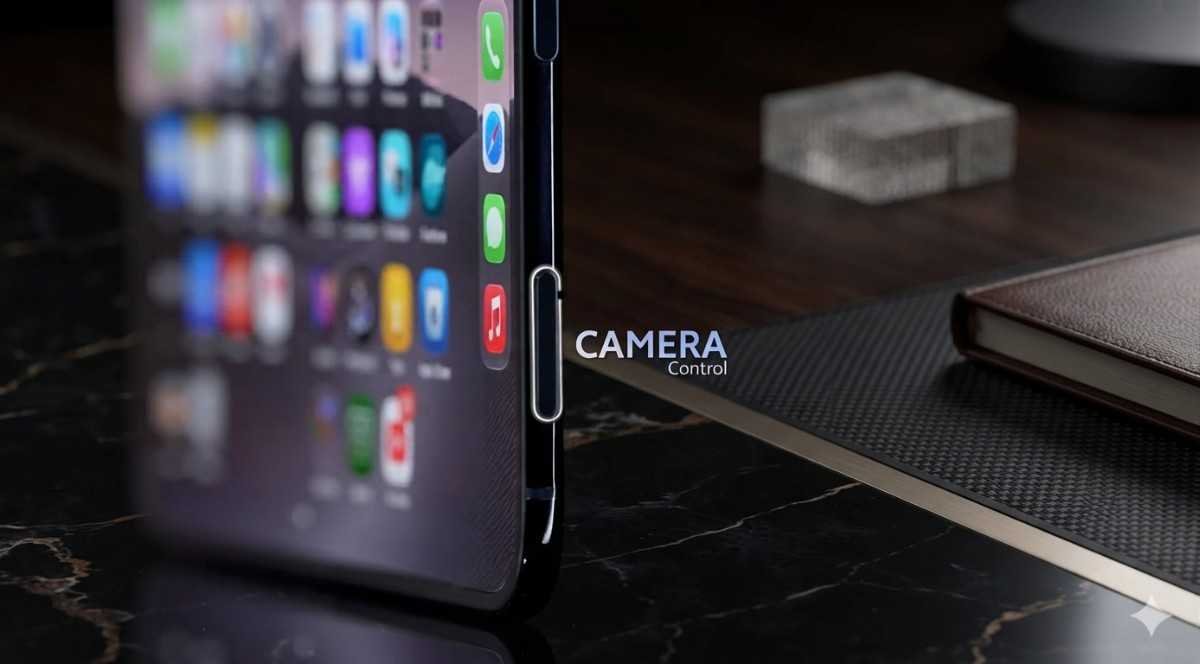
No. The iPhone Duo uses Touch ID integrated into the side button instead of Face ID. It also lacks a customizable Action button but retains a Camera Control button.
Yes. Apple has confirmed that the USB-C Apple Pencil will work on both the inner and outer displays for notes, sketches and markup. Support is scheduled to arrive later in 2026, not at launch.
Yes. The iPhone Duo is eSIM-only worldwide, with no physical SIM tray. In India, Apple lists Airtel, Jio and Vi as supported networks. You can store eight or more eSIMs and keep two active at once.
Yes. The iPhone Duo carries an IP68 rating for dust and water resistance, tested to a maximum depth of 6 metres for up to 30 minutes. It has a Grade 5 titanium frame, Ceramic Shield 2 on the front outer display and Ceramic Shield on the back.
The iPhone Duo is available in two finishes: Star White and Night Sky.
It depends on how you use your phone. The iPhone Duo offers a 7.6-inch foldable screen, Split View multitasking, stand mode and Apple Pencil support for about ₹1.2 lakh more. The iPhone 18 Pro Max has a better camera system with a dedicated telephoto lens, Face ID, slightly better battery life and a lighter body for significantly less money. Buy the Duo for the screen and form factor; buy the Pro Max for camera quality and value.
Final Thoughts
The iPhone Duo is the most ambitious iPhone Apple has ever shipped. A 7.6-inch foldable OLED, a titanium frame, the A20 Pro chip, Split View multitasking, Apple Pencil support and a dual-battery system — these are not small additions. They represent a genuine attempt to rethink what an iPhone can be, and by most early accounts, Apple has pulled it off.
But this is a first-generation product at a first-generation price. The lack of a telephoto camera, the absence of Face ID, the 254g weight and the eSIM-only design are real compromises. The ₹2,99,900 starting price puts it firmly in luxury territory, and the supply constraints mean you may wait months if you order now.
If you want the biggest screen, the most flexible device and the newest form factor Apple has ever made, the Duo is worth it. If you want the best camera, the safest long-term purchase and the best value, the iPhone 18 Pro Max remains the smarter buy. Either way, go and use one in a store before you decide. This is not a phone you should buy from a spec sheet alone.
Found This Guide Helpful?
Explore more iPhone guides, India pricing breakdowns and buying advice on PhonePrice360.
Explore Apple GuidesRead More: