
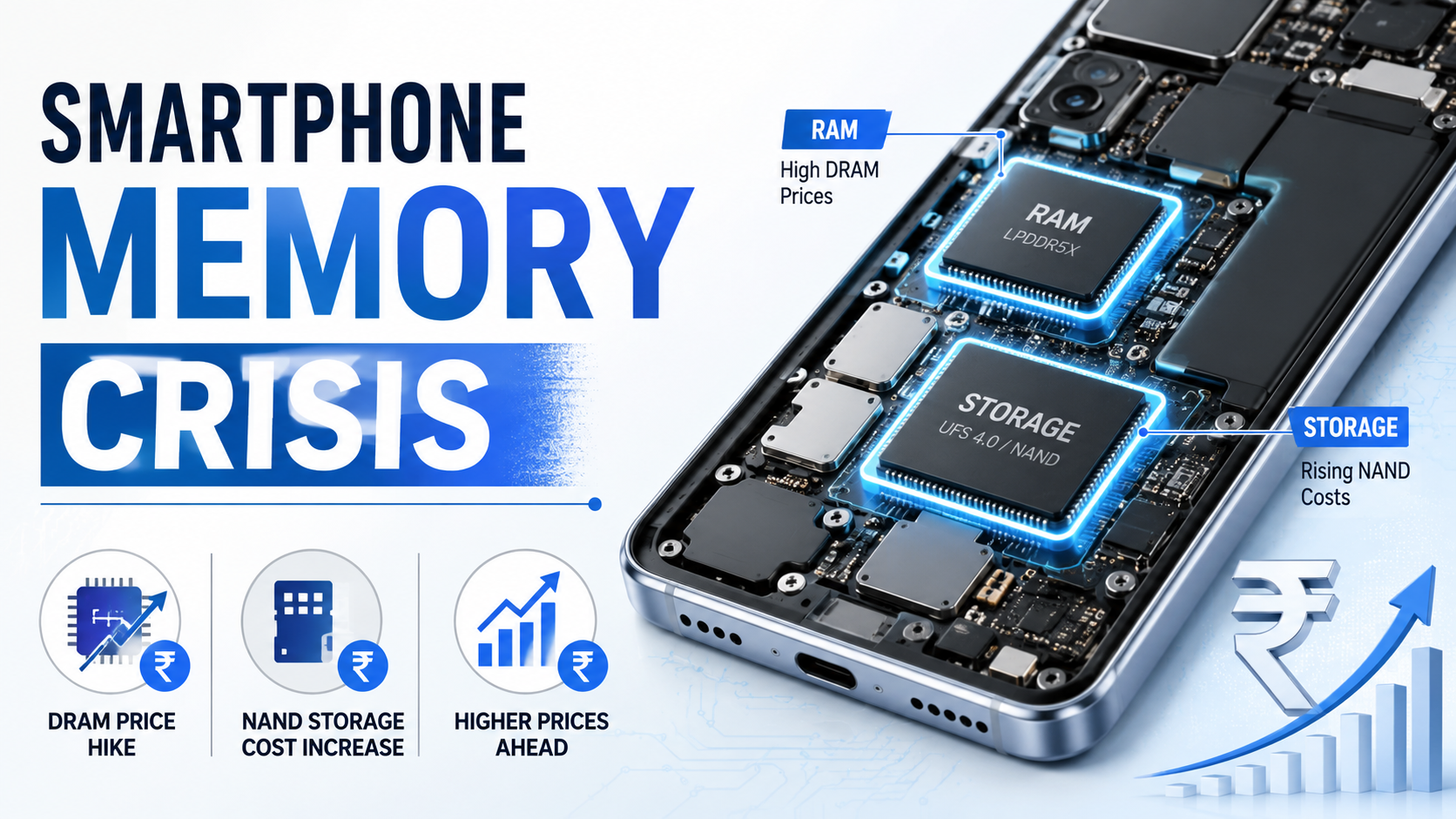
Why smartphone prices are rising in 2026 is one of the biggest questions for buyers right now. The simple answer is that RAM, storage, DRAM, and NAND flash costs are increasing because AI data centers are consuming huge memory supply. This global memory crisis is forcing smartphone brands to raise prices, reduce specifications, or push EMI offers harder.Another reason why smartphone prices are rising in 2026 is that memory has become one of the most expensive parts of modern phones. RAM and storage are no longer cheap upgrades for brands.
Why Smartphone Prices Are Rising in 2026
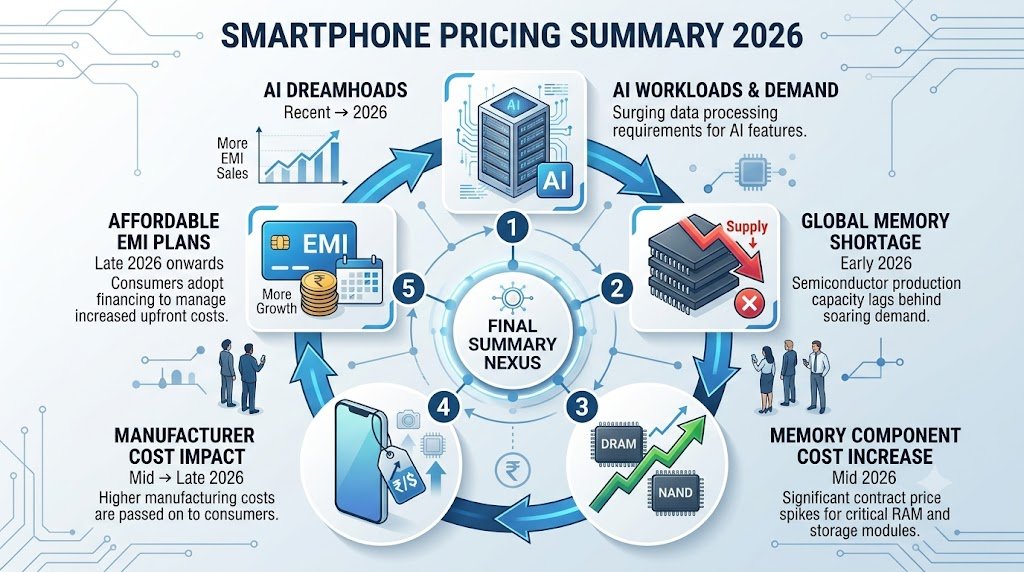
Smartphone prices are rising in 2026 because RAM and storage chips have become much more expensive. The biggest reason is the global memory shortage caused by AI data-center demand, tight DRAM supply, and rising NAND flash prices.
For buyers, this means one simple thing: the same phone specs now cost brands more than before.
For years, smartphone buyers enjoyed a beautiful upgrade cycle. Every year, phones became faster, storage became bigger, RAM increased, cameras improved, and prices stayed almost the same.
That cycle is breaking in 2026.
The reason is not only inflation, import duties, or premium branding. The real pressure is inside the phone — RAM and internal storage.
RAM uses DRAM memory. Internal storage uses NAND flash memory. These two components are now under heavy global pressure because the same memory supply is also needed by AI servers, laptops, SSDs, cloud companies, and enterprise data centers.
According to TrendForce, conventional DRAM contract prices were expected to rise by 58–63% quarter-on-quarter in Q2 2026, while NAND Flash contract prices were expected to rise by 70–75% quarter-on-quarter. That is not a small increase. That is a serious shock for every device maker.
This is why brands are now changing their pricing strategy. Some phones are launching at higher prices. Some are arriving with lower RAM or storage than expected. Some brands are pushing EMI and exchange offers more aggressively. Some budget phones may even get delayed or canceled.
If you regularly follow smartphone pricing on Phone Price 360’s phone price list, you may notice that the gap between budget, mid-range, and premium phones is becoming more sensitive than before.
In simple words, 2026 is the year when memory became one of the biggest reasons behind smartphone price hikes.
What is the RAM and memory crisis in 2026?
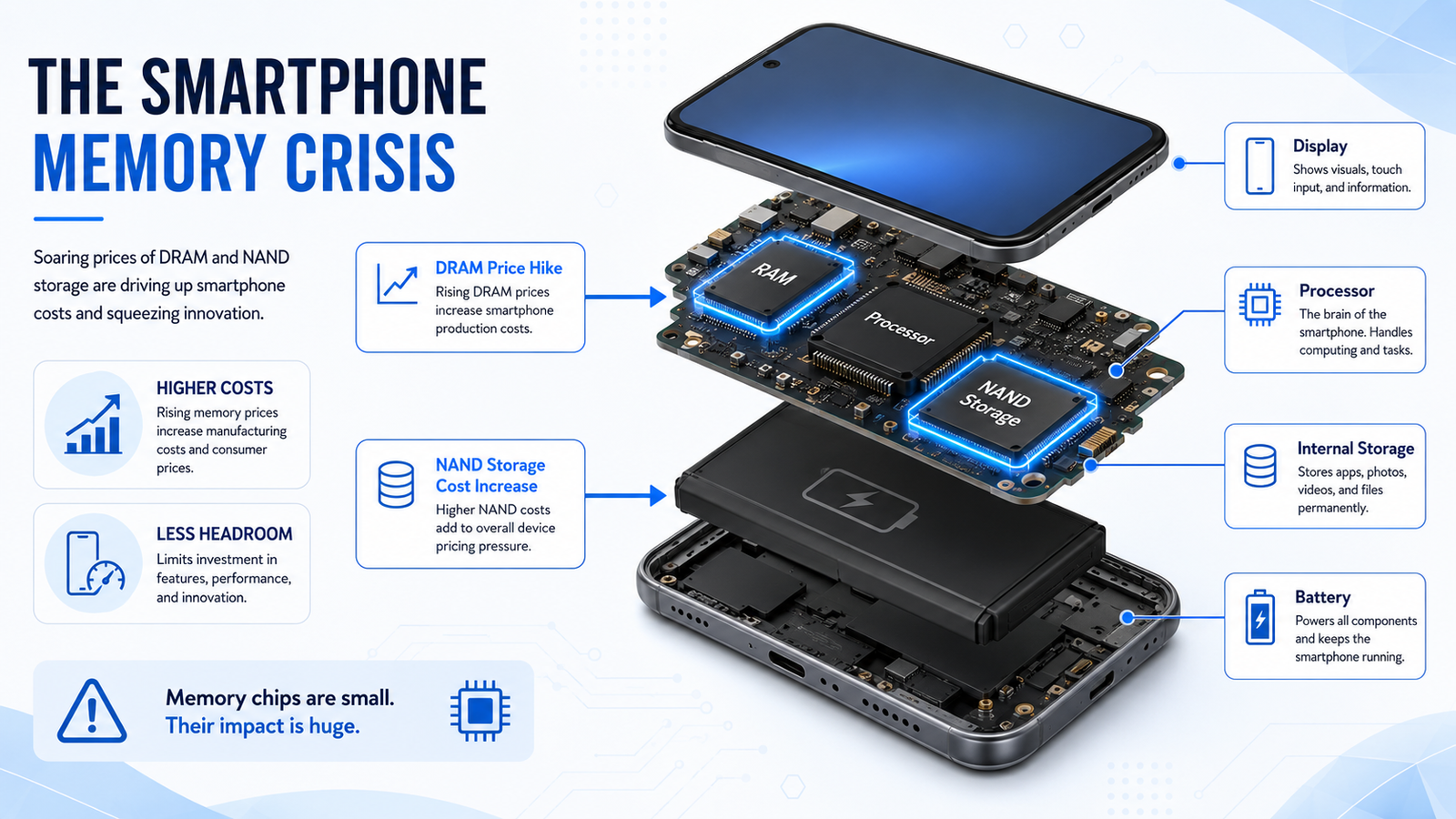
To understand why smartphone prices are rising in 2026, buyers need to understand the role of DRAM and NAND flash. DRAM controls phone RAM, while NAND flash controls internal storage. The RAM and memory crisis is a global shortage and price surge of DRAM and NAND flash chips. These chips are used in smartphones, laptops, SSDs, servers, AI systems, gaming devices, and many other electronics.
Smartphones are affected because every modern phone needs RAM for performance and NAND storage for apps, photos, videos, and system data.
According to IDC, the global semiconductor ecosystem entered an unprecedented memory shortage in late 2025, with effects expected to continue into 2026 and possibly beyond. IDC says AI data-center demand is outpacing supply and forcing memory makers to prioritize high-margin memory products.
This is important because memory makers such as Samsung, SK Hynix, and Micron do not have unlimited factory capacity.
They must decide where to allocate production. In 2026, a lot of that capacity is moving toward AI-related memory such as HBM, high-capacity DDR5, server DRAM, and enterprise SSD storage.
That leaves less supply for normal consumer electronics like smartphones and laptops.
A smartphone brand that wants to launch a ₹15,000 or ₹25,000 phone now has to fight for memory supply in a market where AI companies are placing huge orders.
That sounds unfair, but it is how supply chains work.
AI servers generate massive business value, so cloud companies can pay more for memory. Smartphone brands, especially budget-focused brands, cannot always match that pricing without hurting margins.
So the memory crisis is not just a technical issue. It is a business issue, pricing issue, and consumer affordability issue.
Why does AI data-center demand affect phone prices?
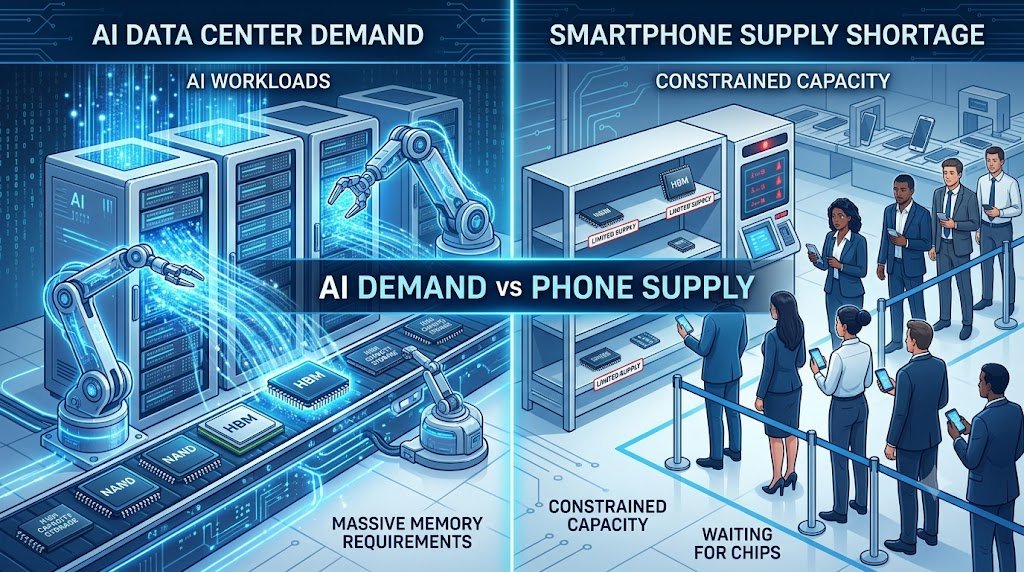
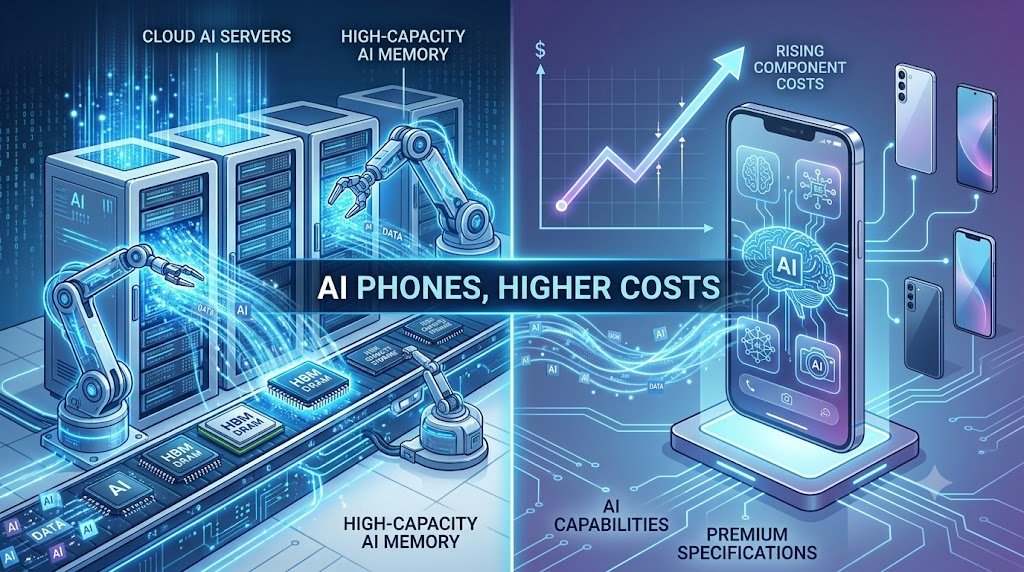
AI demand is a major reason why smartphone prices are rising in 2026. Data centers are buying huge amounts of high-performance memory, leaving less supply for consumer devices. AI data centers affect phone prices because they consume massive amounts of memory. When AI companies buy more memory for servers, less supply remains for consumer devices like phones.
That pushes RAM and storage prices upward across the entire electronics market.
AI models need powerful GPUs, but GPUs alone are not enough. They also need high-bandwidth memory, server DRAM, storage, and fast data movement. That is why AI infrastructure has become one of the biggest drivers of memory demand.
IDC explains that memory manufacturers are shifting production away from conventional DRAM and NAND used in smartphones and PCs toward higher-margin AI and server memory products. This creates a “zero-sum” situation: capacity used for AI memory is capacity not available for consumer products.
That is why your next phone may become more expensive even if you never use AI features.
A student buying a budget 5G phone, a creator buying a camera phone, and a gamer buying a performance phone are all indirectly affected by AI data-center demand.
This is the funny part. Phone brands are marketing “AI phones” everywhere, but the AI boom is also making phones costlier.
So yes, AI is helping smartphones become smarter.
It is also helping smartphone bills become scarier.
How do RAM and storage prices affect smartphone pricing?
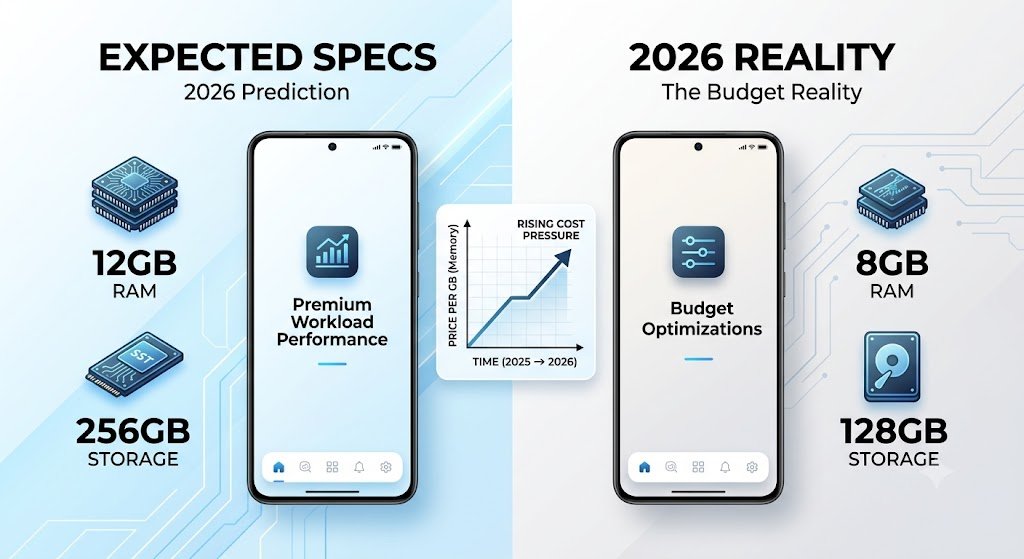
RAM and storage directly affect smartphone pricing because they are core hardware components. When DRAM and NAND prices rise, the total bill of materials increases.
Brands then have only three options: increase the price, reduce specs, or reduce profit margins.
Most brands do not like the third option.
This is especially true for budget and mid-range smartphones. These phones already operate on tight margins. A small component cost increase can quickly damage profitability.
IDC says memory can represent around 15–20% of the bill of materials for a mid-range smartphone. For flagship phones, it can represent around 10–15%. That means memory is not a tiny background cost. It is one of the most important parts of the phone’s hardware cost structure.
This is why a RAM price hike hurts the ₹15,000 to ₹35,000 segment more than ultra-premium flagships.
A ₹1,20,000 flagship has more room to absorb cost pressure because it already includes premium display panels, flagship processors, advanced cameras, wireless charging, expensive materials, and higher brand margins.
A ₹17,000 phone does not have that luxury.
If memory cost rises sharply, the brand may have to reduce something else. That could mean:
- 6GB RAM instead of 8GB RAM
- 128GB storage instead of 256GB storage
- slower storage type
- weaker ultrawide camera
- older processor
- plastic body
- fewer launch discounts
- higher launch price
This is why comparing phones in 2026 will require more attention. A phone may look similar from the outside, but the internal compromise may be hidden in RAM, storage type, or variant pricing.
If you are buying under a tight budget, check guides like Best Phone Under ₹20,000 in India before choosing only by brand name.
Why are budget and mid-range phones affected the most?
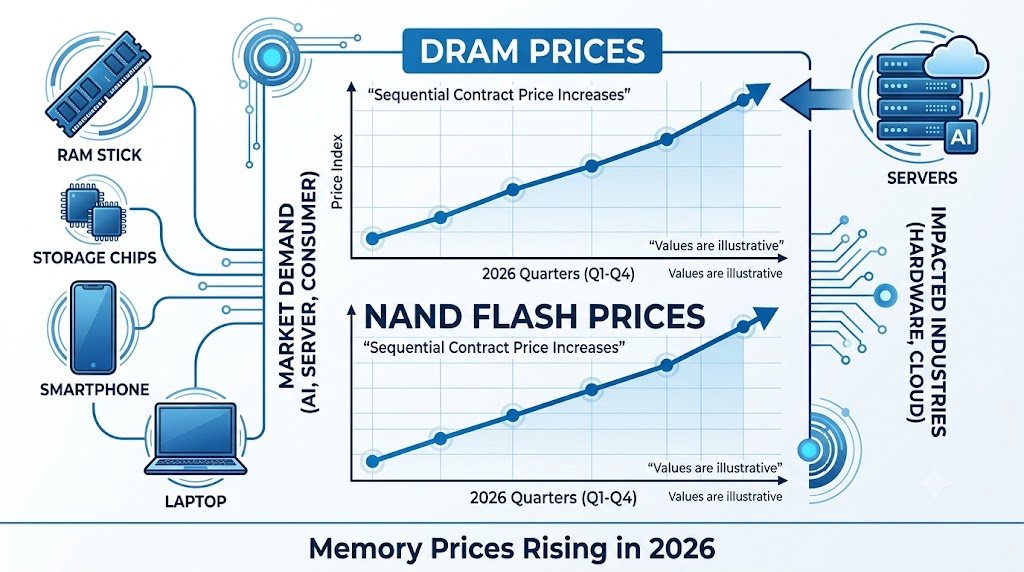
Budget and mid-range phones are affected the most because they have lower profit margins. Even a small RAM or storage cost increase can force brands to change pricing.
This is why the ₹10,000 to ₹35,000 smartphone market may feel less generous in 2026.
In previous years, brands competed by offering more specs at lower prices. You could find phones with big batteries, AMOLED displays, 8GB RAM, 128GB storage, fast charging, and decent processors in affordable price bands.
That competition still exists, but it is becoming harder.
When memory was cheaper, brands could use higher RAM and storage as a selling point. In 2026, the same strategy is expensive.
A phone that was supposed to launch with 12GB RAM may launch with 8GB RAM. A phone that was expected to start with 256GB storage may start with 128GB storage. A budget phone that was supposed to be aggressive may become “good but not exciting.”
This does not mean all budget phones will become bad.
It means buyers need to be more careful.
For students, this matters a lot. Many students want a phone that can handle online classes, PDFs, YouTube, WhatsApp, Google Meet, light gaming, and daily multitasking. If RAM and storage get reduced, long-term performance may suffer.
That is why a practical buying guide like Best Smartphones for Students in India 2026 becomes more important in 2026.
Students should not buy only the cheapest 5G phone. They should check RAM, storage, processor, battery, software updates, and service support together.
How is the memory crisis changing India’s smartphone market?
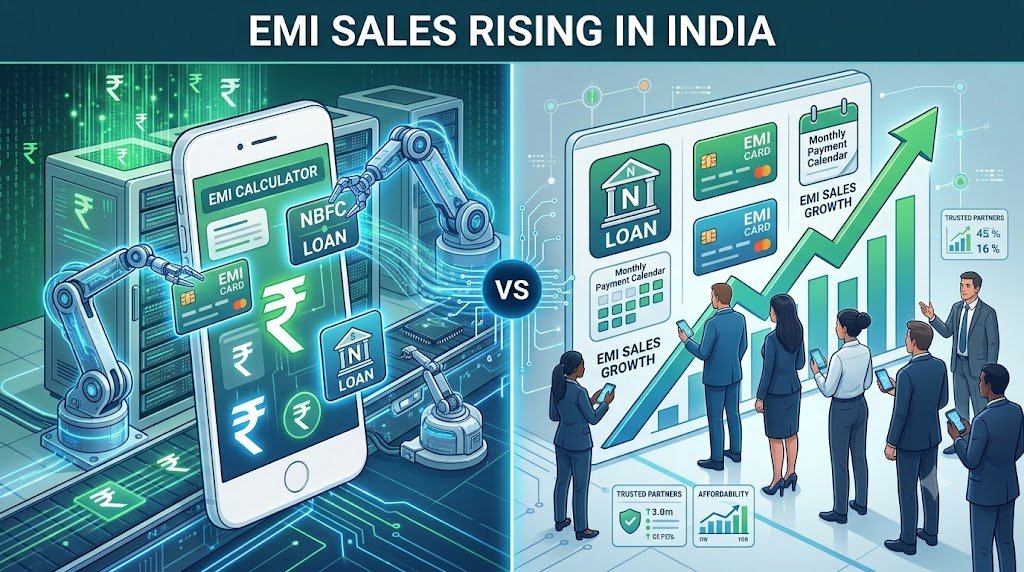
India is one of the most price-sensitive smartphone markets, so rising smartphone prices directly affect buying behavior. More buyers are now using EMI, NBFC loans, card EMI, exchange offers, and affordability schemes.
In 2026, financing is becoming one of the biggest tools brands use to protect sales.
According to Counterpoint Research, smartphone financing is expected to account for 42% of India’s smartphone sales in 2026, up from 35% in 2025.
Moneycontrol, citing Counterpoint Research, also reported that NBFCs account for around 67% of financed smartphone sales, especially because buyers in Tier-2 and Tier-3 cities may not always have easy access to traditional bank-led EMI schemes.
This is a major shift.
Earlier, EMI was mostly used for premium phones. Now, EMI is becoming common even in mid-range segments.
A buyer may avoid paying ₹35,000 upfront. But the same buyer may accept ₹2,999 per month if the phone comes with a no-cost EMI, exchange bonus, and card discount.
This is why smartphone financing is becoming the new “discount language” in India.
Brands may not always reduce the actual price. Instead, they reduce the pain of paying the price.
For buyers, this can be useful, but it can also be risky. EMI makes a phone easier to buy, but it does not always make it cheaper.
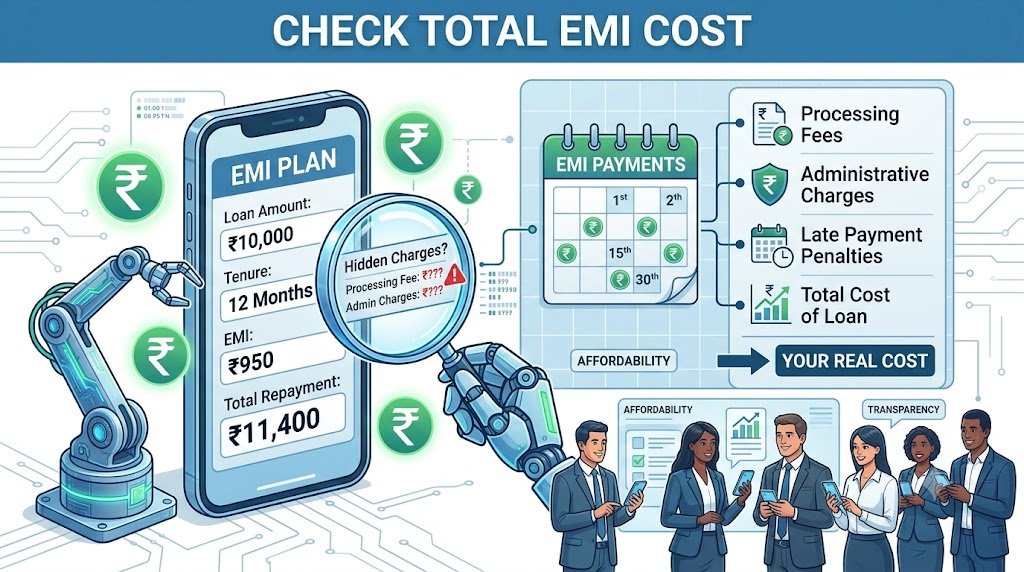
Always check processing fees, total payable amount, GST on interest, foreclosure rules, and hidden charges before choosing EMI.
Why are EMI and NBFC schemes becoming more popular?
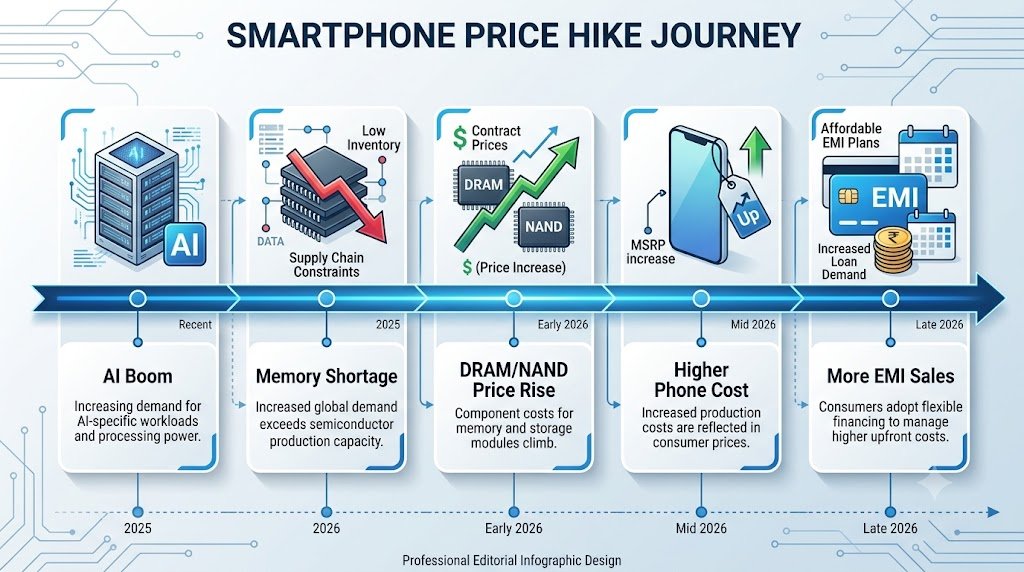
EMI and NBFC schemes are becoming popular because phone prices are rising faster than many buyers’ comfort levels. Financing helps buyers purchase better phones without paying the full amount upfront.
For brands, EMI keeps demand alive even when prices go up.
This is very important in India.
A large number of Indian buyers want better smartphones now. They want 5G, better cameras, more storage, faster processors, AMOLED displays, strong batteries, and long software support.
But not everyone can pay ₹30,000 to ₹60,000 upfront.
That is where EMI comes in.
A phone that looks expensive as a full payment may look manageable as a monthly payment. This is why offline retailers, NBFCs, banks, and brands are working together to push affordability offers.
Offline-focused brands like Samsung, Vivo, and Oppo often benefit from this because many buyers prefer in-person help while understanding EMI plans. Moneycontrol also reported that Samsung, Vivo, and Oppo enjoy higher financing penetration because consumers often prefer offline assistance while evaluating financing schemes.
This is also why phone pricing pages and buying guides matter more now.
Before buying, users should compare actual pricing, launch offers, exchange value, and EMI terms. You can use Phone Price 360 latest news to track new launches and pricing updates before making a final decision.
The main rule is simple: EMI should support your budget, not trap your budget.
Did Nothing or CMF phones get affected by RAM prices?
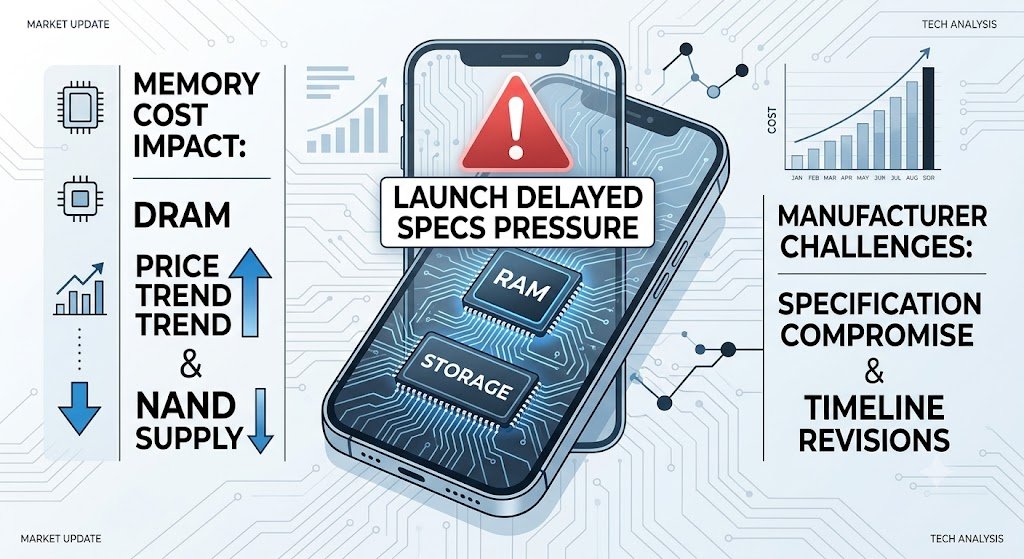
Yes, Nothing and CMF are among the clearest public examples of the memory crisis affecting smartphone launch plans. Reports say a planned CMF phone successor was canceled because high RAM and memory costs made the product difficult to launch at a sensible price.
This is one of the strongest real-world signs that the crisis is not just theory.
Android Authority reported that Nothing canceled the planned successor to the CMF Phone 2 Pro because of skyrocketing RAM and memory costs. The report also mentioned that Nothing co-founder Carl Pei said RAM now costs more than the SoC and display combined in some smartphone builds.
That is a huge statement.
Historically, the processor and display were among the most expensive parts of a phone. If RAM becomes more expensive than those, the entire cost structure changes.
This affects brands like Nothing especially because they compete heavily on design, clean software, and value. If memory prices rise too much, the company cannot easily build a strong budget phone without either raising the price or reducing the product’s appeal.
One important note: there is no strong public confirmation that a specific “Nothing Phone (4b)” had confirmed spec cuts because of memory prices. The verified reporting points to CMF phone cancellation and broader Nothing memory-cost pressure.
For Nothing Phone launch updates, readers can follow the latest smartphone news section on Phone Price 360, but rumors should always be separated from confirmed information.
That distinction matters for trust.
Good tech content should not turn every leak into a fact. Google may reward helpful content, but readers reward honesty faster.
Will iPhone, Samsung, Xiaomi, Vivo, OPPO, and Realme phones also become expensive?
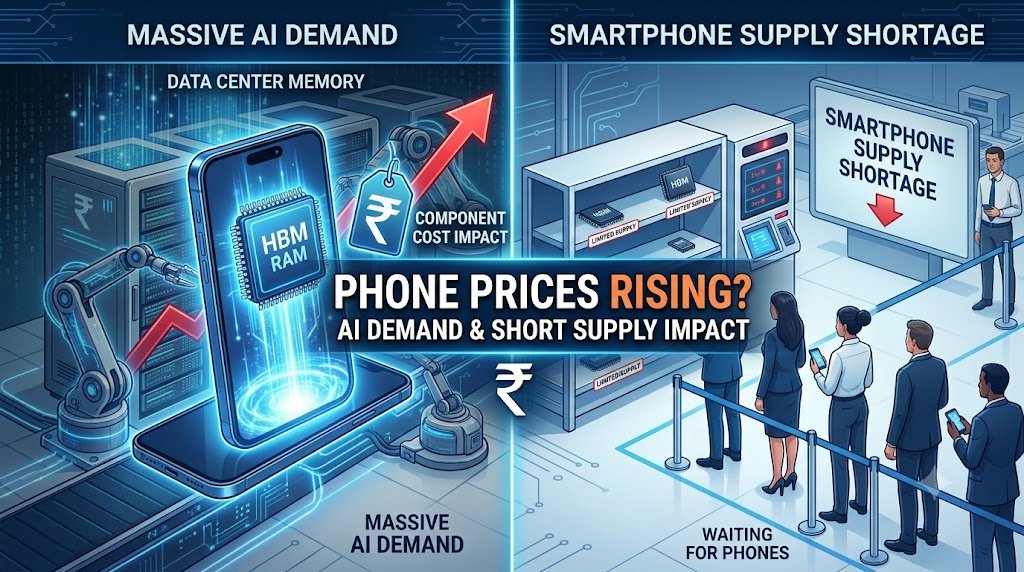
Most smartphone brands will feel the memory cost pressure in 2026, but the impact will not be equal. Premium brands may manage supply better, while budget-focused brands may face stronger pressure.
Brands with stronger supply-chain control and long-term contracts are better protected.
IDC says Apple and Samsung have some structural advantages because of cash reserves and long-term supply agreements. However, Android brands focused on low-end and mid-range phones may suffer more because they work with thinner margins.
This does not mean Apple and Samsung are safe from price pressure.
It means they can manage the pressure differently.
Apple may reduce discounts, keep older models expensive for longer, or avoid major RAM upgrades. Samsung may push financing, trade-in offers, and premium models more aggressively.
Brands like Xiaomi, Realme, Vivo, OPPO, iQOO, Poco, and Motorola may adjust their RAM and storage variants more carefully.
For example, a phone that would normally offer 12GB RAM in the mid-range segment may now reserve that variant for a higher price. A base model may stay attractive on paper but offer lower storage. A “Pro” variant may become necessary if you want the best memory configuration.
This is why processor comparison alone is not enough in 2026.
A phone with a good chipset but weak memory configuration may not age well. Before buying a performance-focused phone, also check processor ranking and memory type. You can read Which Mobile Processor is Fastest in 2026? for processor context, then compare RAM and storage separately.
A balanced phone is better than a phone with one flashy spec and three hidden compromises.
What specs should buyers check more carefully in 2026?
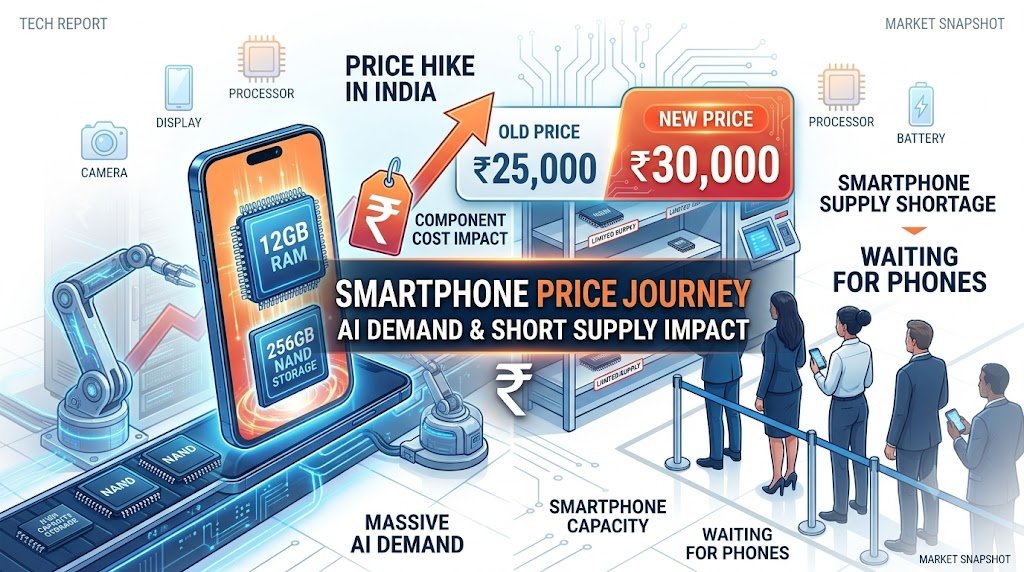
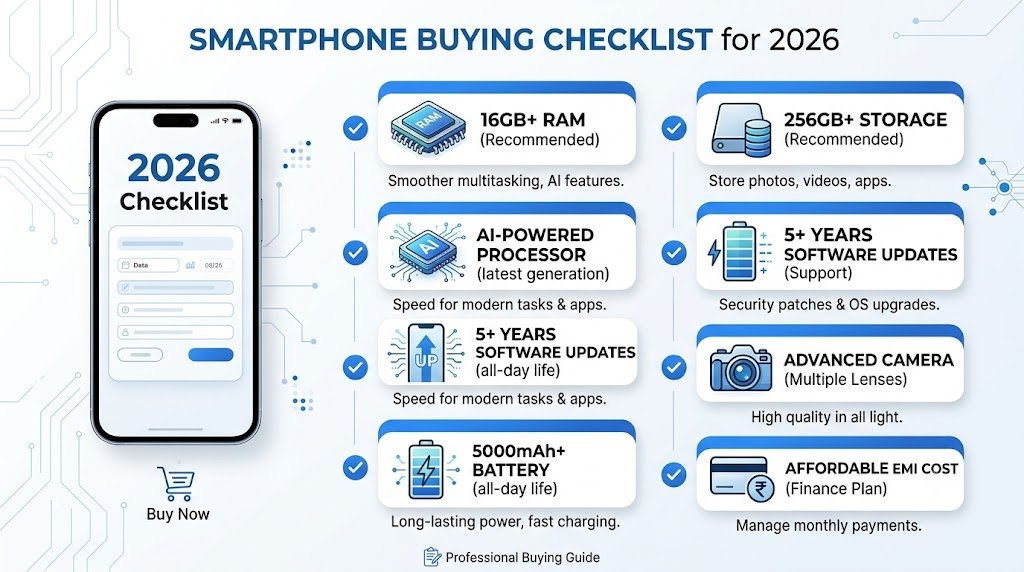
Buyers should check RAM, storage capacity, storage type, processor, software updates, battery health, and EMI cost before buying a phone in 2026. The memory crisis makes RAM and storage more important than ever.
The spec sheet still matters, but you must read it smarter.
First, check physical RAM.
Do not confuse physical RAM with virtual RAM. A phone advertised as “16GB RAM” may actually have 8GB physical RAM plus 8GB virtual RAM. Virtual RAM uses internal storage as temporary memory, but it is slower than actual RAM.
Second, check storage capacity.
128GB may still work for light users, but 256GB is safer for long-term use. Photos, videos, WhatsApp data, offline movies, apps, games, and system updates fill storage faster than expected.
Third, check storage type.
UFS storage is generally faster than eMMC storage. Faster storage improves app loading, file transfer, gaming performance, and long-term smoothness.
Fourth, check software optimization.
A phone with 8GB RAM and excellent software optimization can feel better than a phone with 12GB RAM and poor memory management.
Fifth, check update policy.
When hardware upgrades slow down, software support becomes more important. A phone with longer Android updates and security patches may deliver better value over three to five years.
Sixth, check AI features carefully.
Many 2026 phones will promote AI heavily. Some AI features are useful, but not every AI label means better real-world performance. For a deeper comparison, read Apple Intelligence vs Gemini Nano vs Galaxy AI.
AI features are nice. Smooth daily performance is still nicer.
Should you buy a smartphone now or wait?
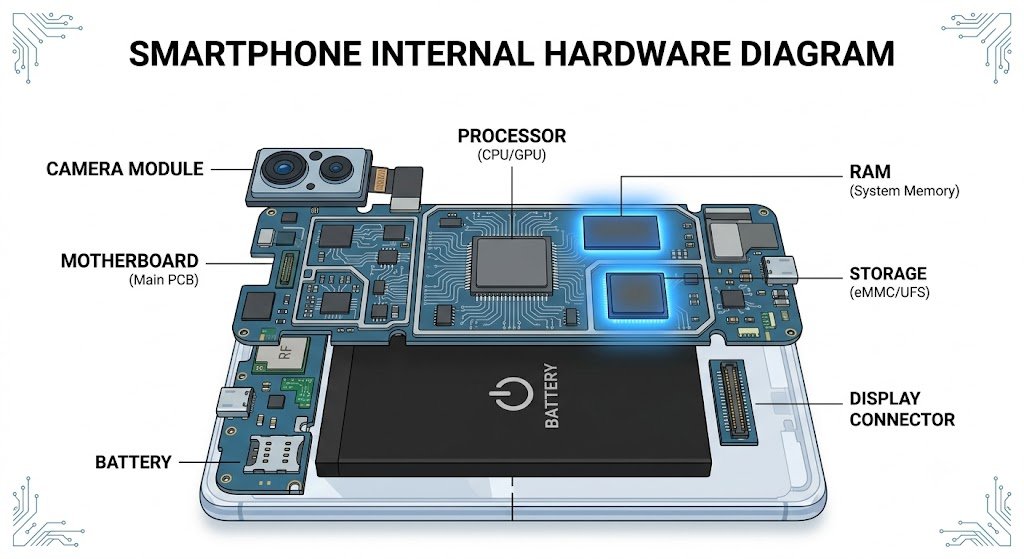
If your current phone is working well, waiting can make sense. But if your phone is slow, damaged, or running out of storage, waiting only for big price drops may not be smart.
Memory prices remain under pressure, so discounts may not be as aggressive as previous years.
TrendForce has warned that smartphone brands continue to face pressure from rising memory costs and may adjust production plans. If brands produce fewer units or reduce aggressive offers, buyers may not get huge discounts immediately.
So the decision depends on your situation.
Buy now if:
- your phone battery is poor
- your storage is full
- your phone lags during daily use
- your camera or display is damaged
- your current phone no longer gets security updates
- you need a reliable phone for work, study, or business
Wait if:
- your current phone still works smoothly
- you already have enough storage
- you do not need better camera or gaming performance
- you can wait for festive sales
- you want to compare upcoming launches
For students and college users, timing matters because phone purchases often happen around admission season. A guide like Best Phone for College and Engineering Students in India 2026 can help compare phones based on actual use cases instead of only launch hype.
In 2026, the best buying strategy is not “buy the newest phone.”
The best strategy is “buy the right configuration before prices or stock become worse.”
How much RAM and storage do you really need in 2026?
Most users should aim for at least 8GB RAM and 256GB storage in 2026 if the budget allows. Light users can manage with 6GB RAM and 128GB storage, but long-term users should avoid cutting too close.
Your ideal configuration depends on your usage.
For basic users, 6GB RAM and 128GB storage can still work. This is fine for calling, WhatsApp, YouTube, light browsing, UPI apps, and basic social media.
For students, 8GB RAM and 128GB or 256GB storage is better. Students often use Google Meet, PDFs, notes, Chrome tabs, YouTube lectures, WhatsApp groups, and file downloads.
For gamers, 8GB RAM is the practical minimum, while 12GB RAM is better for heavier gaming and multitasking.
For creators, 256GB storage should be the minimum. If you shoot videos, edit reels, download files, or store high-resolution photos, 128GB will fill quickly.
For long-term users, 8GB RAM and 256GB storage is the safest middle ground.
Do not overpay for 16GB RAM unless you have a real reason. Many normal users will benefit more from better storage, better battery, better display, and longer software updates.
A phone is not a laptop replacement for everyone. Bigger numbers are not always better value.
Can smartphone prices come down later?
Smartphone prices can come down if memory supply improves, AI demand stabilizes, or consumer demand weakens. But a quick return to old pricing is unlikely in the short term.
The memory crisis looks deeper than a normal seasonal price cycle.
IDC says the effects of the memory shortage could continue well into 2027 because the AI infrastructure boom has changed how memory capacity is allocated. This means consumer electronics may continue to compete with AI servers for supply.
TrendForce also notes that DRAM suppliers are reallocating capacity toward server-related applications, while NAND capacity is increasingly moving toward enterprise SSDs.
So yes, prices may cool eventually.
But buyers should not assume that every phone will suddenly become cheaper in a few months.
Brands may use different tactics instead of direct price cuts:
- exchange bonuses
- long-tenure EMI
- bank cashback
- no-cost EMI
- bundled accessories
- older model discounts
- online flash sales
- limited-time festive offers
This means the visible price may remain high while the effective price changes through offers.
Before buying, check launch prices, current online prices, offline prices, and EMI terms. Tools and buying resources on Phone Price 360 can help readers compare pricing more carefully.
The market is changing, but smart buyers can still find value.
How should brands handle the 2026 smartphone price hike?
Brands should be transparent about pricing, offer useful base variants, avoid fake RAM marketing, and explain why higher storage options cost more. Buyers are becoming smarter, so confusing them is a short-term strategy.
The best brands in 2026 will be the ones that build trust.
A good strategy would be:
- keep 8GB RAM as the practical mid-range standard
- offer 256GB storage at a fair upgrade price
- avoid misleading virtual RAM advertising
- provide longer software updates
- improve storage optimization
- offer clear EMI terms
- publish transparent launch pricing
- reduce bloatware to improve performance
Brands should also stop treating buyers like spec-sheet robots.
A user does not only need “12GB RAM.” A user needs a phone that stays smooth for three years.
A student does not only need “fast charging.” They need a phone that survives classes, notes, videos, exams, and group projects.
A creator does not only need “AI camera.” They need reliable storage, stable video recording, and strong battery life.
In 2026, the most successful brands will combine hardware honesty with software quality.
That is also good for SEO content. Readers want practical advice, not just launch hype.
How can buyers avoid overpaying during the RAM crisis?
Buyers can avoid overpaying by comparing real-world value instead of only launch price. Focus on RAM, storage, update policy, processor, service support, and total EMI cost.
Here is a practical checklist.
First, avoid the weakest base variant if you plan to use the phone for more than two years.
A 4GB RAM or 64GB storage phone may feel cheap today but painful later.
Second, choose 256GB storage if you record many videos or use heavy apps.
Storage upgrades may look expensive, but running out of storage is worse.
Third, check whether the phone uses UFS storage.
A phone with faster storage can feel smoother for longer.
Fourth, do not trust virtual RAM as a full replacement.
Virtual RAM is useful as a backup, but real RAM is still better.
Fifth, compare offline and online offers.
Offline stores may offer better EMI guidance. Online platforms may offer better discounts. Check both.
Sixth, calculate total EMI cost.
A “no-cost EMI” may still include processing fees or other charges.
Seventh, check older premium phones.
A discounted 2025 upper-midrange phone may offer better value than a compromised 2026 mid-range phone.
Eighth, read buying guides before purchasing.
For example, if your budget is student-focused, use a student buying guide. If your budget is performance-focused, compare processor and RAM together. If your budget is under ₹20,000, do not blindly chase the newest launch.
Smartphone buying in 2026 is not difficult.
It just requires less emotion and more calculation.
Key takeaways: RAM and memory crisis in 2026
The 2026 smartphone price hike is not random. It is connected to a real global memory shortage.
Here are the most important points:
- Smartphone RAM uses DRAM memory.
- Smartphone storage uses NAND flash memory.
- AI data centers are consuming huge amounts of memory supply.
- Memory makers are prioritizing high-margin AI and server products.
- TrendForce expects major DRAM and NAND price increases in 2026.
- IDC says the memory shortage may affect smartphones and PCs into 2027.
- Mid-range phones are hit harder because memory forms a bigger share of their cost.
- India smartphone financing is expected to reach 42% of sales in 2026, according to Counterpoint Research.
- NBFCs are becoming important for smartphone financing in Tier-2 and Tier-3 cities.
- Nothing/CMF has already shown how memory prices can affect launch plans.
- Buyers should check real RAM, storage capacity, storage type, and EMI cost before buying.
- In 2026, smart buying matters more than chasing the newest launch.
The bottom line is simple.
Phones are not becoming expensive only because brands want more money. The hardware supply chain itself has changed.
Final verdict: Is 2026 the end of cheap high-spec phones?
The real reason why smartphone prices are rising in 2026 is not one single factor. It is the combination of AI demand, memory shortage, higher component costs, and stronger financing dependence.2026 may not end affordable smartphones, but it may end the easy era of “more RAM, more storage, same price.” Memory has become too expensive for brands to ignore.
Buyers should expect higher prices, fewer aggressive discounts, and more EMI-based offers.
This does not mean you cannot find good phones anymore. You absolutely can. But the buying strategy must change.
Instead of asking, “Which phone has the biggest RAM number?” ask:
- Does it have enough real RAM?
- Is the storage enough for three years?
- Is the storage fast?
- Will it get software updates?
- Is the EMI actually affordable?
- Is the price fair compared to alternatives?
That is how buyers win in 2026.
The smartphone market is entering a new phase where memory cost, AI demand, financing, and software optimization all matter together.
For readers, the best advice is simple: do not panic, but do not buy blindly.
Check prices, compare variants, understand EMI terms, and choose the phone that fits your real use case.
A good phone is still a good investment.
An overpriced phone with weak storage is just an expensive headache with a camera.
Understanding why smartphone prices are rising in 2026 will help buyers make smarter decisions when choosing RAM, storage, and overall phone value.
Why Smartphone Prices Are Rising in 2026: FAQs
Quick answers about the RAM and memory chip crisis, DRAM and NAND price hikes, smartphone EMI growth in India, and what buyers should check before purchasing a phone in 2026.
Why smartphone prices are rising in 2026?
Why smartphone prices are rising in 2026 comes down to RAM, storage, and memory chip costs. AI data centers are using more DRAM and NAND supply, which increases component prices for smartphone brands.
Why are smartphone prices rising in 2026?
Smartphone prices are rising because RAM and storage costs have increased sharply. AI data-center demand is consuming more memory supply, making DRAM and NAND flash more expensive for phone brands.
What is the RAM price hike in 2026?
The RAM price hike refers to the sharp increase in DRAM memory prices. DRAM is used in smartphone RAM, laptops, servers, and many other electronics.
What is NAND flash storage?
NAND flash is the memory used for internal phone storage. It stores apps, photos, videos, system files, downloads, and user data.
How does AI affect smartphone prices?
AI affects smartphone prices because AI servers need huge amounts of memory. When data centers buy more memory, phone brands face tighter supply and higher costs.
Are budget phones getting worse in 2026?
Not necessarily, but some budget phones may offer fewer upgrades than expected. Brands may reduce RAM, storage, camera quality, or discounts to control costs.
Is 8GB RAM enough in 2026?
Yes, 8GB RAM is enough for most users in 2026. Heavy gamers, creators, and long-term users may prefer 12GB RAM if the price difference is reasonable.
Is 128GB storage enough in 2026?
128GB is enough for light users, but 256GB is safer for long-term use. Photos, videos, apps, and WhatsApp data can fill 128GB quickly.
Should I buy a phone on EMI?
EMI is useful if the monthly payment fits your budget. But always check processing fees, total payable amount, hidden charges, and no-cost EMI terms.
Why is smartphone financing growing in India?
Smartphone financing is growing because phone prices are rising and buyers want easier payment options. Counterpoint Research expects financing to account for 42% of India’s smartphone sales in 2026.
Did Nothing cancel a phone because of RAM prices?
Yes. Reports say Nothing canceled a planned CMF phone successor because rising RAM and memory costs made it difficult to launch the phone at the right price.
Will smartphone prices fall later?
Prices may cool if memory supply improves, but a quick return to old pricing is unlikely. AI demand and server memory allocation may keep pressure on consumer devices for some time.
What should I check before buying a phone in 2026?
Check physical RAM, storage capacity, storage type, processor, battery, display, software updates, service support, and total EMI cost before buying.


7 thoughts on “Why Smartphone Prices Are Rising in 2026: The RAM/Memory Crisis Explained”