Google Fitbit Air: What You Need to Know in 30 Seconds
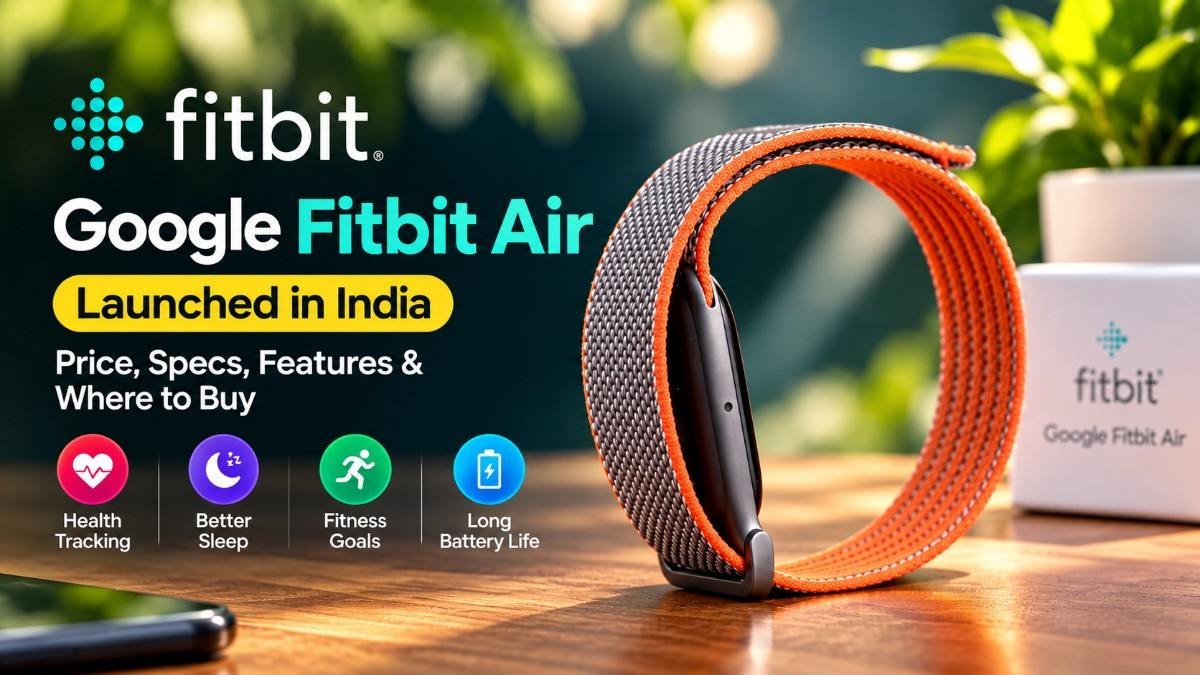
Google’s first screenless fitness tracker has arrived in India at ₹13,999. The Fitbit Air focuses on continuous health monitoring without screen distractions — tracking your heart rate, sleep, blood oxygen, and heart rhythm 24/7. It weighs just 12 grams, lasts up to 7 days on a charge, and works with the AI-powered Google Health Coach. Sales begin October 2.
What’s New About Google Fitbit Air?
Google Fitbit Air takes a genuinely different approach to fitness tracking. Instead of turning the tracker into yet another screen on your wrist, Google uses the device primarily as a continuous health sensor — while the Google Health app handles all the data, insights, and coaching.
Here’s what makes it distinct.
Screenless by design
There’s no display, no buttons, and no on-wrist notifications. Google’s argument is that you already have a phone for that — and putting a screen on your wrist adds another layer of digital noise. The Fitbit Air is designed to be worn and forgotten.
Health tracking without notification fatigue
Because there’s no screen, there are no buzzes, alerts, or tap-to-read messages interrupting your day or your sleep. You check your data when you want to — not when the device decides to notify you.
Google Health Coach integration
The tracker feeds into Google Health Coach, an AI-driven system built on Gemini. It translates your raw health data into personalised guidance — including workout suggestions, activity logging from photos, and subscription-based advanced coaching.
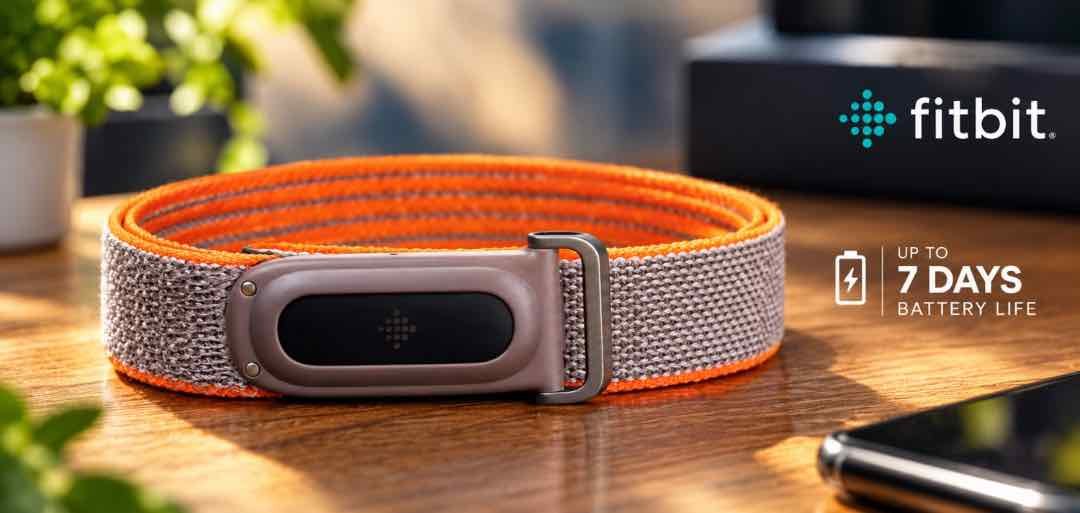
Up to 7 days of battery life
Without a display draining power, the Fitbit Air lasts significantly longer than most smartwatches. Google rates it for up to seven days of use, with a five-minute top-up giving you roughly a full day of tracking.
A lighter form factor
At 12 grams with the band (and just 5.2 grams without), the Fitbit Air is one of the lightest fitness trackers available. That’s small enough to forget you’re wearing it, which matters for overnight sleep tracking.
What Is the Google Fitbit Air?
The Fitbit Air is a screenless fitness tracker designed for people who want continuous health monitoring without another screen demanding attention. It’s a small module — Google calls it a “pebble” — that pops into swappable bands. There’s no display, no buttons, and no notifications on your wrist.
All your health data goes to the Google Health app on your phone. The tracker itself just collects data. You view everything — heart rate trends, sleep stages, workout summaries — on your smartphone.
The tracker was first launched in select international markets in May 2026 at $99.99. It arrived in India on September 30, 2026, with sales beginning October 2. At ₹13,999, it’s positioned as a premium alternative to traditional fitness bands and a direct competitor to screenless trackers like Whoop.
Google Fitbit Air at a Glance
| Feature | Detail |
|---|---|
| India Price | ₹13,999 |
| Display | No (screenless) |
| Weight | 12g with band, 5.2g without |
| Battery | Up to 7 days |
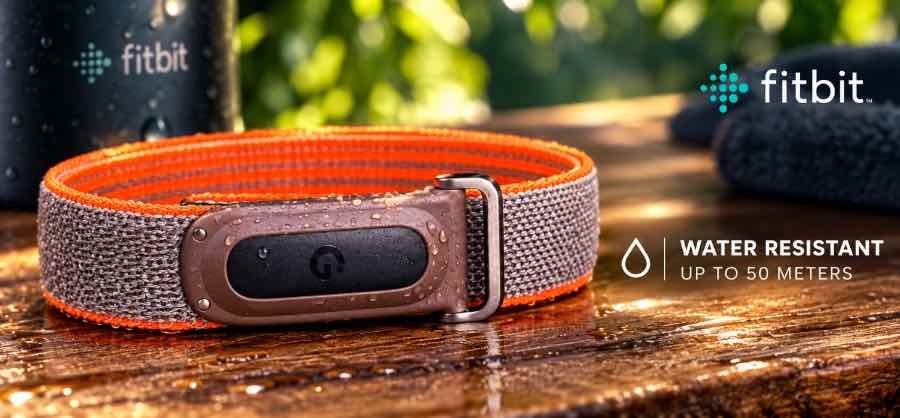
| Water Resistance | 5ATM |
| Heart Rate | Yes, 24/7 |
| SpO2 | Yes |
| AFib Alerts | Yes |
| HRV | Yes |
| Sleep Tracking | Yes, with sleep stages |
| Phone Compatibility | Android 11+ and iOS 16.4+ |
| Health Coach | Yes, with optional Premium |
Google Fitbit Air Price in India
The Fitbit Air is priced at ₹13,999 in India. That’s notably higher than its US price of $99.99 (roughly ₹9,500 at current exchange rates). The India premium is consistent with import duties and local market pricing for wearable devices.
What You Actually Pay
| Item | Amount |
|---|---|
| Official launch price | ₹13,999 |
| Eligible bank cashback | − ₹1,000 |
| Effective price with cashback | ₹12,999 |
| Google Health Premium trial | 3 months free |
Important: the ₹1,000 cashback is a temporary launch offer, not a permanent price cut. The base price after the offer window is ₹13,999. Third-party seller prices on platforms like Amazon or reseller marketplaces may vary and are not authorised Google India pricing.
Google Fitbit Air Launch Offers
Google and its retail partners are offering several launch incentives to make the ₹13,999 price easier to swallow.
| Offer | Details |
|---|---|
| Bank Cashback | ₹1,000 on select HDFC Bank and ICICI Bank cards |
| No-Cost EMI | Up to 12 months on consumer loans |
| Google Health Premium | 3-month free trial included |
| Effective Price | As low as ₹12,999 with cashback |
The ₹1,000 cashback applies to full-swipe transactions on eligible cards. You can combine it with a six-month no-cost EMI option, or choose the 12-month EMI without cashback.
Google Fitbit Air Full Specifications
| Specification | Detail |
|---|---|
| Form Factor | Screenless pebble design |
| Weight | 12g with band, 5.2g without |
| Display | None |
| Buttons | None |
| Battery Life | Up to 7 days |
| Fast Charging | 5 minutes = up to 1 day |
| Full Charge | Approximately 90 minutes |
| Heart Rate | 24/7 continuous optical monitoring |
| Heart Rhythm | AFib alerts |
| Blood Oxygen | SpO2 (red and infrared sensors) |
| Skin Temperature | Device temperature sensor |
| HRV | Heart rate variability tracking |
| Sleep Tracking | Duration and stages (light, deep, REM) |
| Activity Detection | Automatic, learns routines over time |
| GPS | Connected GPS (via phone) |
| Water Resistance | 5ATM (50 meters) |
| Connectivity | Bluetooth 5.0 |
| Compatibility | Android 11+, iOS 16.4+ |
| App | Google Health app |
| Colours | Obsidian, Berry, Lavender, Fog |
| In-box Band | Performance Loop (recycled materials) |
Sources: Google Store, Gadgets360.
Google Fitbit Air: What’s in the Box?
Google keeps the packaging minimal, but here’s exactly what you get when you open the box.
| Item | Included |
|---|---|
| Fitbit Air tracker (pebble module) | Yes |
| Performance Loop band | Yes (colour-matched to tracker) |
| USB-C charging cable | Yes |
| Quick start guide | Yes |
| Warranty documentation | Yes |
| Additional bands | Sold separately |
| Wall charger | Not included |
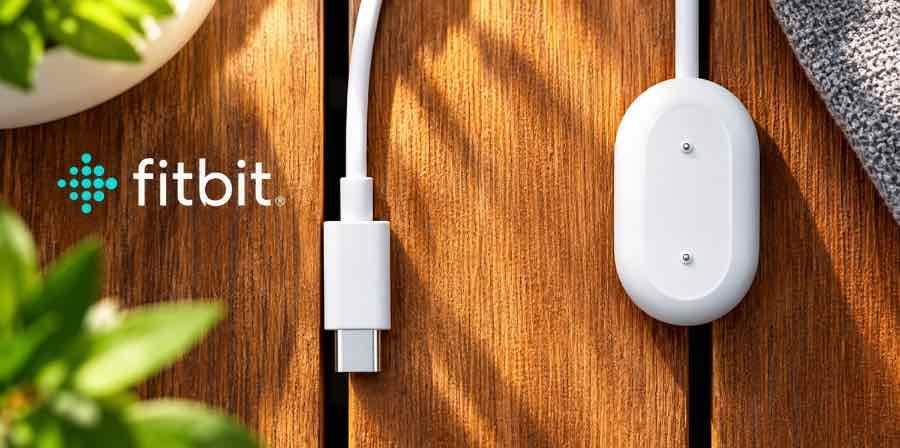
The wall charger is not included, which is consistent with Google’s recent hardware packaging. You’ll need to supply your own USB-C power adapter — anything from a standard 5W phone charger up to a 20W fast charger works.
Fitbit Air Size, Weight & Comfort
The Fitbit Air’s biggest design advantage is how little you notice it.
| Measurement | Value |
|---|---|
| Tracker-only weight | 5.2 grams |
| Weight with Performance Loop band | 12 grams |
| Band material | Recycled knit (Performance Loop) |
| Module removability | Yes, pops out of band |
| Band interchangeability | Three official band options |
| Buckle material | Stainless steel |
What this means in real use
For overnight wear: At 12 grams, the Fitbit Air is lighter than a standard metal watch band. It’s designed to be worn through the night without the weight or bulk that causes people to take off a smartwatch before bed.
For workouts: The pebble sits flush against the wrist and doesn’t protrude the way a large watch case does. The Performance Loop band is breathable, which is a benefit during sweaty sessions.
For all-day wear: Since the module can be removed from the band, you can swap the band without needing a second device. This is what makes the “pebble” concept useful — one sensor, three visual profiles.
Health Tracking Features: What Each Metric Actually Means
The Fitbit Air tracks a lot — but not all metrics are equally useful. Here’s a plain-English breakdown of what each one actually tells you.
| Metric | What it tells you | When it’s useful |
|---|---|---|
| Heart rate | How fast your heart is beating | During workouts, rest, and overnight |
| Resting heart rate | Your baseline heart rate when still | Tracking cardiovascular fitness trends |
| HRV (heart rate variability) | Variation between heartbeats | Recovery and stress monitoring |
| SpO2 (blood oxygen) | How much oxygen is in your blood | Overnight trends and altitude adaptation |
| Sleep stages | Light, deep, and REM proportions | Understanding sleep quality |
| Skin temperature | Temperature variation from your baseline | Recovery trends, illness onset detection |
| AFib alerts | Irregular heart rhythm notifications | Heart-rhythm awareness (not diagnosis) |
| Activity detection | Automatic workout logging | Any day with movement you don’t manually log |
Continuous heart monitoring
The tracker monitors your heart rate 24/7 and tracks resting heart rate and heart rate variability (HRV). It also includes AFib (atrial fibrillation) alerts — irregular heart rhythm notifications that can be a sign of a serious condition.
Blood oxygen (SpO2)
The SpO2 sensor monitors blood oxygen levels throughout the day and night using red and infrared sensors. Low blood oxygen during sleep can be an indicator of sleep apnea or other respiratory issues.
Skin temperature
The Fitbit Air includes a device temperature sensor that tracks skin temperature variation against your baseline. It’s available in the Google Health app and useful for spotting trends.
Does the Google Fitbit Air Have GPS?
This is one of the most important questions for runners and cyclists — and the answer is nuanced.
The Fitbit Air uses connected GPS, meaning it relies on your phone’s GPS for outdoor workout tracking. There is no built-in standalone GPS in the tracker itself.
| Scenario | What happens |
|---|---|
| Outdoor run with phone | Full GPS route tracking via connected GPS |
| Outdoor run without phone | No GPS route — only heart rate and motion data |
| Indoor treadmill run | Tracked via motion and heart rate (no GPS needed) |
| Cycling with phone | Full GPS route + speed data |
| Swimming | Lap counting via motion; no GPS |
Practical impact: If you want GPS route tracking for outdoor workouts, you need to carry your phone with you. If you’re comfortable leaving the phone behind, the Fitbit Air will still log your activity — just without the map.
Connected GPS also affects battery. When the tracker is pulling GPS data from your phone, battery drain is faster than in pure heart-rate tracking mode. Google’s 7-day battery estimate assumes typical mixed usage.
Google Health Coach and AI Features
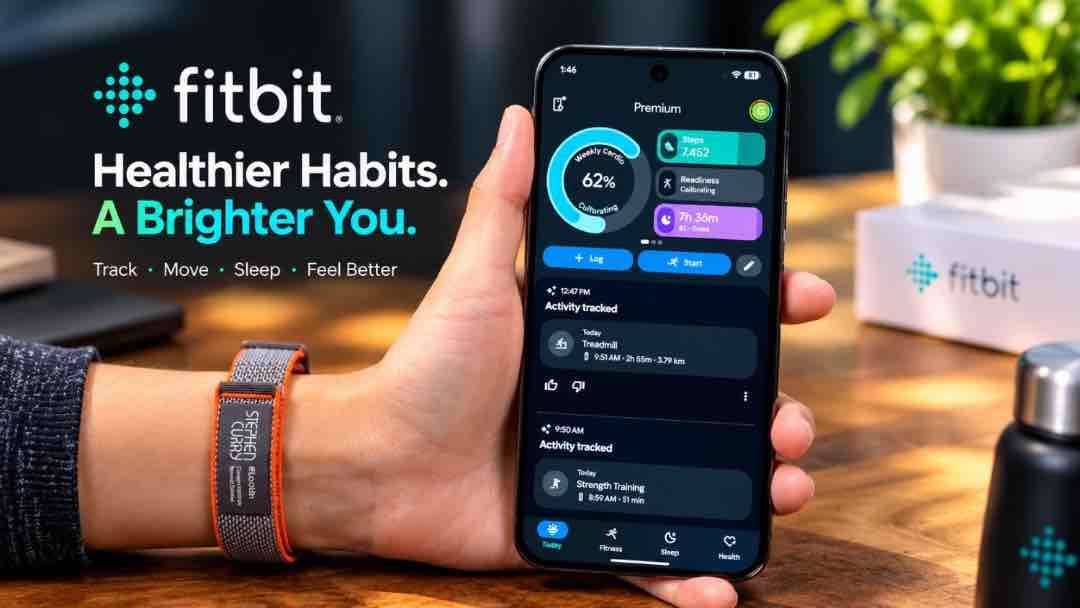
The Fitbit Air works with Google Health Coach, an AI-driven personal wellness system that uses your tracked data to provide personalised guidance. The coach is built on Gemini and translates raw health data into actionable recommendations.
How it works
Instead of tapping buttons or swiping on a screen, all interaction happens through the Google Health app on your phone. You can:
- Follow guided workout sessions
- Log activities automatically
- Take a photo of gym equipment or a whiteboard workout routine — the app interprets it and logs the activity automatically
Does the Google Fitbit Air Require a Subscription?
No. The Fitbit Air works out of the box without any subscription. But there’s a premium tier — Google Health Premium — that unlocks additional features, and understanding what’s free vs paid matters before you buy.
What works without Google Health Premium
- 24/7 heart rate tracking
- Resting heart rate and HRV
- SpO2 monitoring
- AFib alerts
- Skin temperature tracking
- Sleep duration and stages
- Automatic activity detection
- Basic Google Health app experience
What requires Google Health Premium
- Full Google Health Coach experience
- Advanced AI coaching with Gemini
- Deeper health insights and trend analysis
- Advanced wellness reports
What the 3-month trial includes
Every Fitbit Air purchase comes with a three-month Google Health Premium trial, so you can test the full coaching experience before deciding whether to subscribe.
What the subscription costs after the trial
Google’s standard pricing is approximately $9.99 per month or $99.99 per year (roughly ₹830/month or ₹8,300/year in India, though local pricing may differ). Once the trial ends, you’ll be charged unless you cancel.
Is the Fitbit Air still useful without Premium?
Yes, and this is the key point. The core tracking features — heart rate, sleep, SpO2, HRV, skin temperature, AFib alerts, activity detection — all work without a subscription. The Premium tier is about coaching and deeper insights, not about basic functionality. So if you’re mainly interested in health data collection, you can use the Fitbit Air indefinitely without paying a monthly fee.
Battery Life and Charging
| Feature | Detail |
|---|---|
| Battery Life | Up to 7 days |
| Fast Charging | 5 minutes = up to 1 day |
| Full Charge Time | Approximately 90 minutes |
| Charging Method | USB-C cable (included) |
Google rates the Fitbit Air for up to seven days of usage on a single charge. The exact battery life depends on usage patterns — frequent SpO2 monitoring, connected GPS workouts, and higher heart rate sampling will drain it faster.
Bands & Colour Options
The Fitbit Air uses a modular design — the tracker module pops out of the band so you can swap bands without buying a new tracker.
| Band | Material | Best For |
|---|---|---|
| Performance Loop | Recycled knit material | Everyday wear, included in box |
| Active Band | Sweatproof silicone | High-intensity training |
| Elevated Modern Band | Quality everyday material | Office, casual settings |
The tracker itself comes in four colours — Obsidian (black), Berry, Lavender, and Fog. The band you receive matches your tracker colour by default, but additional bands are sold separately.
Google Fitbit Air Stephen Curry Special Edition
Google has partnered with NBA star Stephen Curry for a special edition of the Fitbit Air. It’s called the “Rye” colourway and comes with a limited-edition band and gift packaging.

| Detail | Information |
|---|---|
| US Price | $129.99 (approximately ₹12,300) |
| India Price | Not officially confirmed by Google India |
| Band Colour | Rye with Pyrite Stainless Steel Buckle |
| Special Feature | Exclusive packaging, water-resistant coating |
| Third-party India listings | ₹18,990 – ₹25,995 (unofficial) |
Note: the third-party prices shown for India are listings from resellers and import platforms — they are not official Google India pricing. If Google brings the Curry edition to India officially, expect a different price point.
Google Fitbit Air vs Competitors
The Fitbit Air competes in a category that’s still finding its footing in India. Here’s how it compares.
Fitbit Air vs Google Pixel Watch
| Feature | Fitbit Air | Google Pixel Watch |
|---|---|---|
| Display | None | AMOLED touchscreen |
| Notifications | No | Yes |
| Form factor | Screenless tracker | Smartwatch |
| Battery | Up to 7 days | 1–2 days (varies by model) |
| Health tracking | HR, SpO2, HRV, AFib, sleep, skin temperature | HR, SpO2, ECG, sleep, skin temperature |
| Built-in GPS | No (connected GPS) | Yes (on most models) |
| Calls and apps | No | Yes (LTE models support calls) |
| Ecosystem | Google Health | Wear OS |
| Best suited to | Screen-free health tracking | Full smartwatch experience with health tracking |
The Pixel Watch is a full smartwatch — it has a screen, runs apps, takes calls on LTE models, and integrates deeply with Wear OS. The Fitbit Air is deliberately the opposite: no screen, no notifications, no apps. Choose based on whether you want a smartwatch or a sensor.
Fitbit Air vs Whoop 5.0
| Feature | Fitbit Air | Whoop 5.0 |
|---|---|---|
| Upfront cost | ₹13,999 | ₹21,990+ (includes 12-month plan) |
| Subscription | Optional | Required |
| Display | None | None |
| Focus | General health + AI coaching | Athletic performance |
| App ecosystem | Google Health | Whoop app |
Whoop has the backing of major athletes and a first-mover advantage in the screenless tracker space. But Whoop requires an ongoing subscription. Google’s pitch is a sub-₹14,000 device with optional premium features — which appeals to users who don’t want another monthly bill.
Fitbit Air vs Xiaomi Smart Band
| Feature | Fitbit Air | Xiaomi Smart Band 11 Active |
|---|---|---|
| Price | ₹13,999 | ₹3,799 |
| Display | None | AMOLED touchscreen |
| Battery | 7 days | Up to 21 days |
| Health sensors | HR, SpO2, AFib, HRV, skin temperature | HR, SpO2 |
| AI coach | Google Health Coach | Mi Fitness app |
| Weight | 12g | ~16g |
The Xiaomi Smart Band is much cheaper and has a screen. The Fitbit Air counters with deeper health tracking (AFib, HRV, skin temperature), Google Health Coach, and a lighter, screen-free design.
Google Fitbit Air Privacy: What Happens to Your Health Data?
Because the Fitbit Air collects continuous health data, privacy matters. Here’s what Google documents about how the data is handled.
Where your data lives
All health data from the Fitbit Air syncs to your Google account and is viewed through the Google Health app. Data is stored on Google’s servers, not on the tracker itself. The tracker only stores temporary data between syncs.
Account requirements
You need a Google account to use the Fitbit Air. If you’re migrating from an older Fitbit account, Google has been consolidating Fitbit data into the Google account system.
AI and Health Coach data handling
Google Health Coach processes your health data to generate personalised guidance. Per Google’s published documentation, this data is handled under Google’s general privacy terms for the Health app. You can review these on Google’s privacy policy page.
Data export and deletion
Google allows you to export your health data via Google Takeout, and you can delete your Fitbit account data through the Google account settings. The specifics are documented in Google’s official support pages.
What to check before buying
- Read Google’s current Health app privacy documentation
- Review what data the Health Coach AI processes and how it’s stored
- Understand your options for data export and account deletion
- Consider whether you’re comfortable with continuous biometric data going to Google’s servers
Google Fitbit Air Limitations You Should Know
The Fitbit Air is a well-executed product, but it has real limitations worth understanding before you buy.
- ✗ No display. You cannot check stats, time, or anything else on the wrist. Everything goes through the phone.
- ✗ No on-device notifications. Calls, messages, and app alerts will not reach you through the tracker.
- ✗ Phone required for viewing details. You need a paired phone nearby to see anything beyond the sync.
- ✗ Connected GPS only. No standalone GPS. You need your phone for route tracking.
- ✗ Premium features behind subscription. The full Health Coach AI experience requires Google Health Premium after the trial.
- ✗ Health metrics are not diagnoses. All data is for wellness and trend tracking, not medical assessment.
- ✗ Feature availability varies by country and platform. Some features work differently on Android vs iOS.
Should You Buy Google Fitbit Air?
Buy it if you:
- Want a screenless wearable that doesn’t add digital noise
- Prioritise sleep and health tracking over smartwatch features
- Don’t want wrist notifications
- Like Google’s ecosystem and the Google Health app
- Want a lighter wearable than a full smartwatch
- Are fine using your phone to view data
Consider something else if you:
- Need a display for checking stats mid-workout
- Want smartwatch functionality (calls, apps, notifications)
- Need standalone GPS for running without your phone
- Don’t want any premium subscription tier
- Want the lowest-cost fitness band (the Xiaomi Smart Band is far cheaper)
Google Fitbit Air Pros and Cons
Pros
- Screenless design genuinely reduces distraction
- Lightweight at just 12 grams
- Comprehensive health tracking (HR, SpO2, AFib, HRV, skin temperature, sleep stages)
- Up to 7 days battery life
- 5-minute charge gives a full day of use
- Google Health Coach with AI-powered guidance
- Swappable bands for different activities
- Works with both Android and iOS
- No mandatory subscription
Cons
- No display means no on-wrist stats
- Higher India price than US ($99.99 vs ₹13,999)
- Requires phone for all interactions
- Google Health Premium required for full AI coaching after 3-month trial
- Connected GPS only — no standalone GPS
- Xiaomi Smart Band offers core tracking for far less
Google Fitbit Air: What Its Screenless Design Really Means
The advantage: Removing the screen is not a cost-cutting move — it’s a design philosophy. Without a display, the Fitbit Air has no reason to demand your attention. No notifications, no buzzing, no tapping. For users who feel fatigued by wrist-based screens, this is the entire point.
The trade-off: You must use your phone to see anything. Every trend, every workout summary, every sleep score — all of it lives in the Google Health app. The tracker alone tells you nothing. For some users, that’s the price of freedom from a wrist screen. For others, it’s a dealbreaker.
The interesting positioning: Google is separating “health tracking” from “smartwatch features” in a way that few competitors have attempted. Whoop does this too, but with a subscription-first model. Google’s approach is a sub-₹14,000 device with an optional premium tier. That’s a meaningfully different bet.
The buyer question: Is removing the screen worth ₹13,999 when you can get a screenless experience for less elsewhere? For users who already own a smartwatch and want a second, dedicated health tracker — yes. For users who want one device to do everything — no.
Frequently Asked Questions
The Fitbit Air is priced at ₹13,999 in India. With launch offers including ₹1,000 bank cashback, the effective price can drop to ₹12,999.
Sales begin on October 2, 2026, through the Google Store, Flipkart, Croma, Reliance Digital, Vijay Sales, and other authorised retailers.
No. The Fitbit Air is completely screenless. It has no display, no buttons, and no notifications. All data is viewed through the Google Health app on your phone.
It tracks 24/7 heart rate, resting heart rate, heart rate variability (HRV), AFib alerts, SpO2 (blood oxygen), skin temperature, sleep duration and stages, and automatically detects activities.
The Fitbit Air uses connected GPS — it relies on your phone’s GPS for outdoor workout tracking. There is no standalone GPS in the tracker itself. You need to carry your phone for outdoor runs and rides.
No. Core tracking works without a subscription. A 3-month Google Health Premium trial is included. After the trial, the subscription continues at Google’s standard rate, but it is optional.
The box includes the Fitbit Air tracker, a Performance Loop band, a USB-C charging cable, a quick start guide, and warranty documentation. Additional bands and the wall charger are sold separately.
Up to 7 days on a single charge. A 5-minute fast charge provides enough power for up to a full day.
Yes. It has a 5ATM water resistance rating, which means it’s safe for swimming up to 50 meters. Note: this is water resistance, not waterproofing — it should not be used in hot showers or saunas.
Yes. It’s compatible with both Android 11+ and iOS 16.4+ through the Google Health app.
Obsidian (black), Berry, Lavender, and Fog.
Google Health Coach is an AI-driven wellness system that provides personalised guidance based on your health data. You can follow guided workouts, log activities, and take photos of gym equipment to automatically record exercises.
More About Google Fitbit Air
Sources & References
- Digit — India launch details and specifications
- FoneArena — Pricing, features, and launch offers
- Gadgets360 — Specifications and availability
- Google Store — Official tech specs
- Mashable India — Launch coverage
- Gizbot — Whoop comparison and launch offers
- CNET — Independent hands-on impressions
- ZDNET — Independent hands-on impressions
Final Thoughts
The Google Fitbit Air is a specific product for a specific buyer. It’s not trying to be a smartwatch. It’s not trying to replace your phone. It’s asking one question: do you want continuous health tracking without another screen demanding attention?
If the answer is yes, the Fitbit Air delivers — with comprehensive sensors, a 12-gram form factor, and up to 7 days of battery. If the answer is no, the Pixel Watch or a Xiaomi Smart Band will serve you better at either end of the price spectrum.
At ₹13,999, the Fitbit Air is priced at a premium in India. The core tracking works without a subscription, which keeps ongoing costs predictable. The optional Health Premium tier adds AI coaching but isn’t required for basic health tracking. Whether that trade-off works for you depends on how you actually use a wearable — and that’s the only question that really matters.
Found This Guide Helpful?
Explore more wearable reviews, comparisons, and buying guides on PhonePrice360.
Explore Wearables