The Short Answer
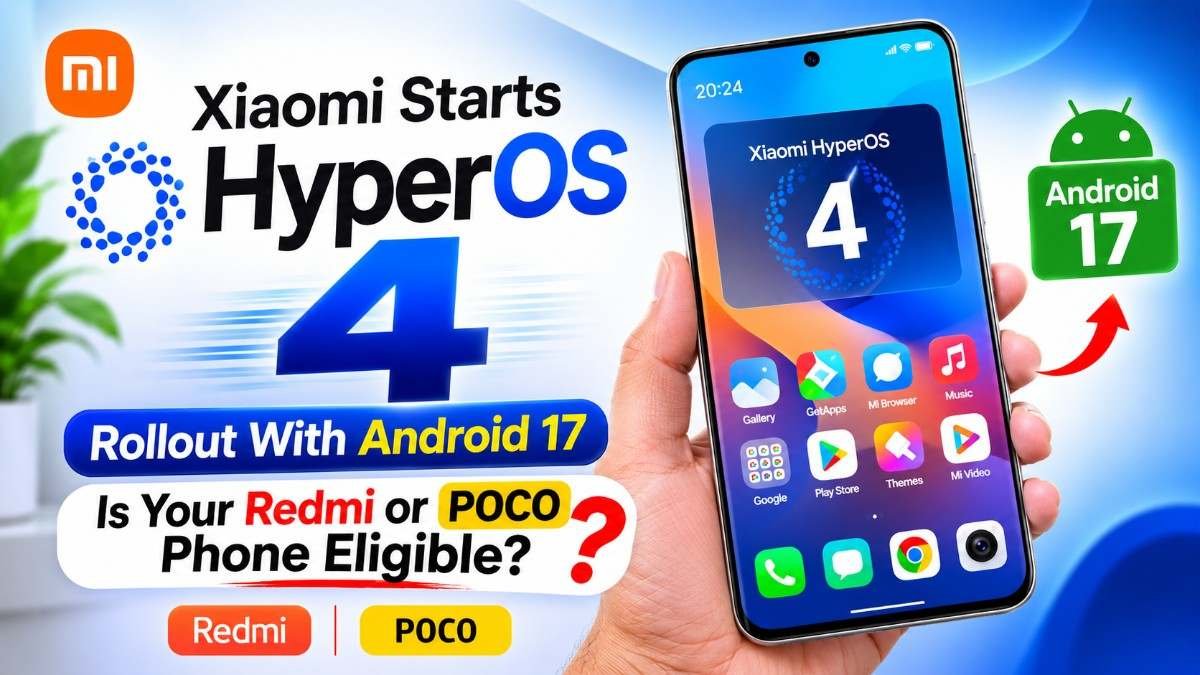
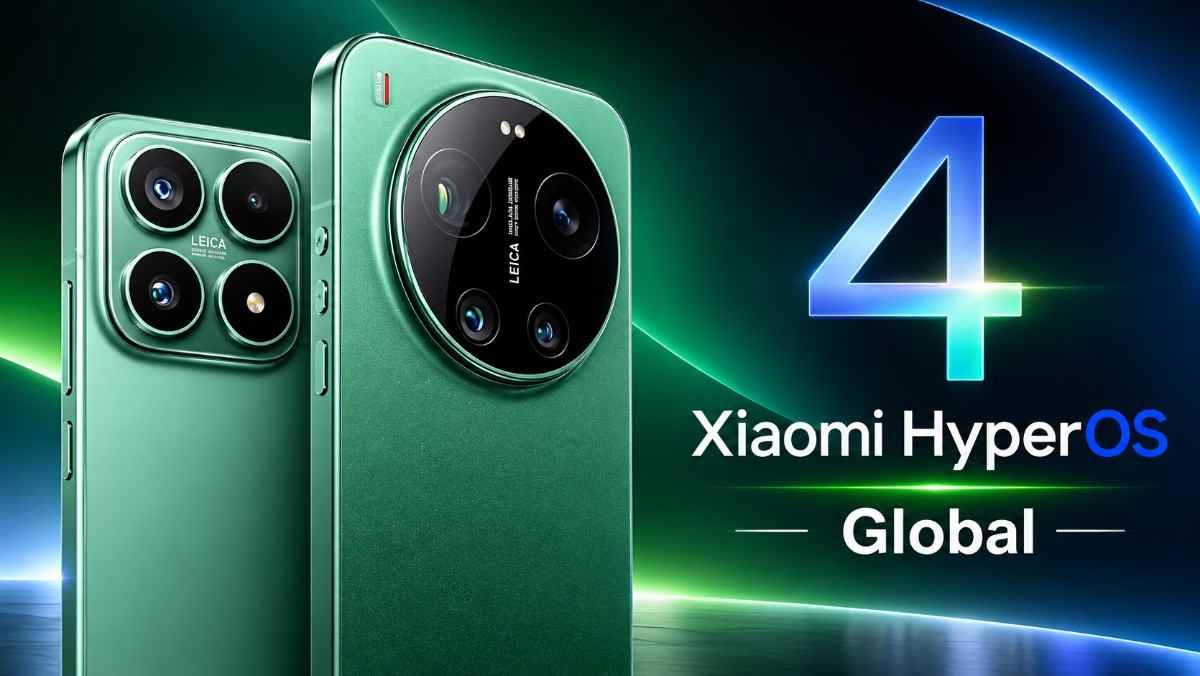
Xiaomi has officially started rolling out HyperOS 4, based on Android 17, to eligible devices worldwide. The rollout covers over 80 phones and tablets across Xiaomi, Redmi and POCO, split into three waves.[1][2][5]
The first wave is live now and includes the Xiaomi 17 and 15 series, Redmi Note 17 and Note 15 families, Redmi 17 and 15 series, POCO F8 and X8 lineups, POCO M8 and C-series models, and the Xiaomi Pad 8 series. The second wave arrives mid-November, and the third wave in December brings the update to older devices like the Xiaomi 14 and 13 series, Redmi Note 14, and POCO F6.[3][5]
For Indian users, Xiaomi has not announced an exact India date, but the global rollout has begun, and India is expected to follow within days. If you own an eligible device, start checking for updates now.[4][6]
How We Verified This Information
This article is built from Xiaomi’s official HyperOS 4 page and independent reporting from multiple outlets. Here is the sourcing:
- Rollout schedule and device list: Xiaomi’s official HyperOS 4 page and X post
- Reporting: 9to5Google, Android Authority, Gadgets360, Digit, Mashable India
- Feature details: Xiaomi official page and Xiaomi Community beta notes
- India availability: Digit and Gadgets360
- We have not personally tested HyperOS 4 on every device; analysis is based on official documentation and published hands-on reports
HyperOS 4 Rollout: The Three Waves Explained
Xiaomi has split the rollout into three waves to manage server load and catch any issues before a wider release. Here is exactly what is in each wave, based on Xiaomi’s official schedule.[1][5]
| Wave | Timing | Devices Included |
|---|---|---|
| Wave 1 | Early November 2026 | Xiaomi 17 Ultra, Xiaomi 17, Xiaomi 17T Pro, Xiaomi 17T, Xiaomi 15 Ultra, Xiaomi 15, Leica Leitzphone powered by Xiaomi, Redmi Note 17 series, Redmi Note 15 series, Redmi 17 series, Redmi 15 series, POCO F8 series, POCO X8 series, POCO M8 series, POCO C95 Pro, POCO C85, Xiaomi Pad 8 Pro, Xiaomi Pad 8 |
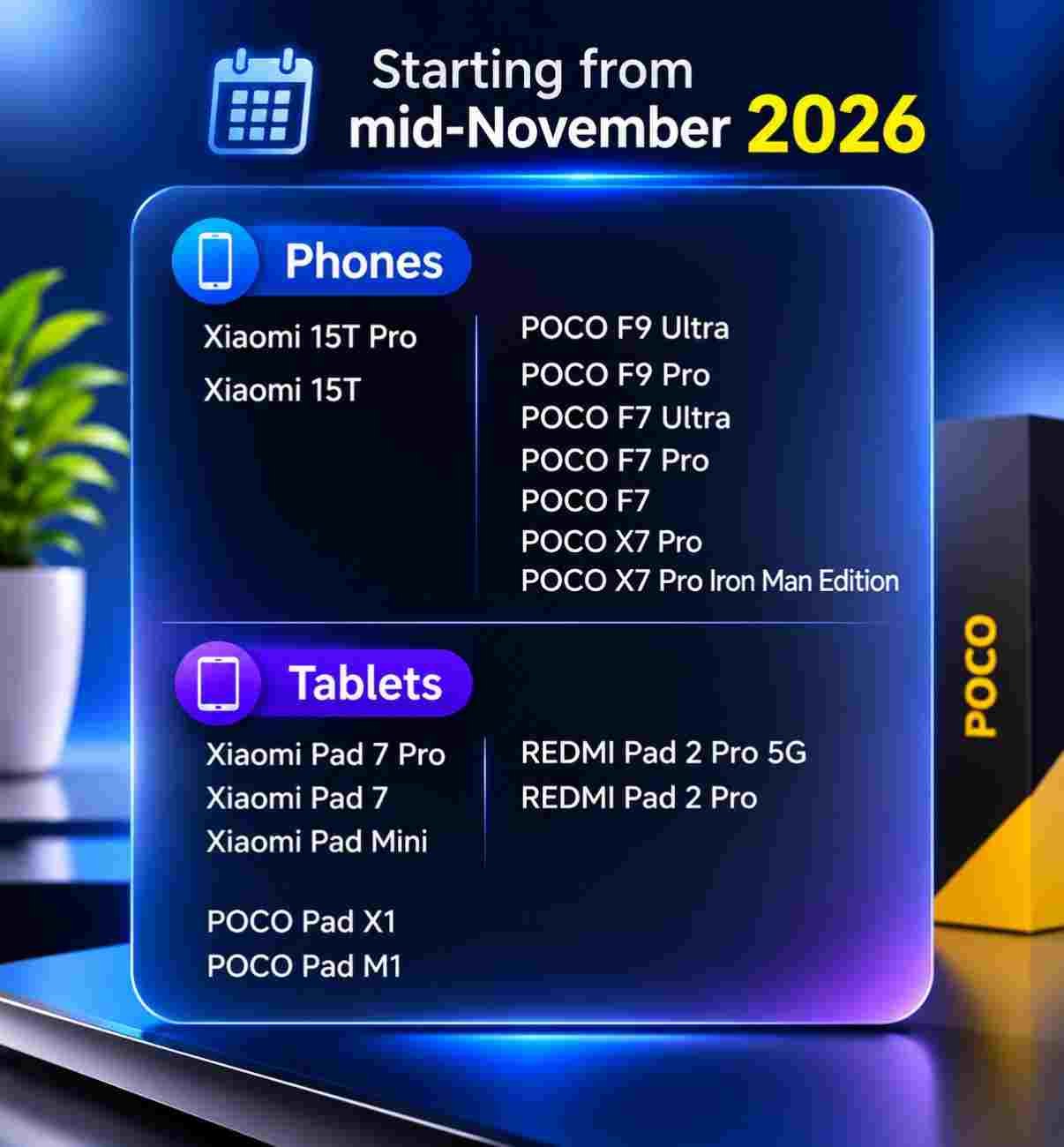
| Wave 2 | Mid-November 2026 | Xiaomi 15T Pro, Xiaomi 15T, POCO F9 Ultra, POCO F9 Pro, POCO F7 Ultra, POCO F7 Pro, POCO F7, POCO X7 Pro, POCO X7 Pro Iron Man Edition, Xiaomi Pad 7 Pro, Xiaomi Pad 7, Xiaomi Pad Mini, Redmi Pad 2 Pro 5G, Redmi Pad 2 Pro, POCO Pad X1, POCO Pad M1 |
| Wave 3 | December 2026 | Xiaomi MIX Flip, Xiaomi 14 Ultra, Xiaomi 14, Xiaomi 13 Ultra, Xiaomi 13 Pro, Xiaomi 13, Xiaomi 14T Pro, Xiaomi 14T, Xiaomi 13T Pro, Xiaomi 13T, Redmi Note 14 Pro+ 5G, Redmi Note 14 Pro 5G, Redmi Note 14 Pro, Redmi Note 14 5G, Redmi Note 14, Redmi 15 5G, Redmi 15, Redmi 14S, Redmi A7 Pro, POCO F6 Pro, POCO F6, POCO X8s, POCO X7, POCO X6 Pro, POCO M8s 5G, POCO M7, POCO C81 Pro, Xiaomi Pad 6S Pro 12.4, Redmi Pad 2 series, POCO Pad C1 |
Xiaomi has been clear that these are rollout starting windows, not guaranteed installation dates. The update reaches devices in phases, and regional carriers can slow things down. If your phone is on the list but you do not see the update, wait a few days and check again.[5]
Full List of Eligible Redmi, POCO and Xiaomi Devices
Here is the complete eligible device list, organised by brand so you can quickly check your phone.[5][10]
Xiaomi phones
- Wave 1: Xiaomi 17 Ultra, Xiaomi 17, Xiaomi 17T Pro, Xiaomi 17T, Xiaomi 15 Ultra, Xiaomi 15, Leica Leitzphone powered by Xiaomi
- Wave 2: Xiaomi 15T Pro, Xiaomi 15T
- Wave 3: Xiaomi MIX Flip, Xiaomi 14 Ultra, Xiaomi 14, Xiaomi 13 Ultra, Xiaomi 13 Pro, Xiaomi 13, Xiaomi 14T Pro, Xiaomi 14T, Xiaomi 13T Pro, Xiaomi 13T
Redmi phones
- Wave 1: Redmi Note 17 Pro Max 5G, Redmi Note 17 Pro 5G, Redmi Note 17 5G, Redmi Note 17, Redmi Note 15 Pro+ 5G, Redmi Note 15 Pro 5G, Redmi Note 15 Pro, Redmi Note 15 5G, Redmi Note 15, Redmi 17 5G, Redmi 17, Redmi 17C 5G, Redmi 15C 5G, Redmi 15C
- Wave 3: Redmi Note 14 Pro+ 5G, Redmi Note 14 Pro 5G, Redmi Note 14 Pro, Redmi Note 14 5G, Redmi Note 14, Redmi 15 5G, Redmi 15, Redmi 14S, Redmi A7 Pro
POCO phones
- Wave 1: POCO F8 Ultra, POCO F8 Pro, POCO X8 Pro Max, POCO X8 Pro, POCO X8 Pro Iron Man Edition, POCO X8, POCO M8 Pro, POCO M8, POCO C95 Pro, POCO C85
- Wave 2: POCO F9 Ultra, POCO F9 Pro, POCO F7 Ultra, POCO F7 Pro, POCO F7, POCO X7 Pro, POCO X7 Pro Iron Man Edition
- Wave 3: POCO F6 Pro, POCO F6, POCO X8s, POCO X7, POCO X6 Pro, POCO M8s 5G, POCO M7, POCO C81 Pro
Tablets
- Wave 1: Xiaomi Pad 8 Pro, Xiaomi Pad 8
- Wave 2: Xiaomi Pad 7 Pro, Xiaomi Pad 7, Xiaomi Pad Mini, Redmi Pad 2 Pro 5G, Redmi Pad 2 Pro, POCO Pad X1, POCO Pad M1
- Wave 3: Xiaomi Pad 6S Pro 12.4, Redmi Pad 2 9.7, Redmi Pad 2 9.7 4G, Redmi Pad 2, Redmi Pad 2 4G, POCO Pad C1
What’s New in HyperOS 4: More Than a Fresh Coat of Paint
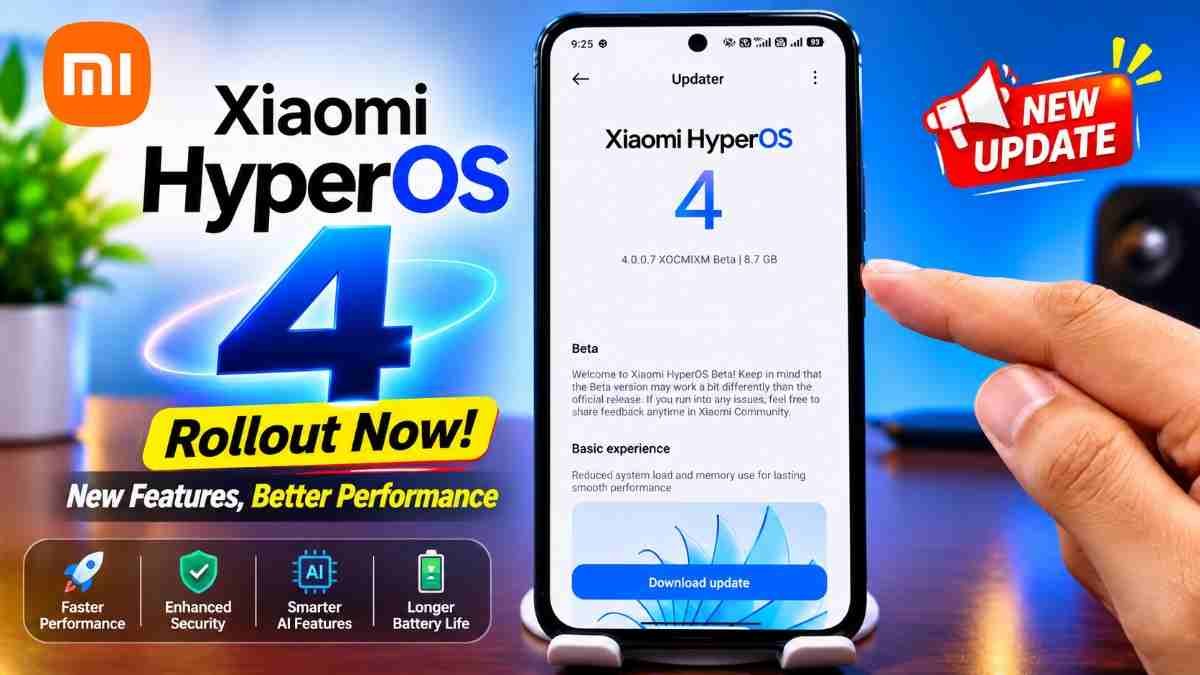
HyperOS 4 is not just a visual refresh. Xiaomi has rebuilt parts of the system and added meaningful performance and AI improvements. Here is what actually matters.[1][11][15]
1. Soft Light Glass design
The headline visual change is the Soft Light Glass aesthetic. It uses translucent panels, layered notifications, dynamic light effects that respond to your touch, and a more flexible lock screen with adjustable clock styles. Home screen folders can now be resized by dragging their edges, and widgets can be stacked.[1][11]
2. Performance improvements that you can feel
Xiaomi’s performance claims are specific and measurable:
| Metric | HyperOS 3 | HyperOS 4 | Improvement |
|---|---|---|---|
| Total launch time for 30 apps (after 9 hours) | 40.3 seconds | 36.8 seconds | 8.7% faster |
| Rear camera HDR photo capture | 313.38 ms | 240.16 ms | 23% faster |
| Camera cold launch | 1,043.6 ms | 808.8 ms | 22% faster |
| Average frame drop rate (video playback) | 2.92% | 0.15% | Significantly smoother |
The update also includes 33% better memory preloading and a claimed 90% reduction in the time it takes to scan 10,000 photos.[9]
3. AI features: Super XiaoAi 2.0 and MiMo
Xiaomi is integrating its Super XiaoAi 2.0 assistant, powered by the MiMo large language model. It can search your photo library, organise schedules, control smart home devices, and identify products on screen. The Notes and Recorder apps get AI transcription and summaries. The Super Island now supports over 130 services.[1][15]
Some AI features remain China-only for now, and Xiaomi has not confirmed which ones will reach global users. That is worth keeping in mind.[1]
4. Privacy and security
HyperOS 4 adds confirmation prompts for sensitive actions like deleting or sharing data, along with post-quantum encryption for communication channels and on-device privacy storage. These are meaningful additions, though not the kind of thing most users will notice day to day.[15]
India Availability and Timeline
Xiaomi has not published a separate India-specific release date. But India is one of Xiaomi’s largest markets, and the global rollout has already started. Digit reports that India availability is “coming soon,” and Gadgets360 notes that HyperOS 4 “could follow the same roll out schedule in India.”[4][6]
Here is the realistic timeline for Indian users:
| Device Category | Expected India Availability |
|---|---|
| Xiaomi 17 series, Xiaomi 15 series | Early to mid-November 2026 |
| Redmi Note 17 series, Redmi Note 15 series | Early to mid-November 2026 |
| POCO F8 series, POCO X8 series | Early to mid-November 2026 |
| Xiaomi 15T series, POCO F9/F7 series | Mid to late November 2026 |
| Xiaomi 14 series, Redmi Note 14 series, POCO F6 series | December 2026 |
If your device is in the first wave, start checking for updates now. If it is in the second or third wave, mark the dates in your calendar. Xiaomi’s rollout is phased, so even within a wave, some users will get it before others.
How to Check for and Install HyperOS 4
The update is delivered as an OTA (over-the-air) update. Here is the fastest way to check:
- 1Open Settings
Go to the Settings app on your Xiaomi, Redmi or POCO phone.
- 2Tap “About phone”
Scroll down and tap on “About phone.”
- 3Tap the HyperOS version
Tap on the HyperOS version number. If an update is available, you will see a prompt to download it.
- 4Download and install
Connect to Wi-Fi, ensure you have enough storage, and tap Download. Once downloaded, tap Install. Your phone will restart.
You can also check the Xiaomi Community app or the official HyperOS 4 page for rollout announcements. If you do not see the update, wait a few days and check again. Do not use third-party “update checker” apps — they can be unreliable and sometimes unsafe.[7]
Should You Update Immediately?
Update now if…
- Your device is in the first wave and you want the new design and performance improvements.
- You use your phone heavily and want the claimed 8.7% faster app launches and smoother video playback.
- You are interested in the new AI features and lock screen customisation.
- You are comfortable with the occasional early-update bug and can report issues.
Wait a few days if…
- You depend on your phone for work and cannot afford any downtime or bugs.
- You are on a device in the second or third wave — there is no point checking daily.
- You use banking or payment apps and want to confirm they work smoothly on Android 17 first.
- You have limited storage — the update file can be large.
The honest take: HyperOS 4 is a substantial update, not a cosmetic one. The performance numbers are real, the design is a clear step forward, and the AI features — while partly China-only for now — show where Xiaomi is heading. If your device is eligible, there is no strong reason to avoid it. Just back up your data first, and install it when you have 20 minutes to spare.
Frequently Asked Questions
Over 80 devices are eligible, split into three waves. The first wave includes the Xiaomi 17 and 15 series, Redmi Note 17 and Note 15 series, Redmi 17 and 15 series, POCO F8 and X8 series, POCO M8 and C-series models, and the Xiaomi Pad 8 series. The second wave covers the Xiaomi 15T series, POCO F9 and F7 series, POCO X7 series, and several tablets. The third wave in December includes the Xiaomi 14 and 13 series, Redmi Note 14 series, and POCO F6 series.[1][5]
HyperOS 4 is based on Android 17. Some devices that already received Android 17 with HyperOS 3 will still get HyperOS 4 for the new interface and features.[2]
The headline feature is the “Soft Light Glass” design with translucent panels and dynamic light effects. It also brings lock screen customisation, notification stacking, resizable home screen folders, performance improvements (8.7% faster app launches after 9 hours of use), AI tools like AI Voice Notes and AI Gallery Search, and enhanced privacy features.[1][11]
Go to Settings > About phone and tap on the HyperOS version number. If an update is available, you will see a prompt to download and install it. You can also check the Xiaomi Community app or the official HyperOS 4 page for rollout status.[7]
Yes. The Redmi Note 14 series is included in the third wave, scheduled for December 2026. The same applies to the POCO F6 series and Xiaomi 13 series.[5]
Xiaomi claims the opposite. The update includes Precision Workload Scheduling, memory preloading, and a new app runtime environment designed to keep performance smooth over time. Early beta reports suggest improvements, but real-world performance can vary by device.[11]
Sources & References
- Yahoo Tech (Android Central) — HyperOS 4 update schedule: Every Xiaomi, Redmi, and POCO phone getting Android 17 (November 4, 2026)
- Mashable India — Xiaomi Announces HyperOS 4 Global Rollout: Check Eligible Xiaomi, Redmi, POCO Phones And Timeline (November 5, 2026)
- 9to5Google — Xiaomi confirms Android 17 HyperOS 4 rollout schedule for these devices (November 3, 2026)
- Digit — Xiaomi confirms HyperOS 4 update roadmap: Check eligible devices, what to expect and India launch timeline (November 3, 2026)
- Android Authority — One of Android’s biggest software rollouts is here, with over 80 devices on the guest list (November 3, 2026)
- Gadgets360 — Xiaomi HyperOS 4 to Start Rolling Out Globally This Month With Android 17 Features, New Design: Full Release Schedule (November 4, 2026)
- Xiaomi Global — Official HyperOS 4 page: features, performance claims and release schedule
- Xiaomi Community — HyperOS 4 Beta 4.0.0.5 changelog and feature details
- Gadgets360 — HyperOS 4 performance claims: 33% memory preloading improvement, 90% faster photo scan (November 4, 2026)
- PhoneWorld — Xiaomi Announces HyperOS 4 Update Schedule for 80+ Devices (November 4, 2026)
- Xiaomi Community — HyperOS 4 beta changelog: Precision Workload Scheduling, Soft Light Glass, notification stacking
- Trusted Reviews — Xiaomi confirms HyperOS 4 rollout – here’s when your phone will get it (November 5, 2026)
- ShiftDelete — HyperOS 4 Rollout: Xiaomi, Redmi and POCO Devices by Wave (November 4, 2026)
- Croma Unboxed — HyperOS 4 rollout schedule officially revealed (November 4, 2026)
- Xiaomi Global — HyperOS 4 official feature page: Soft Light Glass, performance metrics, AI features, privacy
Looking for More Software Update Guides?
We track every major Android rollout — Xiaomi, Samsung, OnePlus, Realme — with clear device lists and India-specific timelines.
Explore Software Updates